
10 Jinju Startups Stand Before Investors… Connecting from IR to Follow

For local startups to advance to the investment attraction stage, they need the ability to explain their growth potential in investors' terms, just as much as the competitiveness of their technology and business models. Local companies, which have limited contact with investment institutions, also face restricted opportunities to create IR materials and have their actual pitches validated. This is why a support structure that extends from corporate diagnosis to material production, presentations, and investment consultations is needed, rather than one-off training sessions. The Gyeongnam Creative Economy Innovation Center and Jinju City are supporting the entire investment attraction process for 10 promising local startups.
The Gyeongnam Creative Economy Innovation Center is implementing the '2026 Jinju-type Startup Accelerating Support Project' through the Jinju Startup Support Center, which it operates under commission from Jinju City.
This program is designed to enhance the investment attraction capabilities of startups based in Jinju by integrating corporate diagnosis, IR material production, pitching training, demo days, and investment consultations into a single course. It identifies investment points tailored to each company's business model and growth stage, and connects them with actual investors.
Last June, the Center recruited startups located in Jinju City with less than 7 years of business experience. Following document and presentation evaluations, 10 final companies were selected in July.
The selected companies participated in a workshop held at the Jinju Startup Support Center on the 12th, where they practiced IR pitching and material production based on the results of preliminary company diagnosis and verification. They also reviewed the structure and message of their existing IR materials through one-on-one consulting with each company.
The consulting focused on restructuring materials from a method of simply listing the technologies and products the company wanted to introduce to one centered on the marketability, growth strategies, competitiveness, and funding plans that investors seek to verify. The company also trained in organizing the key investment points of its business model and pitching techniques to convey growth potential within a limited presentation time.
The Gyeongnam Center for Creative Economy Innovation will continue to support the production of customized IR materials for each company even after this workshop. It plans to refine market analysis, business strategies, and investment utilization plans by incorporating the areas for improvement identified during the consulting process.
In September, an IR Demo Day will be held where selected companies present their business models and growth strategies to investors. Following this, IR Insight Tours and investment consultation sessions will be organized to connect companies with various investment institutions. Feedback from investors received at the Demo Day will also be utilized to refine IR materials and business strategies.
Noh Chung-sik, CEO of the Gyeongnam Creative Economy Innovation Center, said, “Together with Jinju City, we will discover and nurture startups with high growth potential in the region, and strengthen support so that companies grown in Jinju can leap forward through attracting investment and subsequent growth.”
The success of this project depends more on how many investor meetings, company reviews, and follow-up investments are made following the September Demo Day than on the number of IR materials produced. If local incubators go beyond simply providing education and presentation opportunities to connecting companies with investors suited to their growth stages, the likelihood of Jinju startups securing growth capital while based in the region increases. Follow-up support, such as continuously managing investment progress and connecting additional consultations after the Demo Day, is expected to determine the effectiveness of the program.
Related Stories
 Technology
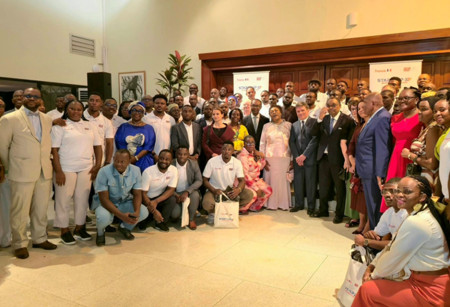
France Completes CFAF 1.3 Billion Program Supporting 100 Cameroon Startups
24 minutes ago
 Technology
NASA Awards Fund Research, Technology and Workforce Development
24 minutes ago
 Technology
Technology & Telecommunication Acquisition Corp 3Q FY2026: Net income $(768,666), EPS $(0.22) — 10
24 minutes ago
 Technology
Digital Dentistry Growth Might Change The Case For Investing In Align Technology (ALGN)
24 minutes ago
 Technology
Chinese Company Xingkai Technology Exposed for Supplying Mesh Modems for Russian Geran and Gerbera Drones
1 hour ago
 Technology
Hôpital Montfort Introduces Digital Pre
1 hour ago
 Technology
Micron Technology (MU) Stock Faces Fresh Pressure After Rival DRAM Breakthrough
1 hour ago
 Technology
UST Selects 19 Startups for D3 Startup Challenge 2026 in Bengaluru
2 hours ago