
12 years of cultural renaissance, spiritual reawakening, heritage revival and the making of a developed...

12 years of cultural renaissance, spiritual reawakening, heritage revival and the making of a developed India
The last 12 years of Prime Minister Narendra Modi’s leadership have represented far more than a change in government; they have marked the emergence of a new national narrative for India.
Since 2014, India has witnessed a period of transformation that has sought not only to accelerate economic growth but also to reconnect the nation with its civilizational consciousness, cultural heritage, and spiritual traditions. In doing so, India has offered the world a distinctive model—one that seeks to harmonize modernity with tradition, technological advancement with cultural continuity, and economic ambition with national identity.
When Narendra Modi assumed office, he articulated a vision of an India that would be confident in its capabilities, rooted in its heritage, and ambitious in its aspirations. Over time, that vision evolved beyond government policy into a broader national movement. The result has been the emergence of an India increasingly defined by opportunity, innovation, self-belief, and global relevance.
A defining feature of this period has been the expansion of the very meaning of development. Rather than being measured solely through macroeconomic indicators, development came to be viewed through the lens of human dignity and social empowerment.
Large-scale welfare initiatives sought to extend the benefits of growth to those historically excluded from formal systems and state support. Financial inclusion through the Jan Dhan programme brought millions into the banking network.
The Ujjwala initiative addressed a long-standing public health challenge faced by women in rural households. Ayushman Bharat expanded access to healthcare, while the Pradhan Mantri Awas Yojana enabled millions of families to pursue a more secure and dignified life.
The Swachh Bharat Mission transformed sanitation from an administrative objective into a nationwide social movement. What was once dismissed by critics as a symbolic campaign ultimately evolved into one of the largest public-health initiatives in independent India.
Similarly, the Jal Jeevan Mission sought to address one of the most fundamental dimensions of human development—access to safe drinking water. Together, these initiatives reflected an approach to governance that emphasized both scale and societal participation.
Infrastructure development has been another defining hallmark of the past decade. Extensive investments in highways, expressways, railway modernization, airports, logistics networks, and digital connectivity have significantly altered India’s developmental landscape. Regions that were once viewed as peripheral have increasingly become integrated into the country’s economic mainstream, creating new opportunities for growth and mobility.
Equally transformative has been India’s digital revolution. Through the Digital India initiative, governance has become more transparent, efficient, and accessible. The success of the Unified Payments Interface (UPI) has positioned India among the world’s leading digital-payment ecosystems, demonstrating how technological innovation can expand financial inclusion while reducing leakages and improving service delivery. Technology, in this context, has emerged not merely as a tool of administration but as an instrument of empowerment.
At the heart of these developments lies the broader vision of Atmanirbhar Bharat—a self-reliant India. More than an economic doctrine, self-reliance has been presented as a manifestation of national confidence.
Programmes such as Make in India, Startup India, Skill India, and a growing emphasis on innovation and entrepreneurship have fostered a more dynamic ecosystem for manufacturing, technology, and enterprise. Today, India is increasingly regarded as a major participant in global supply chains, a leading digital economy, a vibrant startup hub, and an emerging technological power.
India’s expanding global influence has further reinforced this transformation. From its presidency of the G20 to its advocacy on behalf of the Global South, India has assumed a more visible role in shaping international conversations.
The country is no longer viewed merely as a participant in global affairs but increasingly as a stakeholder capable of influencing their direction. Its engagement on climate action, strategic partnerships, and multilateral diplomacy reflects a growing confidence consistent with its rising economic and geopolitical stature.
Yet perhaps the most distinctive aspect of this era has been the effort to integrate development with civilizational renewal. For much of the post-independence period, modernity and tradition were frequently portrayed as competing forces. The past twelve years have sought to challenge that assumption by demonstrating that economic progress and cultural rootedness can advance together.
This philosophy is reflected in the restoration and revitalization of some of India’s most significant spiritual and cultural landmarks. The redevelopment of Kashi Vishwanath Dham has reimagined one of the world’s oldest living cities by combining ancient faith with modern infrastructure. Similar initiatives at Kedarnath, Mahakal Lok in Ujjain, Somnath, and other sacred sites have strengthened both cultural preservation and local economic development through tourism and employment generation.
Among the most consequential developments of this period has been the construction of the Shri Ram Temple in Ayodhya. For millions of Indians, the temple represents not merely the realization of a long-standing religious aspiration but also the reaffirmation of a civilizational memory deeply embedded in the nation’s cultural consciousness.
The constitutional and peaceful resolution of a decades-old dispute underscored the resilience of India’s democratic institutions. The completion of the temple has also generated broader discussions regarding the preservation and restoration of other sites of historical and spiritual significance, including Shri Krishna Janmabhoomi in Mathura.
India’s spiritual traditions have likewise gained unprecedented international visibility during this period. The adoption by the United Nations of June 21 as the International Day of Yoga represented a landmark recognition of India’s cultural heritage on the global stage. Today, yoga is practiced across continents, transcending national boundaries and serving as a universal message of wellness, balance, and inner harmony.
Prime Minister Modi has consistently argued that the success of a nation cannot be measured solely through material prosperity. India’s enduring strength, he has maintained, lies in its cultural values, spiritual traditions, family structures, and civilizational ethos encapsulated in the timeless principle of Vasudhaiva Kutumbakam—the belief that the world is one family. Consequently, traditional knowledge systems, Ayurveda, yoga, and cultural heritage have been accorded a place alongside scientific advancement and technological progress.
The cumulative impact of these developments has been the emergence of a renewed national self-confidence. Achievements in space exploration, including the success of Chandrayaan missions, advances in defence manufacturing, growing sporting excellence, and India’s increasing influence in international forums have contributed to a stronger sense of collective pride and possibility.
Viewed in its entirety, the last twelve years of PM Modi rule constitute more than a record of administrative accomplishments. They represent an attempt to redefine India’s developmental journey through the simultaneous pursuit of economic progress, cultural revival, spiritual confidence, and national self-belief.
Whether measured through infrastructure, digital innovation, welfare delivery, global diplomacy, or the restoration of civilizational heritage, this period has sought to position India not merely as a rising power, but as a nation rediscovering its historical identity while shaping its future.
As India advances toward the vision of a developed nation, the convergence of self-reliance, cultural renaissance, and inclusive development under Narendra Modi regime which may well be remembered as one of the defining features of this chapter in the country’s modern history.
About the Author: Dr. Nikhil Anand is the National General Secretary of the BJP OBC Morcha. He has been a journalist in the past.
Discover the latest Business News, Sensex, and Nifty updates. Obtain Personal Finance insights, tax queries, and expert opinions on Moneycontrol or download the Moneycontrol App to stay updated!
Find the best of Al News in one place, specially curated for you every weekend.
Stay on top of the latest tech trends and biggest startup news.
Related Stories
 India
India
New York to ban Central Park’s horse
2 hours ago
 India
India
One
2 hours ago
 India
India
Rahul Gandhi, his 'ecosystem' trying to create anarchy in India for 'regime change', says BJP
3 hours ago
 India
India
‘Mary Millben can back BJP, Imran Khan can’t criticise it’: CJP's Abhijit Dipke flags contrast
3 hours ago
 India
India
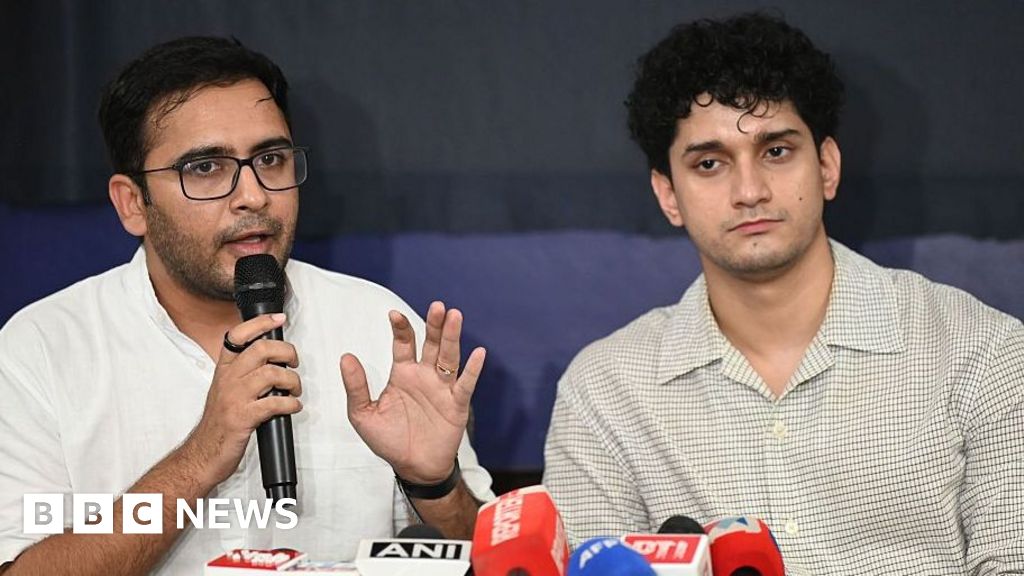
CJP's Saurav Das, Ashutosh Ranka: India's 'cockroach' leaders jailed after holding protest
4 hours ago
 India
India
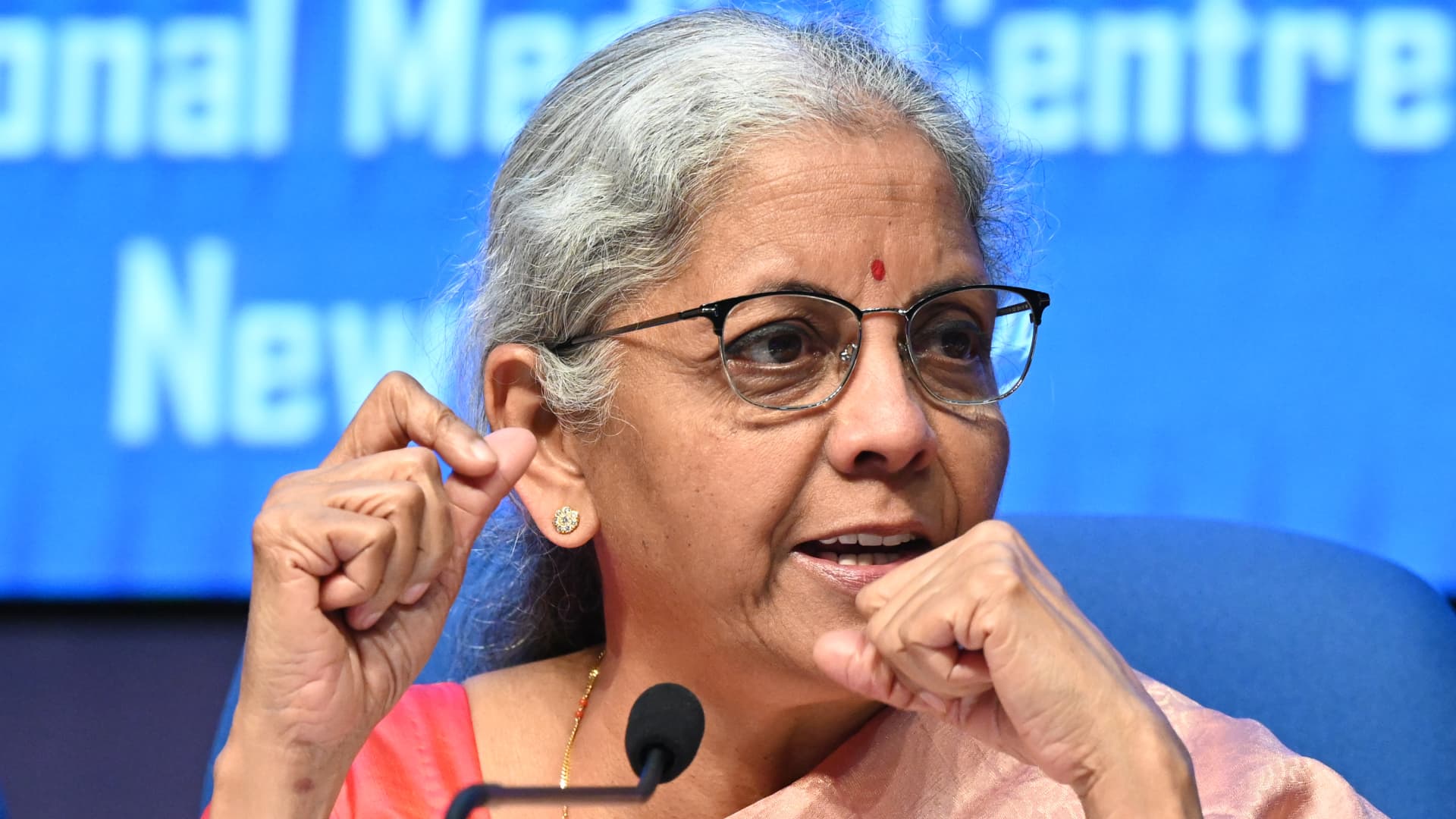
India’s IDBI Bank falls 7% as government announces $5.5 billion stake sale to Canada's Fairfax
4 hours ago
 India
India
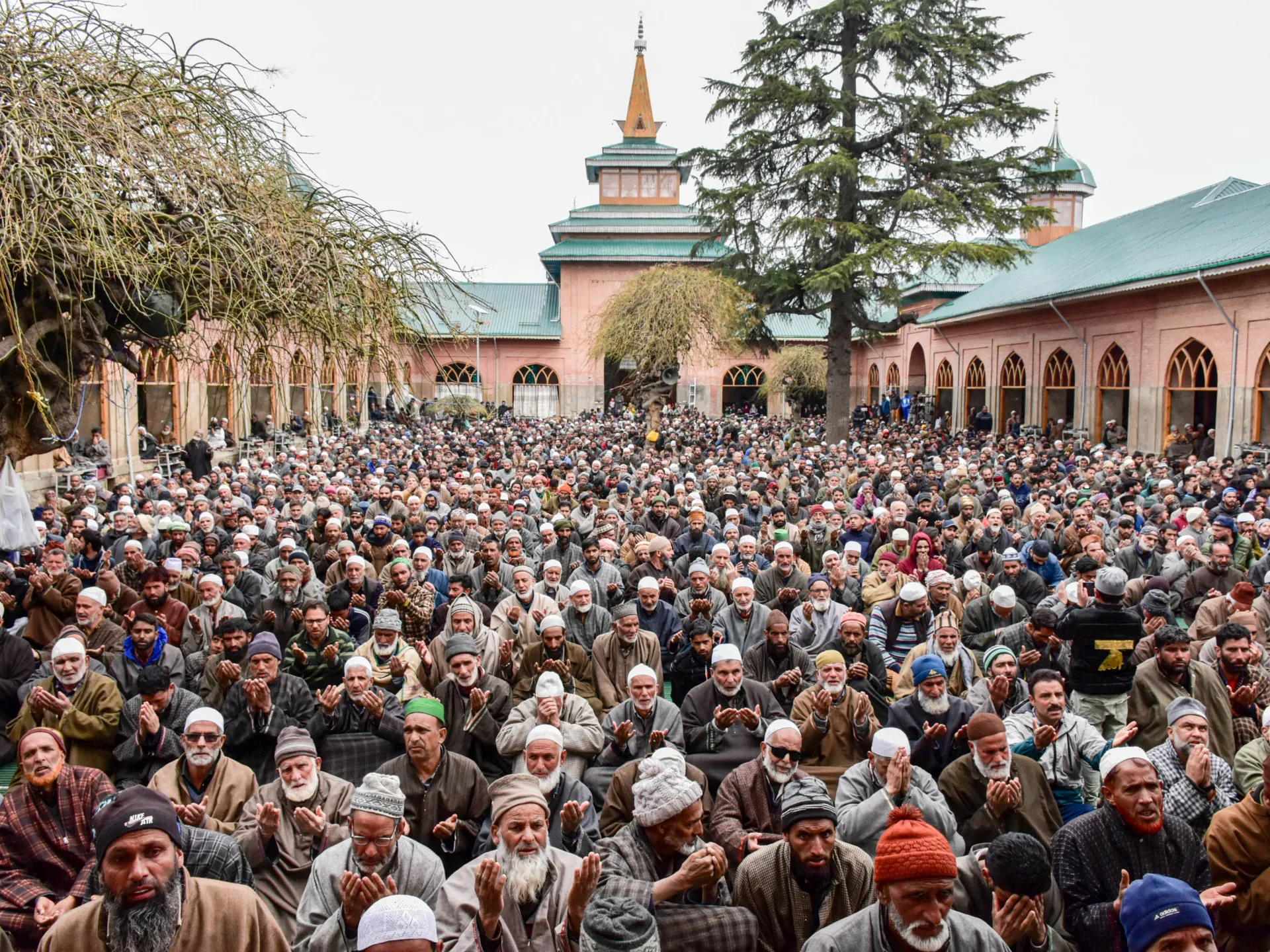
Backlash in Kashmir over proposal for uniform Friday sermons across mosques
4 hours ago
 India
India
Will wipe out the broom: Jhotas father rules out entering politics, but warns AAP of electoral rout
6 hours ago