
A Brain Train Heads For Canada With Dozens Of American Scholars On Board
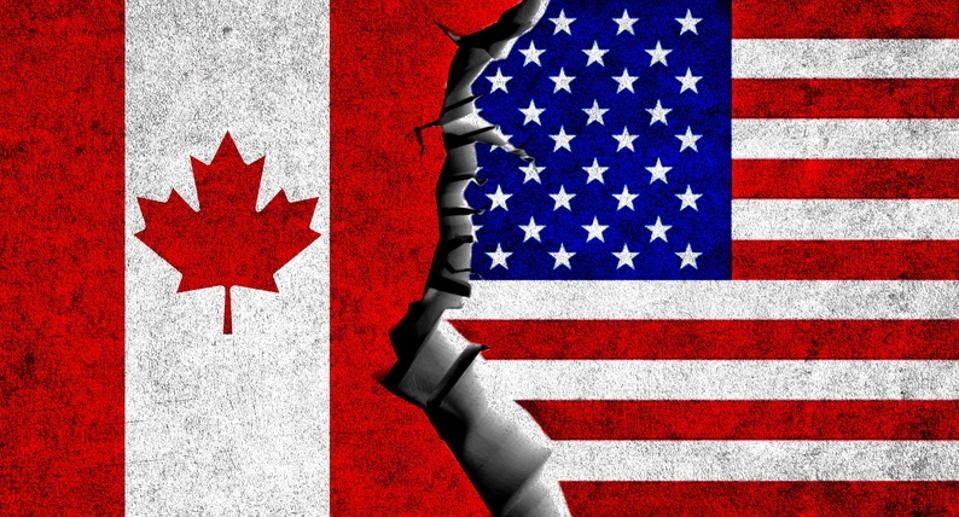
In a week that saw escalating tensions between the U.S. and its northern neighbor, Canada has lured dozens of leading U.S. scholars to its universities.
Canadian universities have successfully recruited more than five dozen international scholars, most of them Americans, as part of a national strategy to lure top academics from around the world to the country.
Of the 64 poached scholars, 48 are coming from American institutions, including those from Harvard, M.I.T, the University of Massachusetts, Yale and Carnegie Mellon University.
The recruitment is part of an aggressive program to attract leading international investigators and research teams to Canadian universities and research hospitals as it seeks to establish itself "at the forefront of scientific innovation." The timing of the move is strategic, taking maximum advantage of the uncertainty now surrounding the U.S. government's declining support of scientific research and the Trump administration's ongoing hostility directed at several of America's leading universities.
Announced last December by Mélanie Joly, Minister of Industry and Minister responsible for Canada Economic Development for Quebec Regions, and Marjorie Michel, Minister of Health, the Canada Global Impact+ Research Talent Initiative initially called for an investment of nearly $1.7 billion in Canadian dollars (about $1.2 billion in U.S. dollars) in a suite of talent-attraction programs.
Now, the first fruit from that effort has been born. At the University of British Columbia on Thursday, Joly announced that Canada is spending $541 million to hire an initial batch of research leaders as part of what it's now calling the Eddie Goldenberg Research Chairs of Canada program, renamed in honor of the late Eddie Goldenburg, chief of staff to former prime minister Jean Chrétien.
Of the funding, $504 million will go for the 64 researchers, with the remaining $37 million used to help universities recruit another 63 academic leaders over the next year.
Joly said the investments were meant to attract the world's best researchers to Canada. "While certain countries are cutting research and turning their back on academic freedom, we're doubling down on science and we're doubling down on research," she said, according to the CBC. She added, "we thought that there was an opportunity to seize. At the same time, we were in competition also with other countries that have launched similar initiatives including France, including also the EU."
Although this week's announcement did not specifically mention that it was targeting U.S. researchers who've grown increasingly disheartened and disgruntled by what's widely perceived as the anti-science policies of the Trump administration, the intent to lure U.S. faculty northward has been unmistakable.
When Joly was asked if she thinks President Trump might view the recruitment as an escalation of the Canada-U.S. trade war he has stoked, she replied, "the U.S. administration is taking its own decisions and we're taking ours."
One of the scholars leaving the U.S. for Canada is Phillip Zamore, the chair of RNA Therapeutics Institute at the University of Massachusetts. He's headed to McGill University in Montreal. According to the New York Times, Zamora described his departure this way: "I used to live in the country that I thought was the most enthusiastic about the prospects for science improving the human condition, of any country in the world. And I woke up one day and that wasn't true anymore. If scientists don't stand up for truth, no one will."
A total of 21 Canadian universities are the beneficiaries of this initial tranche of scholars. As an example of the impact the program is having, consider the University of British Columbia. It recruited three powerhouse faculty working in drug delivery, protein design and microbiome sciences — Kathryn Whitehead, a professor of chemical engineering and biomedical engineering at Carnegie Mellon University; Brian Kuhlman, an international expert in protein design from the University of North Carolina at Chapel Hill; and Curtis Huttenhower, a professor of computational biology and bioinformatics at Harvard University.
In a week that saw the U.S. president attempt to rename Lake Ontario, Canada converted the growing fears of dozens of American scholars and scientists into its own substantial brain gain. That's not a good trade.
This article was originally published on Forbes.com
Related Stories
 Canada
Non
48 minutes ago
 Canada
Obesity Canada launches partnership aimed at improving care in health system
48 minutes ago
 Canada
Lake Louise, Moraine need new approach to tourism, says Parks Canada. What that looks like is still unclear
48 minutes ago
 Canada
How often do you see rats on Montreal's streets? This Park Ex resident says every day
48 minutes ago
 Canada
Ottawa's Nepalese community mourns flood victims at vigil
48 minutes ago
 Canada
How Canada’s turn toward Europe might test the EU's borders
1 hour ago
 Canada
Day 3 of the Quebec election campaign gets underway. Here's what you need to know
1 hour ago
 Canada
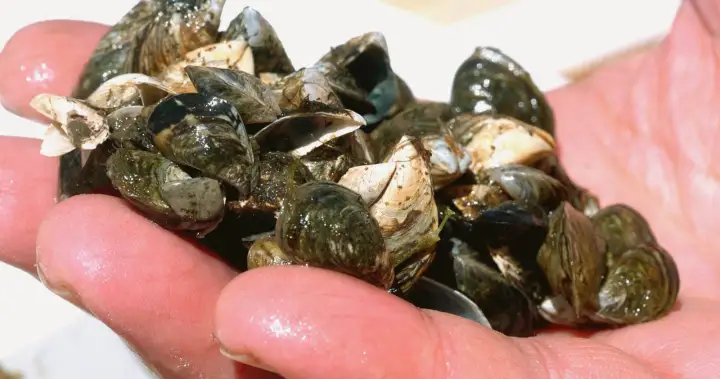
Zebra mussels found during inspection of boat in Saskatchewan provincial park
2 hours ago