
AFRICA FINANCE IN BRIEF: Africa’s markets face fresh growth, debt, investment pressures
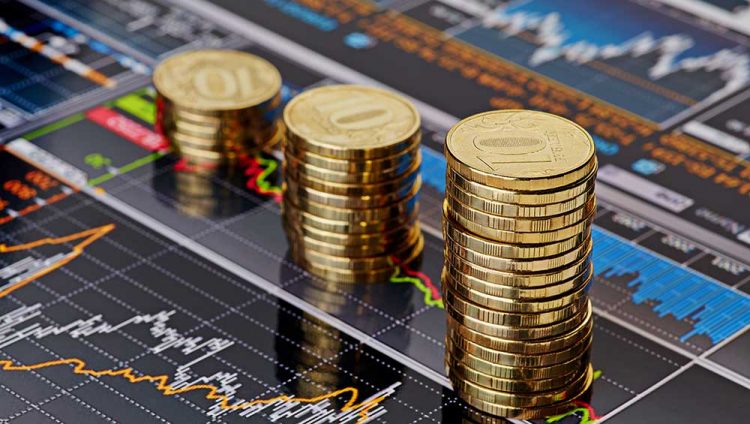
This week’s stories show an African economy caught between external shocks, fiscal pressure and renewed investment ambitions. South Africa’s contraction highlights how weaker global trade and commodity-market disruptions are filtering into the continent’s largest economy, while Senegal’s downgrade underscores the rising cost of unresolved debt problems.
At the same time, Nigeria’s strong equity-market performance and Botswana’s pursuit of Dangote investment point to pockets of investor confidence and capital formation. Mozambique’s central-bank reshuffle adds a reminder that policy stability remains critical to sustaining that confidence.
Iran war, mining, trade drag Africa’s biggest economy into first contraction in nearly two years
South Africa’s economy contracted for the first time in nearly two years in the second quarter of the year, shrinking by 0.2 percent from 0.4 percent growth in the previous quarter, the country’s statistical agency revealed on Tuesday.
Statistics South Africa reported in its GDP report that the contraction was primarily driven by declines in mining, trade, and manufacturing on the production side, while a sharp rise in imports and weaker capital formation constrained growth from the expenditure side.
Why it matters: The country’s contraction shows how global shocks are increasingly weighing on Africa’s biggest economy and threatening its fragile growth recovery. For the rest of Africa, it’s performance matters because it remains the continent’s largest and most systemically important economy and a major source of investment.
S&P cuts Senegal’s rating to near 26-year low after debt restructuring
S&P Global Ratings has cut Senegal’s long-term foreign-currency sovereign rating to CC from CCC+, warning that the government’s planned debt restructuring is highly likely to leave foreign-currency creditors with losses.
The downgrade takes the west African nation’s rating to its lowest level in nearly 26 years, reflecting growing concerns over the country’s ability to meet its debt obligations after billions of dollars in previously undisclosed government liabilities were uncovered in 2024.
Why it matters: Senegal’s downgrade shows that the consequences of the country’s previously undisclosed debt are still unfolding. A rating of CC makes external financing more difficult and potentially more expensive, while losses for foreign-currency creditors could further restrict market access. The story also has a broader African lesson: debt transparency and fiscal credibility have become increasingly important as governments face tighter global financing conditions.
Nigeria’s stock market extends Africa lead as dollar return climbs to 73%
Nigeria’s stock market has extended its lead over African peers just days after reclaiming the continent’s top spot, with its dollar return rising to 73.1 percent by September 4, 2026 from 69.5 percent at the end of August.
The performance puts the Nigerian Exchange Limited (NGX) on course to deliver Africa’s strongest equity-market return to dollar investors this year, as gains in local stocks are being amplified by relative naira stability.
Why it matters: Nigeria’s performance is a striking counterpoint to the broader challenges facing African economies. A 73.1 percent dollar return makes the NGX one of the continent’s strongest investment stories this year and shows how relative currency stability can magnify local equity gains for foreign investors. It also provides important context for the upcoming Dangote Refinery IPO, which will test whether this market strength can translate into deeper capital mobilisation.
Botswana courts Dangote as $100bn revenue ambition drives new investments
Botswana is seeking Aliko Dangote’s backing for major industrial and infrastructure projects, including a cement plant and a strategic railway linking the country to Namibia, as the billionaire expands his business across Africa.
Duma Boko, Botswana President, urged Dangote to consider large-scale investments during a meeting in Gaborone, saying the country was looking for major capital projects that could accelerate industrialisation and create jobs.
Why it matters: Botswana’s pursuit of Dangote highlights a broader competition among African governments for long-term private capital and industrial investment. The proposed cement plant and railway would go beyond individual projects, potentially helping Botswana build domestic production capacity, create jobs and improve regional trade links. I
Mozambique changes central bank leadership after eight years
Daniel Chapo, Mozambican President, has reversed the appointment of the country’s new central bank leadership less than 24 hours after announcing a different set of officials, naming economist Felisberto Dinis Navalha as Governor of the Bank of Mozambique.
Benedita Maria Guimino was appointed deputy governor, replacing Navalha, who had initially been named to the position alongside Waldemar Fernando de Sousa as governor.
Why it matters: The abrupt reversal of Mozambique’s central-bank appointments raises questions about policy continuity and institutional credibility at a time when investors are closely watching the country’s economic reforms. Central-bank independence and predictable monetary policy are particularly important for maintaining confidence in the metical, controlling inflation and attracting investment.
Bunmi holds a degree in Economics from the University of Lagos and has over eight years of experience in content writing and journalism. Her career spans roles as a financial and business journalist at BusinessDay Media and TechCabal, and as Head of Research at SBM Intelligence, an Africa-focused market intelligence and strategic consulting firm. She also served as Editor at Finance in Africa, a subsidiary of Businessfront and is currently Assistant Editor, Finance (Africa), at BusinessDay.
Join BusinessDay whatsapp Channel, to stay up to date
Related Stories
 Finance
Arrest Cheema, says Opposition; ‘stop vulture politics’, counters AAP
3 minutes ago
 Finance
‘I fear the price could be high’: Inside the German state where the far
10 hours ago
 Finance
EU unveils ‘buy European’ public procurement rules to counter China
12 hours ago
 Finance
MSB Registration in the US and Canada: What Crypto and Fintech Startups Need to Launch Legally
15 hours ago
 Finance
Dont do politics over dead bodies: Mann to Rahul on Punjab villager suicide
16 hours ago
 Finance
Vallourec, Aramco Expand Tubulars Partnership
16 hours ago
 Finance
Anti
18 hours ago
 Finance
Extremely rare Woolly Dog pelt back in B.C. after more than 160 years
21 hours ago