
After deadly protests, more Iranian women choosing to defy hijab law despite the dangers

After deadly protests, more Iranian women choosing to defy hijab law despite the dangers
Many women remove hijab as way of continuing January protests quelled by security forces
"Because it's Iran. And I have to live here."
That was the explanation offered by a young woman in Tehran earlier this week when she was asked why she declined to do an anonymous, audio-only interview with a CBC News journalist from abroad.
What she wasn't afraid to do, however, was to go about her business — in this case, shopping in the city's storied Grand Bazaar — without wearing a headscarf.
Or, if she was afraid, she wasn't letting it stop her.
More and more women in Iran have been defying the Islamic Republic's strict headscarf rules in recent years despite the risk of fines, arrest and even jail time for disobeying a law that's been compulsory in Iran since just after the 1979 Iranian Revolution.
One might have expected that the violent crackdown by Iranian security forces on demonstrators demanding change during January's massive street protests would have put an end to those acts of defiance. But if anything, it seems to have given them even greater impetus.
The protests began in late December 2025 when shopkeepers went on strike as the Iranian currency collapsed. They were soon joined by Iranians demanding an end to the Islamic Republic and decades of repression.
"Many people were killed just so that girls could have the kind of freedom they want in the country," said Baran, a 17-year-old student who was also not wearing a headscarf while shopping at the Bazaar.
"Our main objective [in protesting] is not limited to what we would like to wear," she said. "Our main goal is for the country's economic situation to improve."
Like most other Iranians who spoke with CBC News, she asked that her full name not be used for fear of repercussions.
In a Canadian exclusive, CBC News is reporting from Iran with permission of the government. It imposes restrictions on international journalists; however they do not check our material before it is published or broadcast.
Many Iranians hope the memorandum of understanding signed by Washington and Tehran this week will lead to successful peace negotiations and usher in much-needed growth and stability for Iran after years of isolation and decades of U.S.-led sanctions.
In Tehran, skepticism remains over U.S.-Iran agreement
But there's widespread distrust of U.S. President Donald Trump. The two wars he and Israel launched against Iran over the past year — each time while ostensibly involved in negotiations — have fed skepticism about any deal.
For those opposed to Iran's authoritarian regime, there's a feeling that the war and talks to end it have overshadowed and undermined the sacrifices Iranians made in January.
Finding inspiration in 'courage of Iranian women'
Mahyar Yeganeh, 16, says taking part in the protests in which some of her classmates were killed has left her with the feeling that she has nothing left to lose.
Of the people CBC News interviewed, she was the only one not afraid to give her full name.
"I think that if I am going to live the final seconds of my life, I want to live it the way I want," she said.
"And this is connected to the courage of Iranian women, still confronting a dictatorial government by any means."
January's protests came just over three years after the Woman, Life, Freedom movement, prompted by the death of Mahsa Amini. The 22-year-old, arrested for improperly wearing her hijab, died in police custody in September 2022.
In the crackdown that followed her death, more than 500 people were killed by Iranian security forces, according to the Norway-based non-profit Iran Human Rights.
CBC News reports from Iran in Canadian exclusive
Iran's wildly divergent aspirations
On a CBC News trip to Tehran in May 2025, journalists saw plenty of women continuing to defy the ban but not in the numbers they are today and not in as many cities. More women can also be seen driving scooters or vespas, a rarity until now.
It's all the more striking in neighbourhoods where those who back Iran's clerical rulers have been holding near nightly demonstrations in support of the government and against the U.S. and Israel, with many women in the crowd wearing full chadors — a shawl-like garment that covers the head and body.
A changed Iran emerges from war
These wildly divergent aspirations in Iranian society have become even more strained as Iran and the U.S. embark on 60 days of negotiations aimed at setting a permanent peace.
"The supporters of the government, those who roam in the streets, we would live better if they leave," said one woman walking with a group of friends in the Tajrish neighbourhood on the same night as a pro-government demonstration. None of them were wearing headscaves.
"They don't have time to care about women who wear the hijab," said one of the women, referring to the religious police and other security forces she suggested were busy with other matters these days.
"They let us go free so we won't protest," said another. "They don't want people to go to the street. They don't want people to raise their voices."
But when asked if they'd be willing to pose for a photo, the women all declined, saying they also didn't want to give their names for their own safety.
"What if [the police] show up at our door in the middle of the night and arrest us," asked one woman.
"I was arrested myself for [hijab impropriety]," said another. "Because the morality police were filming me. That's why I don't want you to take a photo of us."
U.S. and Iran sign deal that includes plan to reopen Strait of Hormuz, 2-month window for nuclear talks
JD Vance cancels trip to Europe for peace talks with Iran this weekend
Iran has employed more sophisticated monitoring techniques in recent years, using traffic cameras to identify women in cars not wearing headscarves and sending automatic tickets to the addresses of those who hold the licence plates.
People are also encouraged to inform on their neighbours for any infringements they witness.
An inside look at pro-government rallies in Iran
Dress code defiance related to January protests
"I'm just wearing the scarf around my neck to stay on the safe side if anything happens," said an older woman near Tajrish Square on a different day.
That way, she said, she could pull it over her head "if anything happens."
"Every street has its own culture and people are a little more conservative here, so this is the maximum symbol of protest you can display," she said, referring to her bare head. "But if you go to [wealthier] neighbourhoods, you will see more people also protesting in their own way."
The woman, who also asked that her name not be used for safety reasons, said the greater number of women ignoring the religious dress code was directly related to the January protests.
"People decided not to wear the hijab anymore and kind of stand against it."
She described mixed feelings about the U.S.-Iran agreement.
"We hope it will be good. We want a good government and we want them to be accountable for the mass killings [on Jan. 8 and 9]. We want people to finally have peace and security and for our country to become like other countries."
Authorities deny protests linked to mass discontent
The Iranian government has acknowledged the deaths of more than 3,000 people during the January protests, including civilians and members of the security forces. Human rights groups estimate the number to be much higher, with many people still missing or unaccounted for.
The New York-based Human Rights Activists News Agency says it has verified that 7,007 people were killed, while a further 11,000 cases are being investigated.
Amnesty International told CBC News that the group was "sadly confident" that thousands were killed in less than 48 hours between Jan. 8 and 9.
Iranian authorities refuse to acknowledge that the demonstrations — the largest in Iran in several decades — were the product of mass discontent.
"I witnessed all those events from a close distance," Ebrahim Rezaie, spokesperson for the Iranian Parliament's National Security Committee, told CBC News in a sit-down interview.
"They were not protests, they were a coup. And there is a lot of evidence that indicates that the United States and Israel gave weapons to their elements and certain people in order to increase the number of people killed in those events."
Ceasefire hasn't ended fear of regime
The older woman near Tajrish Square said one of her biggest fears is that people in other countries including Canada have not understood the trauma Iran has suffered, both from U.S. and Israeli bombing and from a regime she fears could become even more repressive than the last.
"It is sorrowful that the regime is still there and with all the difficulties that it is making for people and all the threats it is inflicting on people," she said.
"[Those outside Iran] merely think that now that there is a ceasefire there will be negotiations and everything is fine and OK, which is not the case. If you talk with many people you will understand that a lot of them are against the regime. Because of the fear of reprisals they are not willing to express their opinions freely."
That's a sentiment shared by Mahyar Yeganeh, the 16-year-old protester.
"If we wear colourful clothes, if we laugh, it is not a sign that we are happy and have no problem with anything," she said. "It's just simply that we are learning to survive these difficult conditions."
Senior International Correspondent
Margaret Evans is the senior international correspondent for CBC News based in the London bureau. A veteran conflict reporter, Evans has covered civil wars and strife in Angola, Chad and Sudan, as well as the myriad battlefields of the Middle East.
Related Stories
 World
World
Latter
28 minutes ago
 World
World
Trudy strengthens to a hurricane as system nears Mexico’s coast with major storm expected
28 minutes ago
 World
World
The World of Motorcycling- News detail
28 minutes ago
 World
World
Ex
1 hour ago
 World
World
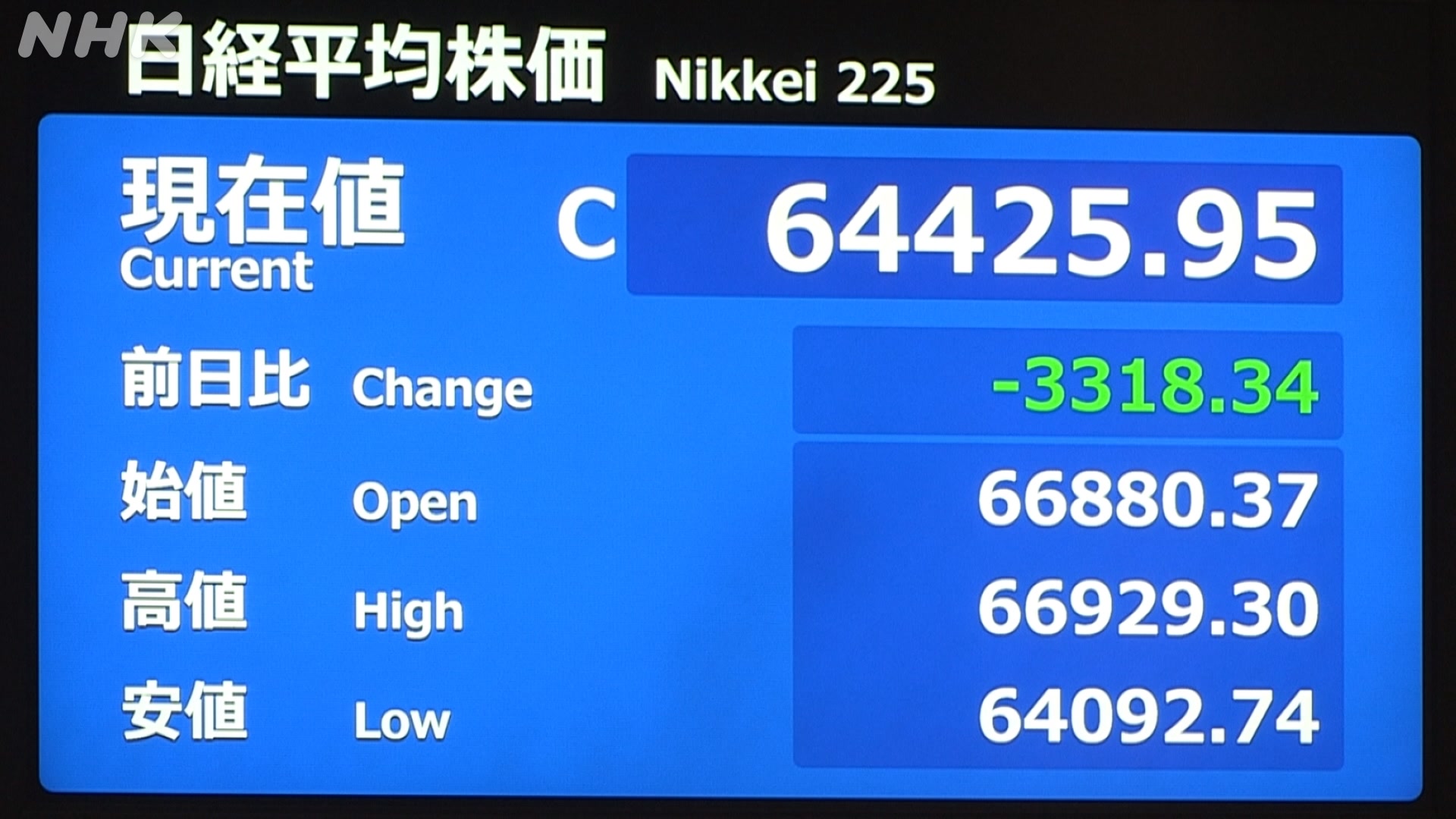
Nikkei 225 posts 3rd-largest point drop | NHK WORLD
1 hour ago
 World
World
Sally Rooney’s characters ask questions. Her politics only has rigid answers.
1 hour ago
 World
World
The Human Advantage Conference 2026: Navigating a complex world through Behavioural Science, AI and Human Intelligence
1 hour ago
 World
World
Raising children amid air alerts and explosions
3 hours ago