
AI Adoption Fuels Hiring, Not Layoffs, New Data Shows

AI Adoption Fuels Hiring, Not Layoffs, New Data Shows
In 1865, English economist William Stanley Jevons observed that improving the efficiency of steam engines increased Britain’s coal consumption instead of reducing it. More efficient engines made coal-powered production cheaper, so more industries adopted it and expanded operations. Over 160 years later, Jevons’ observation, now known as the Jevons paradox, has become one of the most frequently cited frameworks in the debate over artificial intelligence and jobs
Applied to knowledge work, the argument is that when AI lowers the cost of a cognitive task, demand for that task may rise enough to increase the total volume of work performed. Apollo Global Management Chief Economist Torsten Slok made that case directly in an April client note, calling it the “Jevons employment effect.”
“When steam engines made coal more efficient, Britain didn’t burn less coal, it burned more,” Slok wrote. “The same pattern is happening for cheaper legal services, consulting services and financial services.”
OpenAI Chief Economist Aaron Chatterji made a similar point last month.
“When the price of something goes down, if demand is elastic, people might buy more of it,” Chatterji said June 30 at the European Central Bank’s ECB Forum on Central Banking.
Corporate card firm Ramp and workforce analytics firm Revelio Labs found empirical evidence for the hypothesis. They published “A New Look at AI’s Impact on Jobs,” a study of 21,559 firms in the United States from January 2021 through February 2026, linking observed AI spending to workforce records.
The study found that high-intensity adopters, defined as firms spending an average of $33.67 per employee per month on AI in their first three months, grew headcount 10.2% over the two years following adoption. Entry-level headcount grew 12%. Low-intensity adopters, spending an average of $2.78 per employee per month, showed no statistically significant employment change. The gains appeared across engineering, sales, administration, and customer service rather than concentrating in a single function.
Read also: Heavy AI Spenders Are Adding Workers, Not Cutting Them
Companies Spending Most on AI Are Also Hiring Most
The Ramp-Revelio findings carry important caveats, Human Resources Director (HRD) reported July 3. Almost all headcount gains were concentrated among technology-sector firms, and the study covered only white-collar workers. The authors noted correlation rather than causation. Firms that adopted AI heavily were already larger, growing faster and more technically sophisticated before adoption.
“Even when we compare firms that are growing at similar rates, their growth accelerates following AI adoption relative to firms that have not adopted yet,” said Ara Kharazian, lead economist at Ramp and co-author of the study, per the report.
PwC’s 2026 Global AI Jobs Barometer, which analyzed more than 1 billion job advertisements across 27 countries, found a similar pattern at a larger scale. Companies most exposed to AI recorded headcount growth of 52% relative to a 2018 baseline, compared with 36% for the least exposed firms, with wage growth of 24% against 17%. The top 20% of AI-exposed companies achieved average labor productivity growth of 163% over the same period.
PwC described a two-track outcome. “Professionalized” roles, in which AI handles routine tasks while human judgment remains central, are growing twice as fast as roles in which AI primarily simplifies work.
The Data Is Consistent, but the Debate Is Not Settled
The Jevons employment effect is a thesis about long-run dynamics, and the short-run data is mixed. This year, companies announced nearly 102,000 job cuts attributed to AI, with the technology sector accounting for a third of that figure.
A study by Stanford University found that workers ages 22 to 25 in the most AI-exposed occupations experienced a 16% employment decline since the widespread adoption of generative AI, a finding the Federal Reserve Bank of Dallas cited in a January research note.
Dallas Fed economists Tyler Atkinson and Shane Yamco ran their own analysis using Census Bureau survey data and found a smaller but consistent effect. The employment share held by young workers in the most AI-exposed jobs slipped from 16.4% to 15.5% between late 2022 and September 2025, a decline large enough to explain only about 0.1 percentage point of the broader rise in unemployment.
Both studies traced the pattern to slower hiring of new entrants rather than to layoffs.
The Ramp-Revelio study said its 24-month window may be too short to capture longer-run reallocation effects and that its sample skews toward larger, technically sophisticated firms.
Projections from established institutions point in different directions, depending on the time horizon and methodology. What the Ramp, Revelio and PwC data show is that among the firms spending the most on AI, employment is not falling. In the roles where AI is augmenting rather than replacing human judgment, it is rising fastest where the investment is deepest.
For all PYMNTS AI coverage, subscribe to the daily AI Newsletter.
Related Stories
 AI News
UK’s Burnham, Canada’s Carney discuss AI risks, defence cooperation
46 minutes ago
 AI News
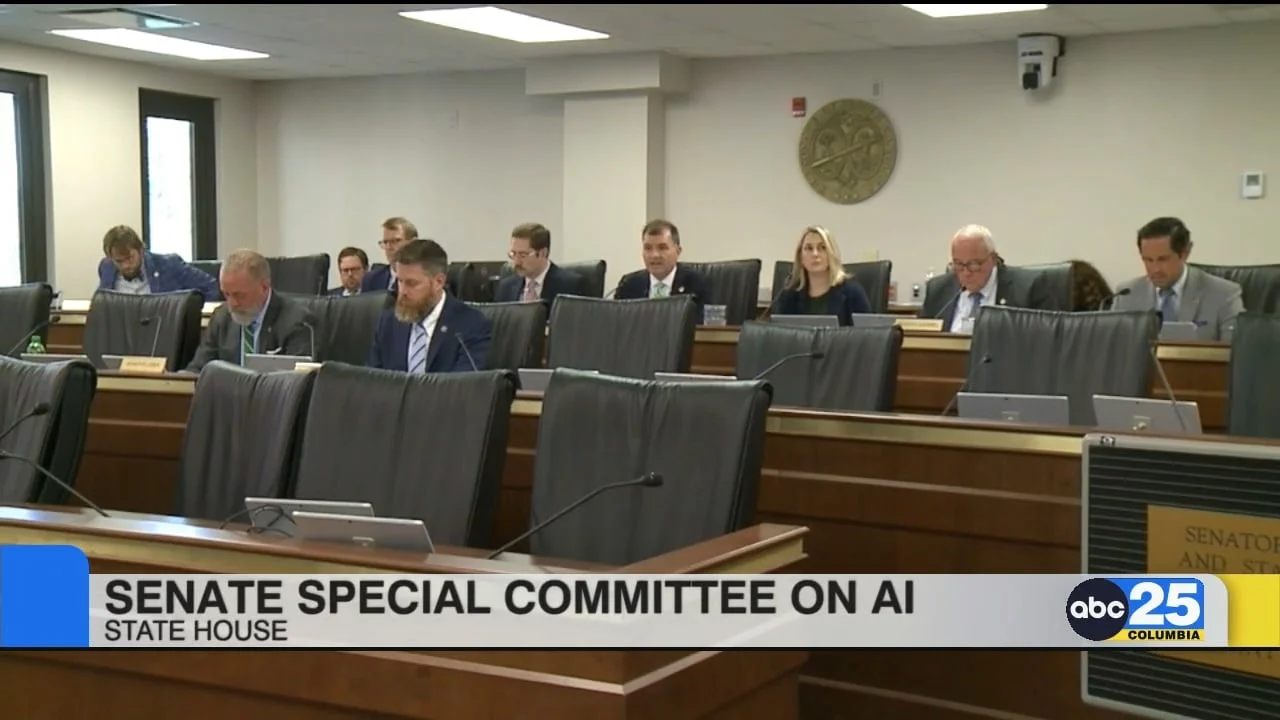
Senate committee holds 1st of many meetings on artificial intelligence
49 minutes ago
 AI News
Allowing AI firms to collude to ‘pace the frontier’ is a dangerous proposition
49 minutes ago
 AI News
OpenAI reveals six new cases of artificial intelligence misbehaviour, vows transparency
49 minutes ago
 AI News
AI Agents Are Changing How Startups Hire and Build Teams | Ukraine news
1 hour ago
 AI News
STONE TEMPLE PILOTS' ERIC KRETZ On Artificial Intelligence: 'I Hate It As An Aid For Songwriting. That's Just Disgusting.
1 hour ago
 AI News
OpenAI reports 6 new instances of 'concerning model behavior' since March
2 hours ago
 AI News
NEW BOOK!
2 hours ago