
AI: Artificial Intelligence Review Part 13: What is Value?
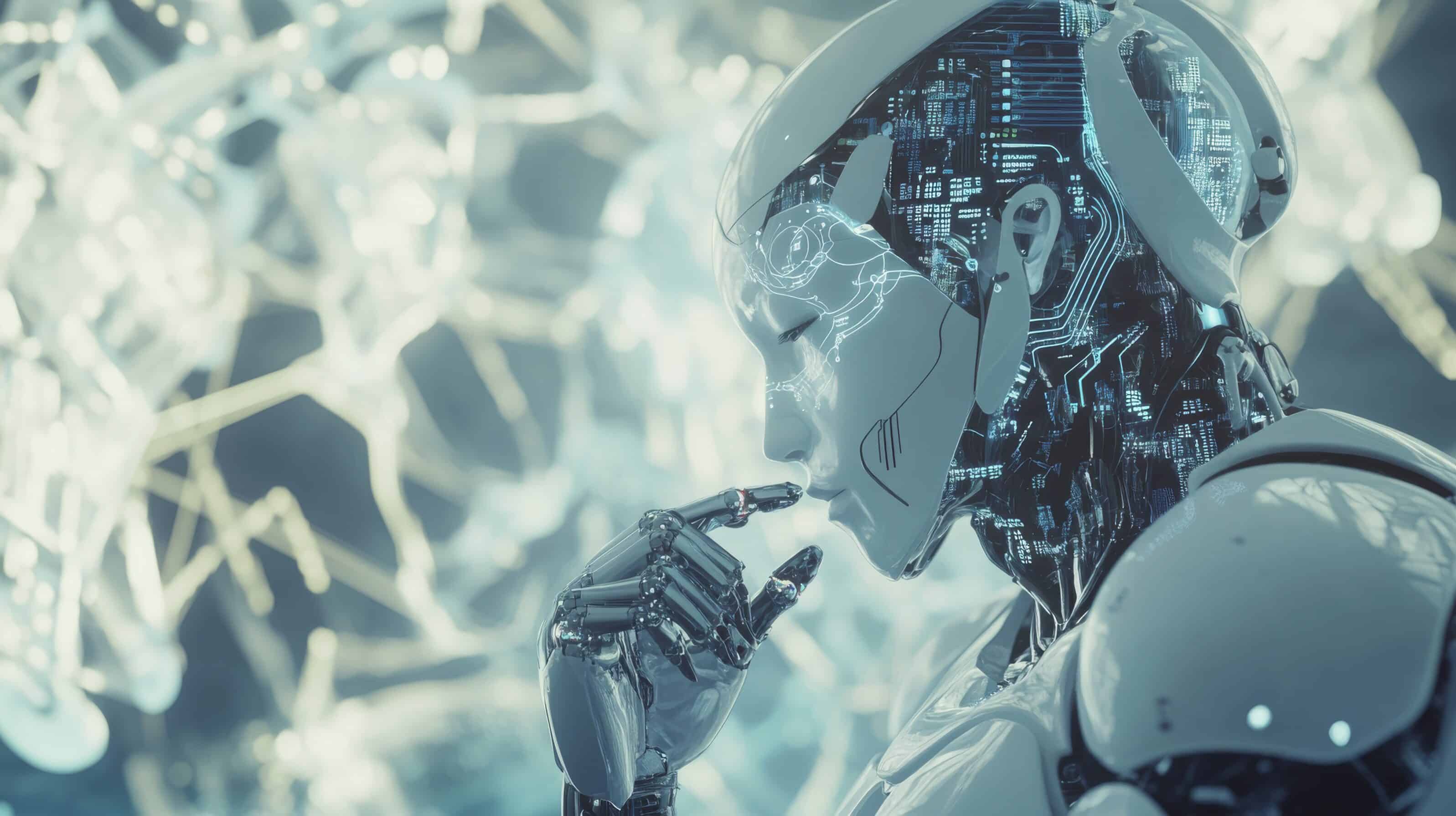
In this last review, I intend to wrap up my refutation of the film and short story’s thesis, “Nobody knows what ‘real’ really means.” I’ve already discussed how the word ‘real’ is being conflated with value, and I also brought up that, whether this was done intentionally or not, the point behind this maneuver was to make the audience believe that ‘real’ meant objective truth rather than realize that the thesis assaults their own value as human beings.
I broke the argument down as follows:
I’ve already dealt with premise A, and that by itself is enough to make the argument collapse, but there are additional issues with premises B and C.
When it comes to premise B, another way to describe the problem would be to say that since no one knows what “real” really means, value has no discernible characteristics. But I’ve already shown that ‘real’ is distinguishable enough as an idea to be identifiable, and that alone gives it a knowable characteristic. The same can be said for value. Why? Because there are discernible levels to value, some things are more valuable than others.
A gold watch is more valuable than a small pile of dirt. Why? I could say that it’s because gold is more expensive, but let’s make it even more simple for argument’s sake. The watch is more valuable because of its function. It tells time. A pile of dirt sits there.
Now, using this criterion, one could argue that value is measured by mere utility. I don’t agree with this obviously, but my point is that, whether this specific claim is false or not, function creates distinctions in value. If function creates distinctions in value, then value cannot be irrelevant or pointless unless one wants to claim that quality of life is pointless or accomplishing any sort of purpose or goal is pointless. And function might not be the only thing that distinguishes one type of value from another.
Let’s say robots were to become sentient, humans would still be the cause of that consciousness. Even when they began to self-replicate, their understanding of the world would still come from humanity. Is the value of a cause different from an effect? I would say the cause is superior to the effect, and the film itself suggests this because the Glitter Bots are determined to find their makers in the pursuit of more knowledge—but there’s no need to go that far.
The point I’m trying to make is that a distinction in value necessarily exists because a cause is going to be distinctly valuable from the effect. The effect may have a value of its own, but that value is dependent on the cause, and that dependence creates a distinction.
And if one were to assume the superiority of the cause, and I do, think about God. If God is real, then, first of all, our value is determined by Him. He gets to say how valuable something is. He gets to say that something is more valuable than something else.
He values us, so we are valuable. And secondly, God is the source of our understanding. Our comprehension of ideas like love and beauty comes from Him. These two things put God on a level above humanity. He is more valuable than humanity.
For the movie’s thesis to work, there must be a total collapse of such distinctions. But even if one is hesitant to attribute a pecking order to value, there are still different kinds of value; that is, the value of two objects may be different because of their relationship to each other—a cause and an effect—and some things are more valuable than others when it comes to accomplishing different purposes—a watch is better for telling time than a pile of dirt.
To ignore these distinctions is to, again, ignore the very human observation and experience the movie requires to validate the Turing Test. So, premise B collapses because it ignores observational data.
Premise C: Objective human value does not exist. I’ve shown that “real” is identifiable and that different values are perceived. When it comes to premise C, I’ll begin by asking a simple question. What is more valuable for the purpose of building society: reaction or reflection?
The movie has made the choice to ignore the inner man in favor of claiming that behavior is synonymous with emotion. In the opening scene, it insists that the professor is building a child that can really feel but then slips in the word “imprinting” during the monologue, suggesting that instinct is synonymous with feeling and, therefore, the robot’s emotions are indistinguishable from a human’s.
But again, experience insists this is not the case. Saying, “I love you,” with a gun to one’s head is coercion because the will is removed, choice is removed. That lack of choice invalidates the emotion. Choice is a necessary component of love, but even someone trapped in an arranged marriage might find themselves in a circumstance where they can love their partner later, whereas David will never experience this choice without breaking his programming first.
In effect, he must learn to unlove before he can truly learn to love the right way. That would’ve made for a more interesting movie. This imprinting also undermines David’s ability to make goals. The professor is impressed that David took on a goal by himself, but the entire process was started by a program. David is no different than a robot playing chess, adapting its strategy under a set of pre-established rules.
And the film continues its nasty habit of conflating terms. Obsession becomes love. Apathy to others becomes a form of affection for the mother. Even territorial violence, when David destroys his copy, becomes equivocated with both his love for his mother and his desire to be unique.
This desire to be unique presents another problem. Many people desire to fit in so they can acquire love, or what they perceive to be love, at any rate. So, why is David’s desire to be unique equivocated with his emerging consciousness? What if that’s hubris? Is hubris required for consciousness?
And speaking of hubris, one could argue that humans have multiple programs inside them. I won’t say these multiple programs are required, but the human, the real man, is torn between his desire to do good and his desire to do what he wants, even if it is evil. How does a robot with multiple programs exist inside itself? How does it choose? How does a human create that, and if he or she could, would that not just be another programming?
None of this is addressed because David is never tempted, which is why the Pinocchio analogy fails. Pinocchio must learn to do right, but David is always right because the audience is supposed to feel sorry for him. I believe Spielberg does this to make David seem more human, but the lack of temptation, that lack of questioning his own resolve, is what makes him a robot. He never reflects, only reacts.
And this is another unique component of humanity: reflection, the ability to ask abstract questions like, “Was I right to do this?” or “What makes that bird beautiful?” Notice the concepts in these questions: right, beautiful. A human comprehends them and debates them without always knowing their precise meaning, whereas a robot requires a definition.
David may see and understand the box, but he can’t ask what box means beyond its physical shape. Society isn’t built by mere reaction. Ducks do not debate the existence of God, nor do they build skyscrapers, nor do they gather in the middle of the pond to pray.
Society is built by debate, competition, love, self-denial, and all of these require conflict that goes beyond ripping a robot’s head off because one believes that his mother must only love him. This conflict requires reflection and many times creates an agreement based on the acceptance of a truth, not coercion. So, not only does human value exist; it is unique, special.
The statement “Nobody knows what ‘real’ really means” fails to suggest anything meaningful because it denies reality itself. It ignores the concept of God. It ignores the notion that God Himself might give His creatures value by the simple fact that He made them. It ignores the relevance of beauty and right and wrong, but humans do not live that way, so how can a robot mimic a human without not only failing to understand these things but also without being able to ask what they really are?
In the film, every emotion, every reaction, collapses into want. “I want my mother to love me” becomes obsession because David doesn’t know what love is and can’t even ask the question. David is incapable of asking, “Why don’t I love Henry too?” because his emotion is simply imprinting.
But ultimately to say “Nobody knows what ‘real’ really means,” is to limit oneself to the physical and, in the end, to deny even that as worthless because one’s very senses could be wrong. But there are objective truths. A man can say green is blue, but if everyone around him maintains that blue is blue, then to deny that is to deny definitions themselves, to deny any sort of order altogether.
Finally, the saying tries to refute the value of the inner life, one’s own thoughts, the ability to not just choose in a reactive sense but to reflect, then make a choice. As Descartes said, “I think, therefore, I am.”
Related Stories
 AI News
Jonathan Edwards Winery announces summer concert lineup
18 minutes ago
 AI News
The hidden cost of becoming AI
19 minutes ago
 AI News
SoFi deepens AI
20 minutes ago
 AI News
Keeping teens safe in a world with artificial intelligence
20 minutes ago
 AI News
Oracle Admits Artificial Intelligence Has Cost 21,000 Jobs
20 minutes ago
 AI News
World Cup 2026: England v Ghana
43 minutes ago
 AI News
Forty drown across France in heatwave and parts of Spain above 30C at night
44 minutes ago
 AI News
The Latest: Pentagon asks Congress for roughly $80 billion to cover cost of Iran war
44 minutes ago