
AI degree programs are popping up across North America. Here's where Atlantic Canada stands

AI degree programs are popping up across North America. Here's where Atlantic Canada stands
UNB, Dalhousie launching new programs in next two years
Joel Blit was two-thirds of the way through teaching an economics course when his students started posing non-stop questions about artificial intelligence.
Finally, Blit asked the class at the University of Waterloo if he should throw out the rest of the course and just focus on AI.
“They said yes, please, please do,” said Blit, who is also the co-founder of the Canadian AI Adoption Initiative.
He thinks that his students being interested in AI is a sign of the times. They can sense how deeply AI will transform the economy— hundreds of new jobs and billions of dollars — and they don’t want to be left behind.
Not many universities are preparing students for that future, Blit said. Few schools offer opportunities to earn an AI degree, or programs that teach people not just how to use the technology, but also how to create and apply it.
But some schools in Atlantic Canada, such as the University of New Brunswick and Dalhousie University, are quietly building new programs that will give them a competitive edge as Canada rolls out its AI strategy over the next five years.
UNB Saint John will launch a bachelor of data science degree in September 2027, according to a spokesperson. And Dalhousie University will launch a major in AI under the computer science umbrella within the next two years, according to Frank Rudzicz, a computer science professor and Canada Institute for Advanced Research chair in AI.
Canada’s AI strategy projects more than 250,000 new AI-relevant jobs will be created across the economy by 2031.
‘We don't want to lose the opportunity to people moving west’
When it comes to AI degree programs, the United States is far ahead of Canada.
Its first AI university degree appeared in Pittsburgh in 2018, according to The New York Times, and by 2021, five schools offered AI majors. Today, the U.S. has an AI research ecosystem spread out across 29 institutions, plus countless degree offerings.
Canada has options, though. For example, Western University has a new artificial intelligence systems engineering program, Trent University now offers an AI degree and, in 2025, Ontario Tech University launched a School of Artificial Intelligence.
New degree options to study AI coming to Atlantic Canada
In Atlantic Canada, Memorial University of Newfoundland has offered a master’s degree in AI since 2022. This fall, Holland College on Prince Edward Island is launching a new artificial intelligence and data analytics post-graduate certificate. New Brunswick Community College will also offer self-paced courses and an AI microcredential through its professional and part-time learning school, a spokesperson told CBC News.
UNB’s new bachelor of data science degree has been in the works for a few years, according to the university's math department head Connie Stewart, who has been heavily involved in the program’s development.
But AI won’t be a concentration or a major at the start.
“That is definitely something that we are interested in adding,” Stewart said.
It means Dalhousie will be the first in the region where students can major in AI.
“There's a lot of opportunity for us to differentiate ourselves and get ahead of the curve here, not just in Nova Scotia, but across the four provinces,” Rudzicz said.
Other regions in Canada already have the research infrastructure to woo prospective students. The country’s three AI research institutes include Amii in Edmonton, Mila in Montreal and the Vector Institute in Toronto. Vancouver is quickly becoming another AI research hub.
Rudzicz is also Atlantic Canada’s only AI research chair, but there are 137 across the country.
“I feel a strong urge for the Atlantic region to be competitive with the rest of Canada," he said. "Our unique needs in Atlantic Canada, from ocean industries to defence, and our unique agriculture — we don't want to lose the opportunity to people moving west.”
The federal government’s AI strategy promises to increase the number of Canada Institute for Advanced Research AI chairs to nearly 200. The organization told CBC News that it would know more in the fall about whether any of the new AI research chairs will be from Atlantic Canada.
AI 'gone awry' made up case law, a Manitoba court says. Justice experts say it highlights a lack of access
Can Mark Carney get Canadians to trust AI?
Designing the new major was a balancing act, Rudzicz said. On one hand, Dalhousie wants to prepare students for AI technology as it exists now and is likely to exist in the near future. On the other, Rudzicz said students need to know the basic math and principles behind AI so they can adapt to future technologies.
Blit, who is preparing to teach a course this fall on how AI will impact the job market, said Canada can’t leave any region behind in the AI era. He said universities have to act intentionally, but quickly.
“If universities don't move themselves, what's going to happen is you're going to get competitors from outside coming in, starting to offer what students need, and over time you're going to see that universities will become irrelevant,” he said.
The only way for Canada to avoid creating new inequalities as it adopts AI, Blit said, is for everyone to have equal access to it.
“AI has the potential to tremendously empower people,” he said. “We can't afford to have a fraction of our society being left behind.”
Raechel Huizinga is a reporter based in Moncton, N.B. You can reach her at raechel.huizinga@cbc.ca.
Related Stories
 AI News
UTA uses AI to advance precision medicine
1 minute ago
 AI News
Rebellions, Nvidia discuss tie
1 minute ago
 AI News
Instagram Looks to Limit AI
1 hour ago
 AI News
OpenAI Notches $1 Billion Ad Milestone
1 hour ago
 AI News
Build observable enterprise agentic retrieval using Managed Amazon Bedrock Knowledge Base with AWS CloudFormation
1 hour ago
 AI News
Opinion: AI's Potential Is Clear. Now We Must Define Where It Belongs
1 hour ago
 AI News
Cities Are Using AI to Speed Up Housing Project Permitting
2 hours ago
 AI News
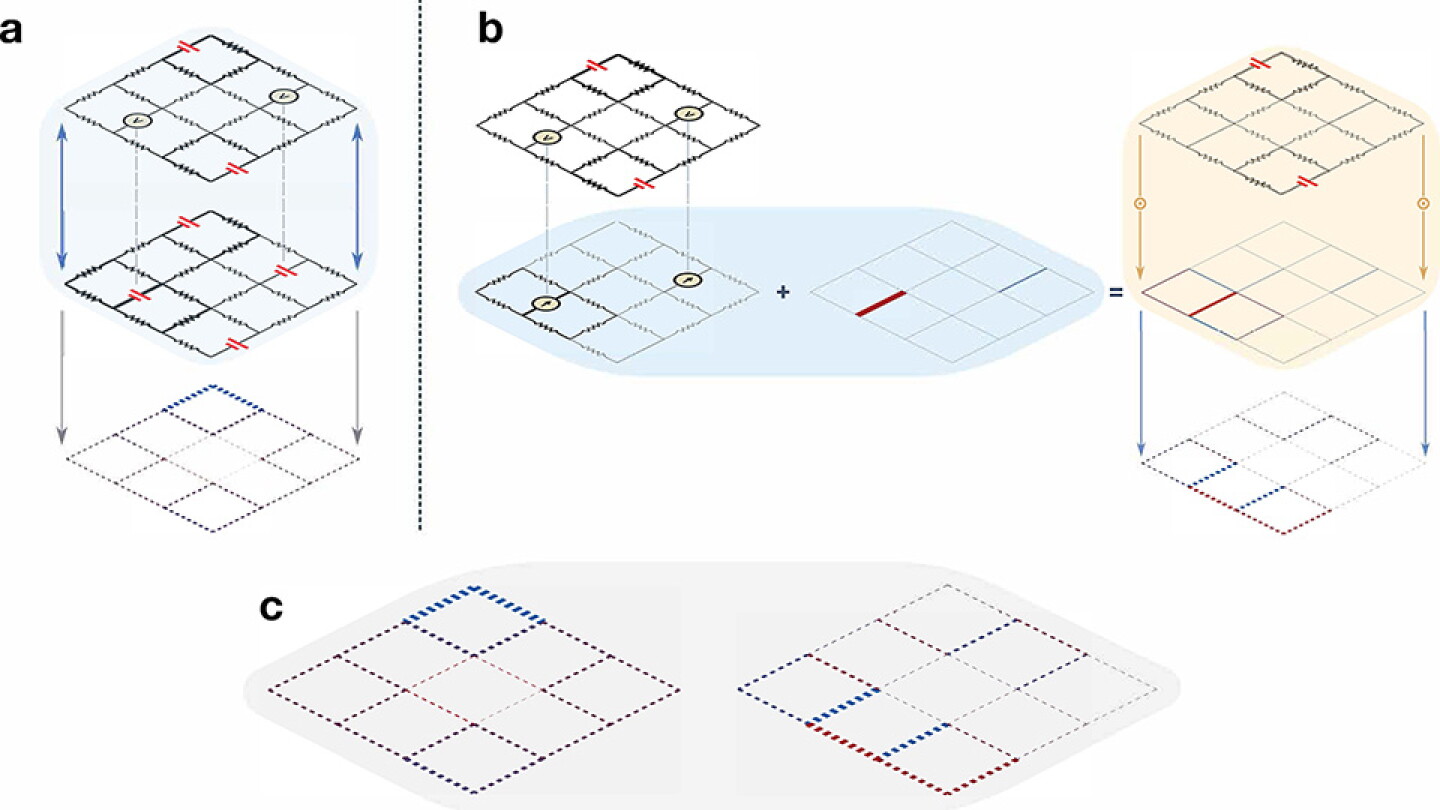
Algorithm optimizes machine learning techniques that use linear, tunable resistor networks
2 hours ago