
AI Just Got Its First 24/7 TV Channel
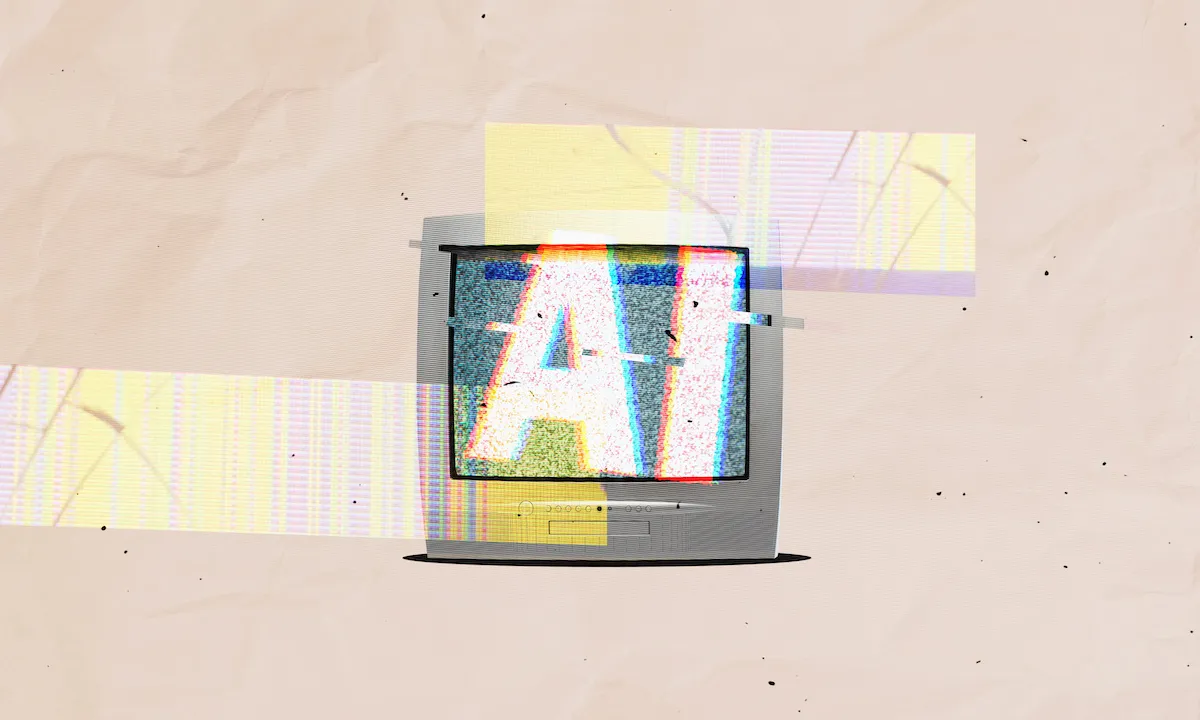
AI Just Got Its First 24/7 TV Channel
Fairground AI Creator TV is a channel that runs entirely artificial intelligence (AI)-generated video 24 hours a day, seven days a week, interrupted only by AI-generated commercials. That makes it the first free ad-supported streaming television (FAST) channel built exclusively from AI content, Fairground Entertainment said in a July 30 announcement. The channel launched this month on The Roku Channel’s live guide, one of more than five connected TV and FAST platforms carrying it, according to Variety. Fairground Entertainment has raised $4 million led by Viant Technology and is run by Colin Petrie-Norris, the former CEO of Xumo, one of the original FAST platforms, who left that role to move into synthetic media.
The channel pulls programming from more than 100 AI creators worldwide, with the lineup programmed by Petrie-Norris and his team in the vein of a traditional TV schedule, including programs slotted into primetime blocks and specials timed to events like Halloween, Variety reported. Named contributors include Kelly Boesch, a Los Angeles-based AI visual artist with roughly 4 million social media followers who delivered a TED Talk on AI and creativity in April, along with Kavan the Kid’s Phantom X Studio, filmmaker Ryan Phillips, Wonder Studios and Massive Studios, the company’s announcement said. The programming, rated TV-14, spans science fiction, drama, animation, true crime and comedy, alongside AI-generated adaptations of public-domain properties including Dracula and Robin Hood.
The Reviews Are Brutal, but the Math Still Works
Early reviews are rough. Boing Boing described a medieval drama with “laggy physics that makes it look like it takes place on the Moon,” dialogue delivered “with the cadence and awkward pauses of a mid-2000s video game cutscene,” and characters who never blink when they talk. Futurism called the channel an “AI slop channel” broadcasting “abominations” around the clock. Fairground, in contrast, markets its output as “premium” television rather than addressing the quality gap critics describe.
That disagreement over quality may be beside the point for how the channel actually makes money. A FAST channel’s economics do not depend on any single piece of content becoming a hit. They depend on filling enough hours with content cheap enough to produce that even modest ad rates against a large volume of inventory turn a profit, a model that rewards volume over any individual show’s quality in a way traditional television licensing never did. AI production removes almost all of the the marginal cost of adding another hour of programming, because generating a new episode does not require hiring a cast, renting a set or paying a production crew the way conventional television does.
Distribution Matters More Than the Content Does
What makes Fairground’s launch notable is not the content itself but where it landed. Roku reaches more than 100 million global streaming households. Meanwhile, Fox Corporation agreed in June to acquire Roku for $22 billion in enterprise value, the companies said in a joint statement. Getting a channel onto Roku’s live guide puts AI-generated video in front of a connected-TV audience at a scale no social platform algorithm can replicate on its own.
That distribution test is happening at a moment when the entertainment industry is already contending with AI on multiple fronts.
Toy maker Hasbro announced on June 3 that it would build AI-powered versions of its own characters through a new studio called Sixth Wall, citing the unauthorized AI use of its intellectual property elsewhere as the reason.
A fully AI-generated film, “Dreams of Violets,” premiered at the Tribeca Festival on June 10, the first time a major film festival accepted a full-length, live-action feature made entirely with AI into its official lineup. Whether Fairground’s specific improves enough to hold an audience is a separate question. The bigger one is whether AI content, cheap enough to produce and distributed widely enough, can fill the enormous volume of ad-supported television inventory that traditional production was never able to scale to meet.
For all PYMNTS AI and digital transformation coverage, subscribe to the daily AI and Digital Transformation Newsletters.
Related Stories
 AI News
Bill Gross bets AI can help mass
2 days ago
 AI News
Nigeria records 93% rise in AI micro
2 days ago
 AI News
The Italian gelato maker using AI to invent new flavours
2 days ago
 AI News
Closing the Gap Between Agentic CX Pilots and Production
2 days ago
 AI News
New Brunswick data centre debate highlights cross
2 days ago
 AI News
How to Structure an AI Agent Referral Fee Agreement Between Startups
2 days ago
 AI News
No, AI didn’t delete a Swedish reality TV series
2 days ago
 AI News
There is no AI in Armageddon. Artificial intelligence is a tool, not an apocalypse
2 days ago