
AI power efficiency the target of Lotus Microsystems energy advances
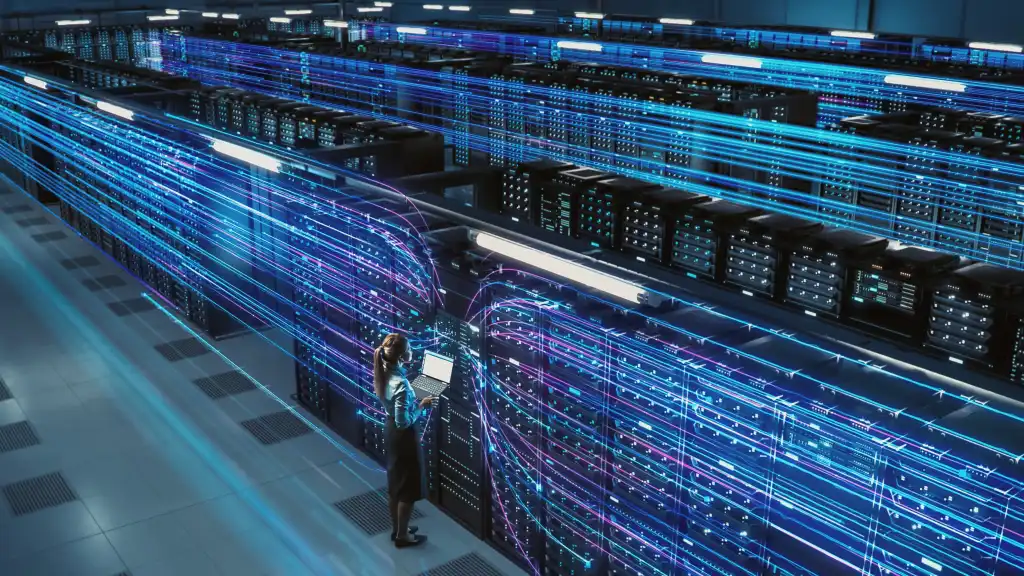
Lotus vStrata power-delivery architecture aimed at improving data center power efficiency,
Lotus Microsystems has introduced vStrata, a new power-delivery architecture aimed at Improving data center power efficiency, a pressing concern even in a non-AI environment.
At the heart of the platform is the company’s proprietary Power Interposer Technology (PIT), a silicon-based interposer architecture that enables power conversion and delivery closer to the processor package. The PIT uses a vertical power delivery (VPD) chip and package designed to deliver electrical power directly through the package stack to the processor.
By shortening current paths and integrating thermal management directly into the power-delivery structure, vStrata aims to reduce conversion losses while improving cooling efficiency.
According to Lotus Microsystems, the module can achieve point-of-load efficiencies of up to 96% while reducing power-conversion losses by more than 50% compared with conventional approaches.
“We focus very much on a topology technology that is more efficient, so it basically means that for the amount of power that you put into the power converter, you get more power out, and you have less power losses,” said Hans Hasselby-Andersen, CEO of Lotus.
“Another unique thing about our solution is where we utilize our silicon substrate technology to effectively remove the heat from the solution, so where others are focusing on the power side of power delivery, we also handle the thermal issues related to power conversion,” he added.
No power converter is 100% efficient, usually about 90% efficient. Lotus’s PID is 96% efficient, making for a 60% reduction in power loss. With banks of power consuming GPUs, that adds up, so much so data centers could potentially stick with air cooling rather than be forced to use liquid cooling.
“There’s no doubt that if you deploy this technology across the board, you would definitely be able to reduce the energy that you put into cooling data centers, and not only energy, but issues with water consumption,” said Hasselby-Andersen.
Lotus Microsystems states that vStrata maintains compatibility with existing power-management controllers and reference designs, potentially easing adoption among semiconductor and system vendors.
vStrata comes in the form of power supplies, and Lotus is working with major server vendors and hyperscalers, but the new power supplies are not suitable for retrofitting into existing server racks. “There’s no industry standard [for server power supplies], so there’s no default footprint you can live up to,” said Hasselby-Andersen.
Engineering samples of the LSC0580 – the first vStrata platform module – are scheduled to ship in Q3 2026.
Related Stories
 AI News
Can Artificial Intelligence Help Prevent Double Land Sales in Ghana?
54 minutes ago
 AI News
Delay the deployment of Artificial Intelligence | Opinion letters
54 minutes ago
 AI News
Artificial intelligence answers: what is the expected result of the Liverpool v Manchester City match?
1 hour ago
 AI News
Korea’s SK Square backs Japanese physical AI startup Mujin to expand into robotics
1 hour ago
 AI News
Artificial intelligence answers: what is the expected result of the Al Ahly and Zamalek summit?
2 hours ago
 AI News
Artificial intelligence answers: what is the expected result of the Al Ahly v Zamalek summit?
2 hours ago
 AI News
We saw ‘Artificial’ before everyone else, and now we know why Hollywood tried to bury it
2 hours ago
 AI News
AI surveillance startup Flock to cut several hundred jobs amid backlash, sources say
4 hours ago