
AI services to agentic AI: Nekko is building its next growth engine for business process transformation
The AI-as-a-service (AIaaS) market is growing rapidly. Valued at $16.08 billion in 2024, it is expected to reach $105.04 billion by 2030, according to Grand View Research. This massive upswing reflects the surging demand for businesses that can help organisations adopt and deploy AI in practical ways.
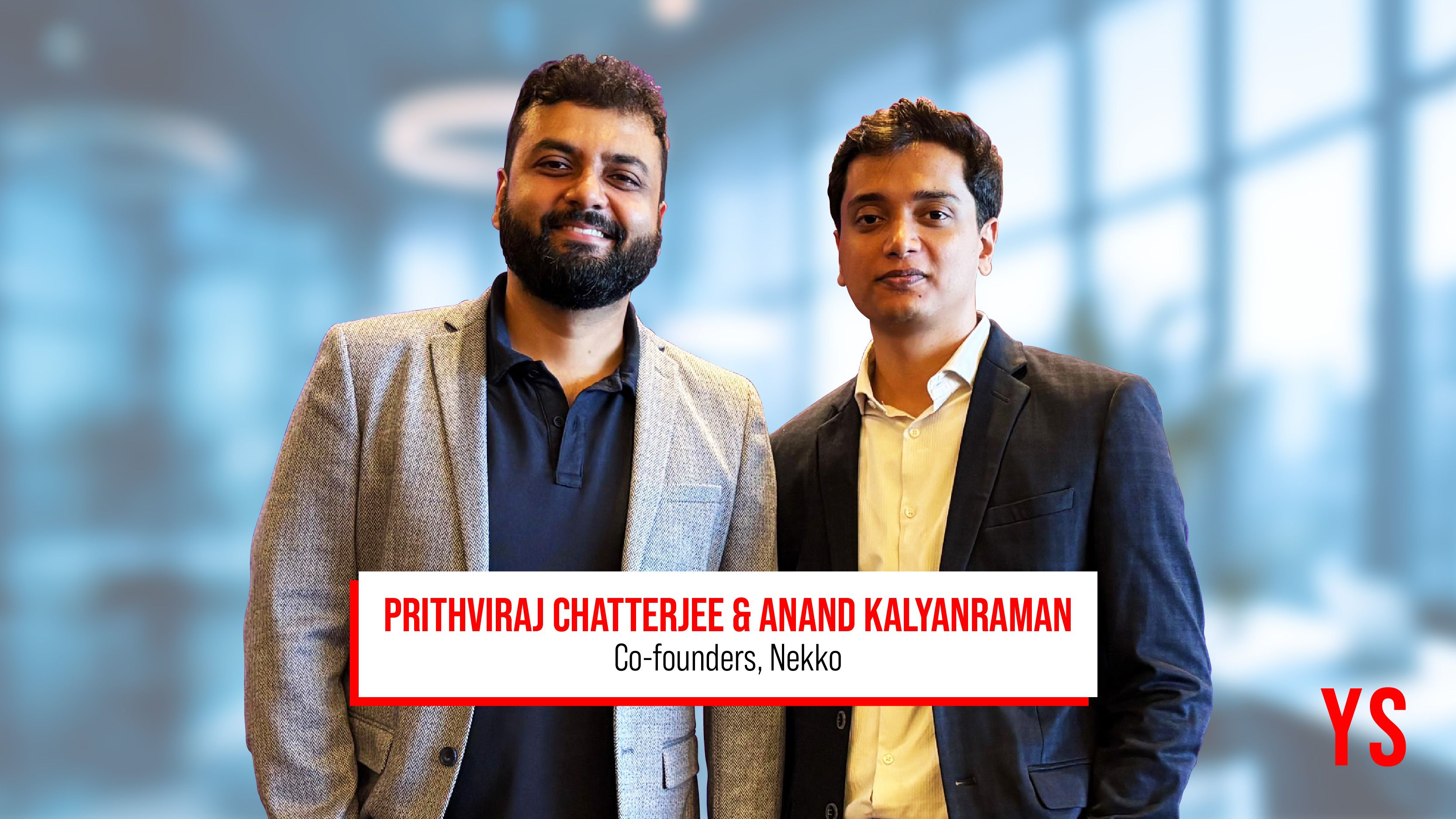
Among the startups riding this wave is Bengaluru-based Nekko. Its founders, Anand Kalyanraman and Prithviraj Chatterjee, first met during a challenging sales call while working at AI debt collection platform Skit.
“I was surprised to hear a Tamilian speak fluent Bengali on the call,” recalls Chatterjee.
The duo stayed in touch even after moving to different organisations. A few years later, they found themselves working together again, this time on the sales team of another startup. It was there that the idea for AIaaS startup Nekko took shape.
“We noticed that a lot of companies were looking for AI services rather than AI products, primarily because of the [level of] customisation required,” says Kalyanraman. “That trend is now being validated by the market, with companies like OpenAI and Anthropic launching AI services offerings of their own.”
Nekko operates from Bengaluru, with delivery operations in Hyderabad and a sales office in Kuala Lumpur. The 10-member company is led by Kalyanraman as CEO and Chatterjee as COO. The name of the startup comes from a Japanese word that means ‘root of a plant’ or ‘origin’, a reference to a strong foundation.
Reimagining business processes with AI
Nekko positions itself as an AI and machine learning services company focused on business process transformation rather than traditional digital transformation.
Kalyanraman explains that digital transformation has often meant converting paper-based workflows into digital workflows without questioning whether the underlying process itself should change.
“Our approach is to rethink and rebuild processes using AI, especially agentic process automation,” he says. “We see it as the next step beyond traditional robotic process automation because it can handle a wider range of real-world workflows.”
Alongside its services business, Nekko has also developed a computer vision platform aimed at industries such as manufacturing and retail, where safety, compliance, and operational visibility have become increasingly important.
“Think of our vision system as adding a brain to security cameras. The camera records, while the vision system analyses if all compliances, for products and personnel, are maintained,” Chatterjee says.
In a retail setting, for example, a dessert chain may want staff to offer complimentary tasting cups to customers and replace display products every four hours. Nekko’s system can monitor whether these activities are taking place consistently, and provide near real-time insights through dashboards and reports.
“The idea is not to penalise anybody but to build a culture of safety and compliance. Ultimately, it’s for their own good,” says Kalyanraman.
The AI models powering the computer vision platform are customised for each client. In many cases, Nekko develops proprietary models rather than relying on publicly available datasets.
“Certain companies handle highly sensitive information. We can’t use publicly available data to build the AI models,” he says. “There are RBI regulations that we have to comply with. For such clients, we create proprietary models. Where sensitivities are lower, we may use wrappers.”
According to the company, the average deployment ticket size for its computer vision platform is around $30,000.
What began as a service is now being turned into a product.
Nekko also has developed TensAI, an agentic AI framework designed to orchestrate multiple specialised agents for workflows such as request-for-quotation processing, visa handling, and customer support. The framework integrates with CRM platforms and enterprise systems.
The startup is developing physical kiosks powered by TensAI, designed to deliver more personalised recommendations based on user behaviour.
"The easiest comparison is McDonald's kiosk," says Chatterjee. “The difference is that our kiosks learn from past behaviour and contextual signals to proactively recommend what a user is likely to want next.”
The kiosks have been deployed in India, and Nekko plans to expand them into Malaysia and North America.
So far, Nekko has worked with around 50 clients. Its customer base includes Cholamandalam Investment and Finance Company, Lissomsoft, and Medstrat Innovations.
Atanu Halder, owner of The Bengal Hotel and Nekko’s customer, states that Nekko’s technology has completely revolutionised how his business connects with its guests.
“Since we incorporated Nekko’s services, our direct booking conversions have significantly increased, leading to a surge in sales. It didn’t just upgrade our digital presence; it transformed our bottom line,” says Halder.
Within a year of launching, Nekko entered the Malaysian market. The founders say they are now open to expanding to wherever opportunities emerge.
“We are a startup. We are hungry for leads,” says Chatterjee. “If we find customers in Antarctica, we will expand there. Both of us come from sales backgrounds, so we have access to market insights through our network. Wherever the market grows, you will find us there.”
While India remains the company's largest market, the founders wish to tap into opportunities in other markets too.
They say overseas customers are willing to engage with younger companies like theirs. The Malaysian market, for instance, gave the AIaaS startup an early opportunity to prove itself.
Nekko operates in a competitive landscape that includes startups like Mindsprint and Quantiphi. Kalyanraman believes the startup’s deep investment in R&D gives it a distinct advantage.
“We’ve evolved from being purely a services company into one that is building products informed by those services,” he says. “We understand product-market fit because we're solving problems that customers are actively paying us to address. That's a powerful advantage.”
In FY26, Nekko reported an annual revenue of about $200,000. This year, it aims to increase that figure fivefold.
To get to the $1 million mark, the founders plan to double down on their two big bets: agentic automation through the TensAI framework, and computer vision systems.
A major part of this strategy involves expanding TensAI kiosks across Malaysia, Southeast Asia, and eventually North America, after raising capital.
“We aim to invest heavily in R&D, allocating roughly 30% of our revenue towards it,” says Kalyanraman. “The goal is to keep refining our frameworks, strengthening our products, and building reusable intellectual property from recurring client problems.”
Related Stories
 AI News
Omega Seiki Mobility Partners with Electra AI for Battery Health Intelligence
14 minutes ago
 AI News
Artificial intelligence in action: how AI agents are transforming businesses, public administrations and strategic sectors
14 minutes ago
 AI News
Alibaba’s US$10 billion share sale three times oversubscribed in Hong Kong
1 hour ago
 AI News
Workers in China worry over being replaced with AI: ‘Everyone else is using it’
1 hour ago
 AI News
Why feed companies must rethink how they use AI
1 hour ago
 AI News
Majority of European businesses now use AI, but startups signal early warning on scaling challenges
1 hour ago
 AI News
Introducing Claude for Small Business
1 hour ago
 AI News
'Don't ask me to print your ChatGPT birthday card': Hitting back at AI 'slop'
2 hours ago