
AIS: A Primer On The VistaShares Artificial Intelligence Supercycle ETF (NYSEARCA:AIS)
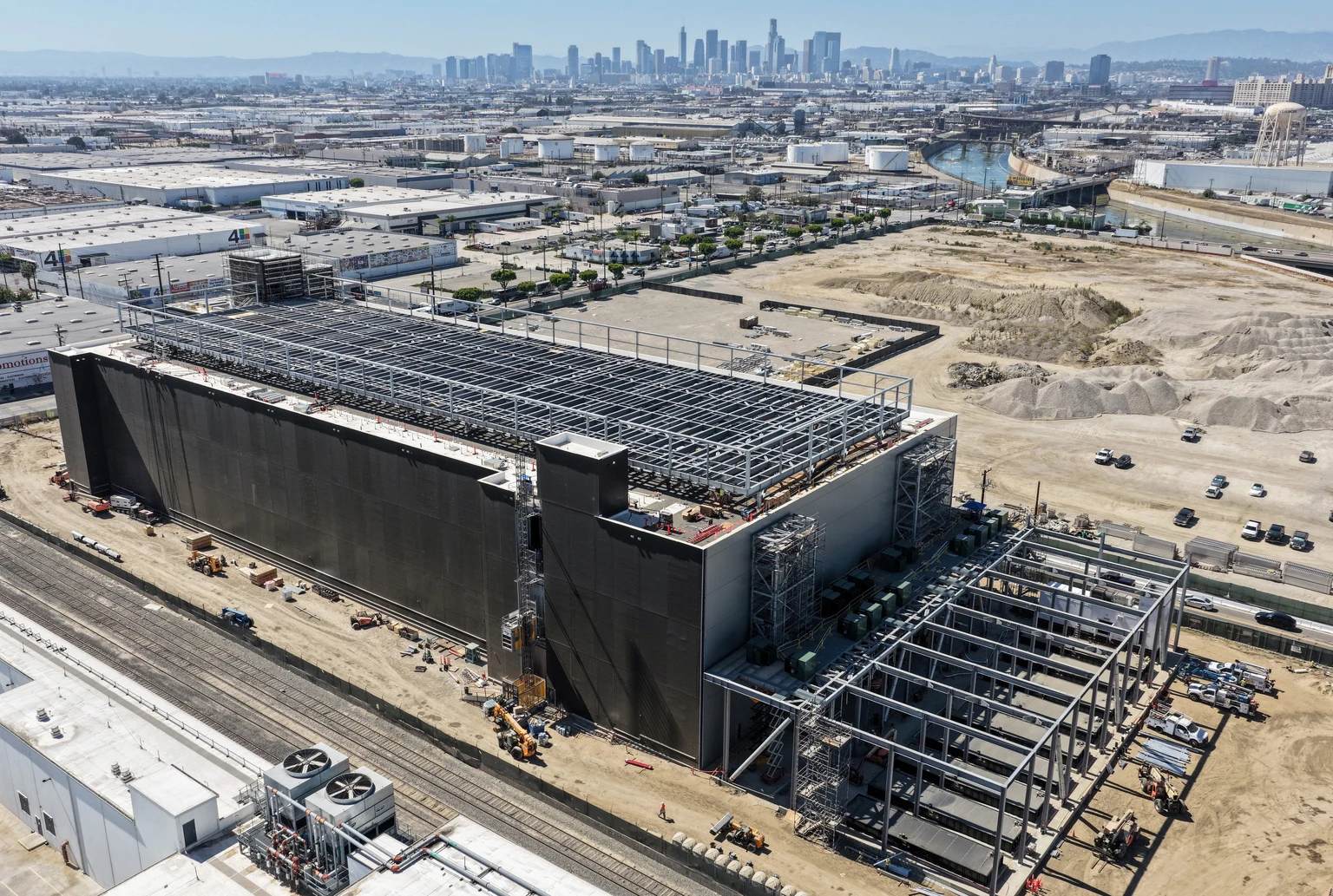
The VistaShares Artificial Intelligence Supercycle ETF targets AI infrastructure suppliers, weighting holdings by supply chain importance. Memory makers currently dominate.
AIS is actively managed and can deviate from its index. It excludes hyperscalers, resulting in concentrated exposure to semiconductors and hardware. 40% is allocated to international stocks.
Performance has been exceptional since launch, driven by memory stocks, but volatility is high, and the track record is limited to an AI capex boom.
AIS is best suited for investors seeking targeted AI supply chain exposure, but risks include capex slowdowns, lack of diversification, and sensitivity to memory pricing cycles.
The VistaShares Artificial Intelligence Supercycle ETF (AIS) is a portfolio of companies on the supply side of the AI buildout. It includes memory chips, power systems, cooling, and networking hardware but excludes the hyperscalers.
This overview covers AIS’s strategy and holdings, portfolio fit, performance history, and peers.
AIS is built around an index and is actively managed. That’s fairly uncommon. It’s based on the BITA VistaShares Artificial Intelligence Supercycle Index. BITA screens for companies with 50%+ of revenue from chips, data center hardware, or AI-enabled applications. To be eligible, they also need a minimum $200M market cap and $300K+ in daily trading.
BITA then splits the supply chain into segments (GPUs, memory, cooling, etc.) and gives each a proprietary weight based on its “importance.” Companies are assigned to whichever segment generates most of their qualifying revenue. Each is then weighted by the share of that segment’s sales. A company can’t exceed its own segment’s slice, which is why NVIDIA Corporation (NVDA) is only ~3% even though it supplies most of the market’s GPUs. The index also caps any company at 4.5% when it rebalances in June and December.
The ETF isn’t bound by the same caps. The managers can freely adjust when and however they see fit. Up to 20% of assets can be allocated outside the index (cash, emerging opportunities, etc.).
AIS launched in December 2024 and has $800M+ in assets. The expense ratio is 0.75%.
What’s in the Portfolio of the VistaShares Artificial Intelligence Supercycle ETF?
The top ten of its ~60-70 positions currently make up ~43%:
Semiconductors and semiconductor equipment dominate. The biggest piece within that is memory: SK hynix Inc. (SKHY) and Micron Technology, Inc. (MU) together are ~15% after their recent run. Further down the list, Samsung Electronics Co., Ltd. (SSNLF) and Sandisk Corporation (SNDK) add even more exposure.
The next graphic shows the industry breakdown – it’s mostly technology with the rest in industrials.
About 40% of assets are in companies outside the U.S. Much is held as foreign ordinary shares. Several have no U.S. listing at all, so buying them directly would require a brokerage that handles foreign markets. (An ETF simplifies this.) For AIS, this comes with currency exposure – it doesn’t hedge, meaning exchange rates affect returns.
How Might AIS Fit In Your Portfolio?
Know what you already own before adding a thematic or otherwise concentrated fund. AIS excludes the hyperscalers because of where they earn the bulk of their revenue. That leaves the suppliers. NVIDIA, Micron, and Broadcom Inc. (AVGO) are already major S&P 500 (SPY) and (QQQ) constituents. Semiconductor funds like the VanEck Semiconductor ETF (SMH) and iShares Semiconductor ETF (SOXX) duplicate even more of AIS’s portfolio.
AIS has never paid a distribution, and its 30-day SEC yield is negative. A taxable brokerage account will work about as well as an IRA. Position size is more important: this is a bet on a single theme, and the fund holds multiple holdings from the same industries. Investors might also think about where they can best tolerate volatility.
How Has AIS Performed Since Inception?
AIS returned ~58% in its first calendar year and is up another ~70% in 2026. Two positions produced outsized gains: SK hynix and Micron (up roughly 550% and ~650%, respectively, TTM) have surged on demand for high-bandwidth chips. But AIS dropped from a June peak of ~$89 to under $60 in July as memory stocks sold off. More than a third of the year’s gain evaporated in six weeks. It has since recovered a bit.
The ETF trailed its index in 2025 by a few percentage points. The expense ratio explains some of that, and the managers’ deviations account for the rest. One-year tracking error is 7.2%, which is high for a fund that starts with a replication strategy.
Most important for assessing performance: AIS’s short record is all during an AI infrastructure boom. The theme was already well established at launch. What the managers did differently was weight memory and power equipment above the mega-caps. Whether that was insight or timing won’t be clear until AIS trades through a downcycle.
How Might AIS Perform in Different Markets?
Performance (in the current iteration) will continue to correlate with hyperscaler spending. Flat or rising capex will generally be good and cuts bad. Since data centers are built with borrowed money, credit costs feed into those decisions. I.e., falling rates are good, rising rates are bad.
The segments within have their own quirks. Memory pricing has been especially volatile, and adding fabrication capacity takes years. The stocks trade as much (or more) on future price expectations as they do for current results. Samsung and SK hynix both fell 20%+ from their highs this summer even as they reported record profit. Power and cooling companies are different – they work through long backlogs, so shifts in AI spending might have a delayed effect.
A broad capex slowdown would hurt AIS more than a diversified tech fund, given the specific revenue requirement. Companies like Microsoft Corporation (MSFT) and Amazon.com, Inc. (AMZN) have advertising and enterprise software to fall back on. The companies AIS holds don’t. There’s no cushion at the portfolio level either – a broad technology selloff will hit every holding.
Another possible scenario: the AI theme chugs along, but AIS lags. Platform companies are excluded as noted above, and the software AIS does hold is cybersecurity and data management. If the profits from AI migrate toward software and services, AIS would capture little of it. The managers could adjust to that reality, but for now, the strategy is focused on physical components.
Several funds cover similar ground. Some focus on just the suppliers of the AI buildout, and others add the financers.
The closest match mandate-wise is Amplify Bloomberg AI Equal Weight ETF (AIVC). It tracks an index centered on the AI value chain with a similar global mix of semiconductor and hardware companies. Two differences: AIVC includes cloud and enterprise like Alibaba Group Holding Limited (BABA) and Dell Technologies Inc. (DELL), and it’s equal-weighted. The top ten is only about a quarter of the fund. It’s also very lightly traded with a wider spread.
Roundhill Memory ETF (DRAM) uses a 50% revenue or profits test but pares it down to just memory. The top three are ~73% combined (though some of that comes through total return swaps rather than shares to meet diversification rules). DRAM is quite new and has already amassed ~$24B in AUM, about 30x that of AIS.
The top ten of the Global X Artificial Intelligence & Technology ETF (AIQ) looks almost identical to AIS's, but then it really diverges. AIQ holds all the Magnificent Seven plus companies like Oracle Corporation (ORCL), Netflix, Inc. (NFLX), Palantir Technologies Inc. (PLTR), and Tencent Holdings Limited (TCEHY). This one’s passive and market-cap weighted.
The iShares AI Innovation and Tech Active ETF (BAI) has more on the hardware side and is also actively managed. Lam Research Corporation (LRCX) and Tower Semiconductor Ltd. (TSEM) are among its largest holdings. It’s more diversified with technology at 78% and much of the rest in communications and consumer cyclicals. BAI has less international exposure (30%) than AIS.
Last is Roundhill Generative AI & Technology ETF (CHAT). Here too there’s considerable overlap with AIS despite what the name suggests; SK hynix, Advanced Micro Devices, Inc. (AMD), Micron, Samsung, ASML Holding N.V. (ASML), Arm Holdings plc (ARM), Vertiv Holdings Co (VRT), and Astera Labs, Inc. (ALAB) are in both. But CHAT adds hyperscalers plus AI cloud providers like Nebius Group N.V. (NBIS) and CoreWeave, Inc. (CRWV).
Seeking Alpha and Fund Fact Sheets
AIS holds suppliers to the AI buildout. They’re weighted by each company’s place in the supply chain, which puts memory makers at the top currently. The managers can stray quite a bit from the index on which it’s based. Returns since launch have been extraordinary, but the record only covers a period of unprecedented capex.
This article answers these four questions about AIS:
Author’s Note: This analysis reflects data and information available as of July 31, 2026.
Editor's note: This article is intended to provide a general overview of the ETF for educational purposes only and, unlike other articles on Seeking Alpha, does not offer an investment opinion about the ETF.
Analyst’s Disclosure: I/we have no stock, option or similar derivative position in any of the companies mentioned, and no plans to initiate any such positions within the next 72 hours. I wrote this article myself, and it expresses my own opinions. I am not receiving compensation for it (other than from Seeking Alpha). I have no business relationship with any company whose stock is mentioned in this article.
Seeking Alpha's Disclosure: Past performance is no guarantee of future results. No recommendation or advice is being given as to whether any investment is suitable for a particular investor. Any views or opinions expressed above may not reflect those of Seeking Alpha as a whole. Seeking Alpha is not a licensed securities dealer, broker or US investment adviser or investment bank. Our analysts are third party authors that include both professional investors and individual investors who may not be licensed or certified by any institute or regulatory body.
Related Stories
 AI News
AI Stocks With Real Revenue Behind The ChatGPT Build Out
52 minutes ago
 AI News
Artificial Intelligence Stocks To Follow Now
52 minutes ago
 AI News
Trump and White House aide Natalie Harp get the LEGO treatment in ‘incredible’ AI video from parody account
1 hour ago
 AI News
After Babel: Sapir, Whorf and the Multilingual Mind of Artificial Intelligence
3 hours ago
 AI News
A Third of the Post-ChatGPT Web Is AI
3 hours ago
 AI News
Z.ai delays GLM 5.3 release over cybersecurity risks
4 hours ago
 AI News
Anthropic market debut could break SpaceX IPO record: media
4 hours ago
 AI News
2026 Green Computing Power (Artificial Intelligence) Conference held in Inner Mongolia, N China
5 hours ago