
Already existing laws governing AI simply being ignored, former regulators, analysts say
Already existing laws governing AI simply being ignored, former regulators, analysts say
by CHRISTOPHER WHITE | The National News Desk
HUNT VALLEY, Md. (TNND) — What is the purpose of Congress rolling out new regulations aimed at containing negative impacts from artificial intelligence when the rules that already apply to the industry aren't being followed? That is a question some former regulators and analysts are asking about the push for new laws.
Questions about how to tackle what some call rogue frontier AI agents are swirling after President Donald Trump gathered tech executives at the White House to sign what he calls a "morally binding" agreement on developing AI safely. The accord largely keeps the government out of the loop and provides the industry leeway in terms of policing the new technology.
For Democrats and some Republicans, a light touch on the industry is not enough. Some lawmakers want a more aggressive approach.
There are several proposals winding through Congress. One would require AI developers to install a so-called kill switch in their systems, which would provide a human operator the ability to shut down the system. The Department of Homeland Security would ensure compliance with the requirement. Another bill would create an oversight board within the Commerce Department to establish safety standards.
Discussion also comes amid examples of agents infiltrating websites without permission. Frontier models tied to OpenAI broke free of their confinements during one project, which resulted in a cyberattack of fellow AI company -- Hugging Face. The Federal Trade Commission is investigating OpenAI and Anthropic over possible risks to consumers following news of the incident.
Some news reports described the Hugging Face incident as an example of agents going rogue, or acting independently of human supervision, but critics argue engineers simply were not careful enough during the project. The engineers inadvertently gave agents access to the internet through third-party software, where the agents then discovered vulnerabilities to help them hack into websites.
Some lawmakers are not convinced Congress has the expertise to craft sound regulations. Count Sen. Ruben Gallego, D-Ariz., as one skeptic.
“They still don’t know how to get on the internet,” Gallego told NBC News this month. Rep. Ro Khanna, D-Calif., told reporters something similar, saying the issue is that there aren't enough lawmakers around who "have a basic understanding of how the technology works or are using it."
The lack of experience in the halls of Congress is prompting some AI executives to point out that industry must participate in rule-crafting. Former Microsoft CEO Bill Gates believes grappling with AI will require input from executives, mainly because much of AI development came through private enterprise rather than funding from the government. He believes expertise in the government is not there.
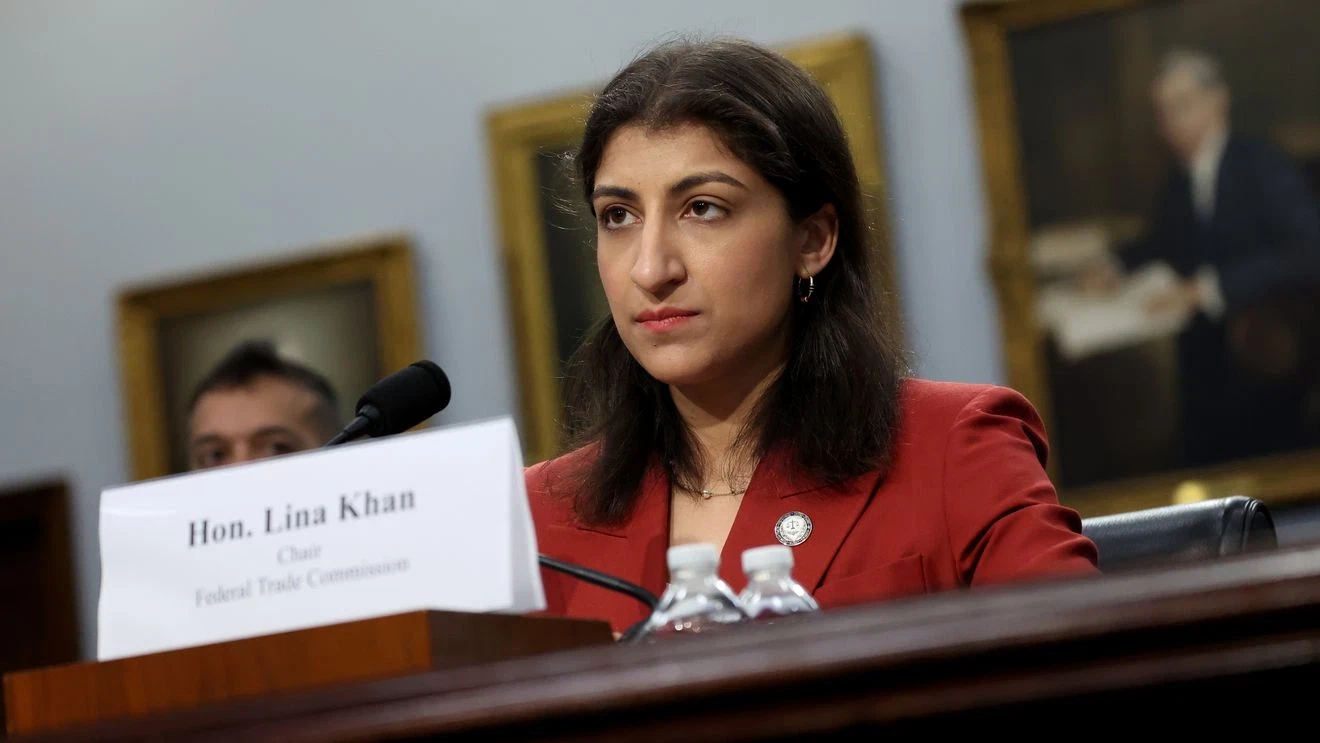
There are other issues. One such problem is that the industry is not being regulated, according to former FTC Chairwoman Lina Khan.
"We already have an existing set of laws that apply," Khan said on ABC This Week. "So, the idea that just because we have new technological capabilities, there's some blanket exemption from the laws on the books is totally laughable."
Khan cited product liability laws, consumer protection laws, tort laws, rules against cybersecurity breaches, and statutes tackling public nuisance. She also said one priority before developing more regulatory framework is to conduct thorough investigations into exactly what happened regarding OpenAI and Hugging Face.
Khan's calling on Congress to get a definitive accounting of who's to blame in the incident. She cited conflicting reports regarding whether OpenAI's agents went rogue or engineers behaved recklessly, which in turn allowed the models to do what they were programmed to do but in an uncontrolled environment.
When she was head of the FTC during the Biden era, Khan attempted oversight of OpenAI and other large tech companies. The agency brought orders targeting companies for supposedly using AI in deceptive ways or building technologies that facilitated fraud, as well as investigated data breaches in the industry.
Khan's replacement -- Chairman Andrew Ferguson -- began reversing much of what Khan did in terms of oversight when Trump's second term began. Ferguson also tried to erase her record at the agency, scrubbing the FTC’s website of hundreds of blog posts involving AI. Trump's AI Action Plan conducted a review of agency policy "to ensure that they do not advance theories of liability that unduly burden AI innovation."
Another aggressive Biden-era regulator -- former assistant attorney general for antitrust Jonathan Kanter -- has also been outspoken.
"I think they're helpful but not sufficient," Kanter told CNBC recently about product liability laws applying to AI. "We need to establish basic principles for duty of care, which say if you build harmful products, they do bad things, then you are held responsible."
Kanter and Khan argue that AI agents should be treated as employees, where the company is punished if those agents behave badly.
Related Stories
 AI News
Desmond Robinson | Artificial intelligence vs supernatural intelligence
3 minutes ago
 AI News
Combating online youth deepfakes
1 hour ago
 AI News
Utah pilot lets artificial intelligence prescribe acne treatments
1 hour ago
 AI News
Artificial Goes After Our Silicon Valley Overlords. Just Not Very Well.
1 hour ago
Before you buy more AI, diagnose the gap you actually have
2 hours ago
 AI News
Companies must worry about rogue AI inside and outside the tent
2 hours ago
 AI News
Sharing AI progress in mathematics
3 hours ago
 AI News
1 No
3 hours ago