
American tariffs on Canadian goods take effect after trade talks fall apart
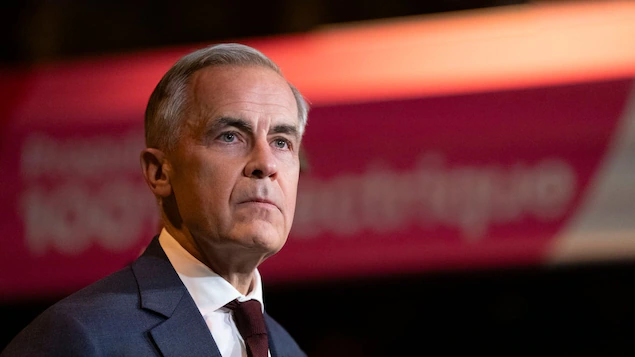
Prime Minister Mark Carney, seen in Longueuil, Que., this June, said Ottawa would retaliate 'dollar for dollar' after the Trump administration imposed crushing 50 per cent tariffs on billions of dollars worth of Canadian goods just after midnight on Saturday. (Ivanoh Demers/CBC/Radio-Canada)
Photo: (Ivanoh Demers/CBC/Radio-Canada)
Rhianna Schmunk (new window) · CBC News
The Trump administration's latest round of tariffs against billions of dollars worth of Canadian goods took effect just after midnight Saturday, after the two countries failed to seal a last-minute trade deal that satisfied both sides.
Prime Minister Mark Carney said Ottawa would retaliate dollar for dollar after the White House delivered on its threat to impose crushing 50 per cent tariffs on a wide range of products. The two governments' trade representatives said they had come close to finalizing an agreement in recent days, but Carney said Ottawa ultimately couldn't accept the terms on the table.
I have decided to suspend trade negotiations with the U.S. and have directed Canada's negotiators to return to Ottawa, the prime minister said in a statement.
They have worked hard, in good faith, to defend the interests of Canadians throughout these negotiations up until the very last minute. However, last-minute changes in the U.S. proposed terms were unfair, uneconomic, and called into question the reliability of any deal.
U.S. President Donald Trump did not immediately comment.
WATCH | U.S. imposes 50 per cent tariffs after trade talks collapse:
50% tariffs in effect after U.S. and Canada fail to reach a deal
Prime Minister Mark Carney said Canada is planning to match U.S. levies ‘dollar for dollar,’ after the 50 per cent tariffs took effect on Aug. 21 at 12:01 ET. The two countries had ramped-up trade talks over the last three days after Trump extended the tariff deadline earlier this week.
In his own statement, U.S. Trade Representative Jamieson Greer said talks crumbled because Canada didn't accept the agreement the administration had offered.
Tonight, Canada declined to finalize the trade deal under the terms agreed earlier this week, despite the U.S. offer to Canada to receive the best treatment of any major exporter to our market, new demands and walk backs of other commitments by Canada have upended the careful balance reached in the past days, Greer said in a statement.
In addition, Canada is continuing to maintain its prolonged retaliation against the United States, including, among other things, flat out prohibitions on certain American goods and services.
The fresh American tariffs and the promise of Canadian counter-tariffs are a significant escalation in the dispute between Canada and the U.S., two countries once seen as being as close as can be on trade.
Canadian Trade Minister Dominic LeBlanc met with Greer, his American counterpart, throughout the week in Washington, D.C., to try to secure a deal before the administration's Friday night deadline.
The terms of the tentative deal were not made public, but separate sources have said the agreement would have lowered sectoral tariffs (new window) that have been crushing the Canadian aluminum, steel and automobile sectors for months. In return, Carney asked Canadian premiers to consider ending provincial bans on American alcohol.
Sources who had been briefed on the talks as of Thursday night said U.S. Commerce Secretary Howard Lutnick, one of Trump's most influential cabinet members, had expressed dissatisfaction with the proposed deal (new window).
Following Carney's promise on Friday to respond to the new tariffs dollar for dollar, CBC News asked a senior Trump administration official what could be done to pull the two countries out of an apparent tit-for-tat trade dispute.
I mean, in some ways, it's up to the Canadians, right? If they're interested in an escalation, then that's a choice, the official said Friday, adding Trump could be provided with options to level the playing field if Canada retaliated.
WATCH | Negotiations came down to the wire:
The final hours before Trump's tariff deadline
On Friday, Canadian and U.S. negotiators raced against a midnight deadline to finalize a high-stakes trade agreement that could lower threatened U.S. tariffs on Canadian steel and aluminum, and return American alcohol to some provincial store shelves. Advisory Council on Canada-U.S. Economic Relations member Ralph Goodale speaks to Power & Politics.
While much of the tariff discussion this week has revolved around the highest echelons of political power, businesses on both sides of the border were also waiting to see whether the latest threat to their livelihoods would come to pass (new window).
This will be a body blow to North American competitiveness in this self-defeating trade saga, the Canadian Chamber of Commerce said of the new American levies. A whopping, non-absorbable tariff is not sustainable or viable for business.
Under the Trump administration's new policy, tariffs of 50 per cent will apply to hundreds of products worth more than $28 billion — from plywood and cement to wine and hockey sticks.
The Trump administration has said the tariff threat was a response to Canada's retaliation against U.S. trade policy and its discrimination against the American dairy, alcohol and automotive sectors.
Last month, Carney said most of those measures, like provincial bans on American booze, were "merely" Canada's response (new window) to the argument the White House started by announcing other levies last year.
Canadian trade figures are based on slightly broader categories than the list of potential tariffed items issued by the White House. Therefore the data used to calculate exports may include some related goods not targeted by U.S. tariffs. Territories omitted because of small export values.
Photo: Statistics Canada(Graeme Bruce/CBC)
The new duties are imposed through Section 338 of the U.S. Tariff Act, or the Smoot-Hawley Act, which was created during the Great Depression nearly a century ago. The law gives the president the ability to apply tariffs at a rate of up to 50 per cent on countries deemed to be discriminating against the American economy.
In the past, the tariff rate has often been closer to 10 or 20 per cent. Goods that are compliant with the Canada-United States-Mexico Agreement, CUSMA, have also previously been exempt, but that is no longer the case for many of those products as of Saturday.
Canada's electronics sector stands to take the biggest hit. Canada exported more than $4 billion US worth of electronic equipment that would be subject to Trump's new tariffs. In fact, certain electrical boards and controllers are on the list and are the largest value export to the U.S. of any threatened category.
The tariffs would also take a bite out of Canada's plastics industry, including things like bottles, floor coverings and various household items. The value of items in this category is about $3 billion US.
British Columbia will be disproportionately affected by these import duties compared to other provinces. Items subject to the new taxes, most notably wood and paper, represent more than 13 per cent of the province's total exports to the U.S., higher than any other province.
Quebec also stands to suffer losses, since roughly 10 per cent of its exports are now exposed. The new levies add to severe, pre-existing 50 per cent tariffs on steel and aluminum, one of the province's largest industries.
Related Stories
 Canada
Canadians like to think we're nice. But loaning my car to a stranger made me question what that really means
21 minutes ago
 Canada
Canadians backing tough response to U.S. tariffs, says Windsor professor
21 minutes ago
 Canada
'We got attacked': Carney says retaliatory tariffs on U.S. to take effect next month
21 minutes ago
 Canada
CBC News speaks with Heather Hurlburt about Canada
21 minutes ago
 Canada
A trade war between Canada and the US deepens rupture in what had been a close and durable alliance
1 hour ago
 Canada
U.S. terms suggested restricting Canada's ability to execute trade deals, Carney says
1 hour ago
 Canada
Read Mark Carney's full speech after trade talks with the U.S. collapsed
1 hour ago
 Canada
Ontario businesses brace for tariffs after U.S.
1 hour ago