
Anthropic is no longer just selling its AI to labs

Anthropic is no longer just selling its AI to labs — it's going to make its own drugs
Designing its own drugs, in its own laboratory: that's Anthropic's new project - the American company behind Claude, one of the major AI models and ChatGPT's main rival.
First component, the more straightforward one: a tool called Claude Science. It's a research environment built on Claude models that brings together more than 60 scientific databases (genetics, proteins, chemistry) in one place, to support laboratories during the preclinical phase - that is, everything that happens before the first human trials.
Second component, considerably more surprising: Anthropic will also develop its own drugs in-house. No less. Eric Kauderer-Abrams, the company's head of life sciences, wants to target so-called "neglected" diseases - the ones mainstream labs pass on because they're not profitable enough.
His justification can be summed up in one sentence: to build the right AI tools for the pharmaceutical industry, you first have to live the work from the inside. It's a fair argument, all things considered.
On the client side, some big names. American giant Bristol Myers Squibb rolled out Claude to more than 30,000 employees last May, and among the early users you'll also find Novo Nordisk - the Danish lab behind Ozempic, the blockbuster drug for diabetes and obesity - as well as the Allen Institute research organization.
One startup, Inductive Bio, has even plugged its ADMET prediction tool directly into Claude - in other words, the way a drug is absorbed by the body, how it spreads through it, how it's eliminated, and how toxic it turns out to be. The connection runs through an MCP connector, a recent standard that allows external tools to be linked to an AI.
With all this, Anthropic joins OpenAI and Google in a three-way race for AI applied to drug discovery. The promise is appealing: speed up research that costs a fortune and take on diseases that everyone ignores.
Except that a little skepticism is warranted here. These AIs still make mistakes regularly, sometimes inventing wrong answers with perfect confidence, and a drug isn't judged by a demo but by years of clinical trials conducted on real patients.
And Anthropic isn't a charity: selling its AI to the pharmaceutical sector - probably the wealthiest in the world - represents a colossal market. Neglected diseases make for a nice showcase, so we'll judge based on the molecules that actually come out of this famous lab, not on the press releases.
Related Stories
 AI News
Trump administration’s interpretation of slavery under George Washington can be reinstalled
12 minutes ago
 AI News
Anti
12 minutes ago
 AI News
Toronto Stadium makes memorable impression in the last of its six World Cup matches
12 minutes ago
 AI News
Ukraine says it struck two Russian airbases in Crimea
12 minutes ago
 AI News
Instagram running ads promoting child sexual abuse material in India, BBC finds
12 minutes ago
 AI News
Flood
13 minutes ago
 AI News
LeBreton Flats hosting World Cup watch party for Canada vs. Morroco knockout game
13 minutes ago
 AI News
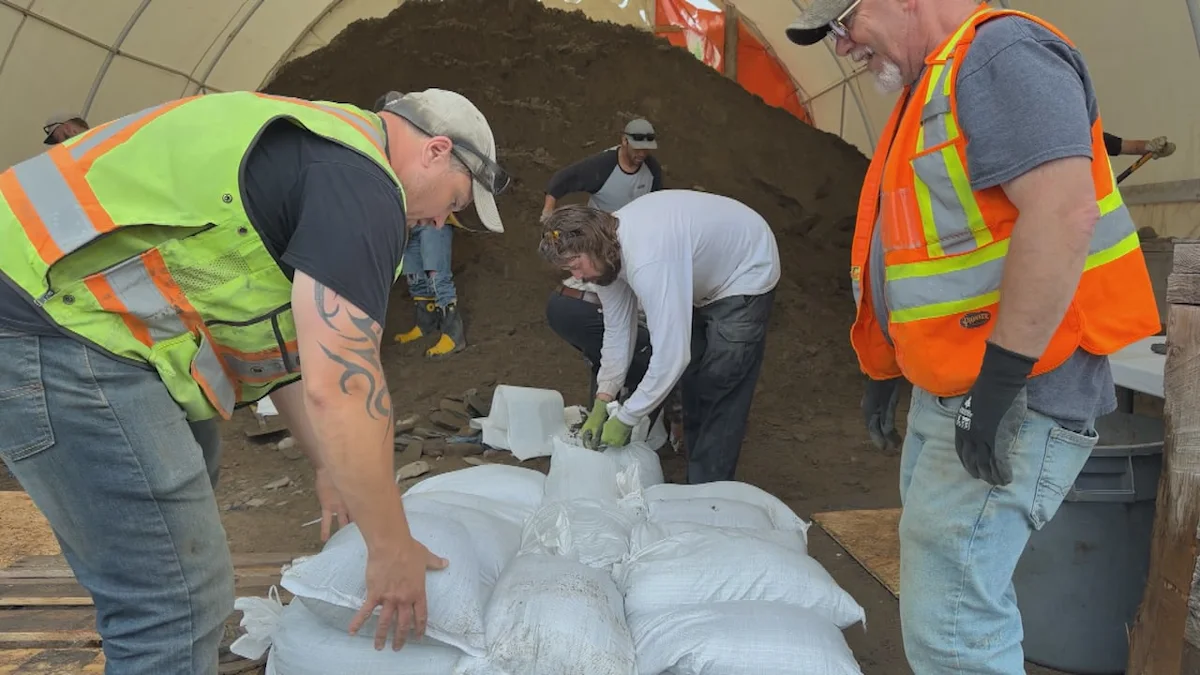
Work underway to protect Minnedosa, Brandon as rivers rise
13 minutes ago