
Are India's Mid-Day Meals Becoming Caste
The West Bengal government has handed over mid-day meal preparation in Kolkata to the International Society for Krishna Consciousness (ISKCON). Eggs have disappeared from the menu. So have onion and garlic. West Bengal is not an isolated case. ISKCON, the Akshaya Patra Foundation (APF), and other religious charities that dominate the centralised supply of mid-day meals have shaped policy across several States over the past decade. The Kolkata decision was among the first major announcements of the State’s newly elected BJP government, formed after the 2026 Assembly election.
The mid-day meal (MDM) is a legal entitlement for schoolchildren in India, in both government and government-aided schools. It was introduced to tackle childhood malnutrition and to encourage regular school attendance. Several States serve eggs multiple times a week in the MDM. However, organisations such as ISKCON, which often secure MDM contracts, impose vegetarian-only meals. Public health experts and anti-caste activists have condemned this for years, arguing that it imposes caste—and religion—based food choices on children from predominantly meat-eating communities.
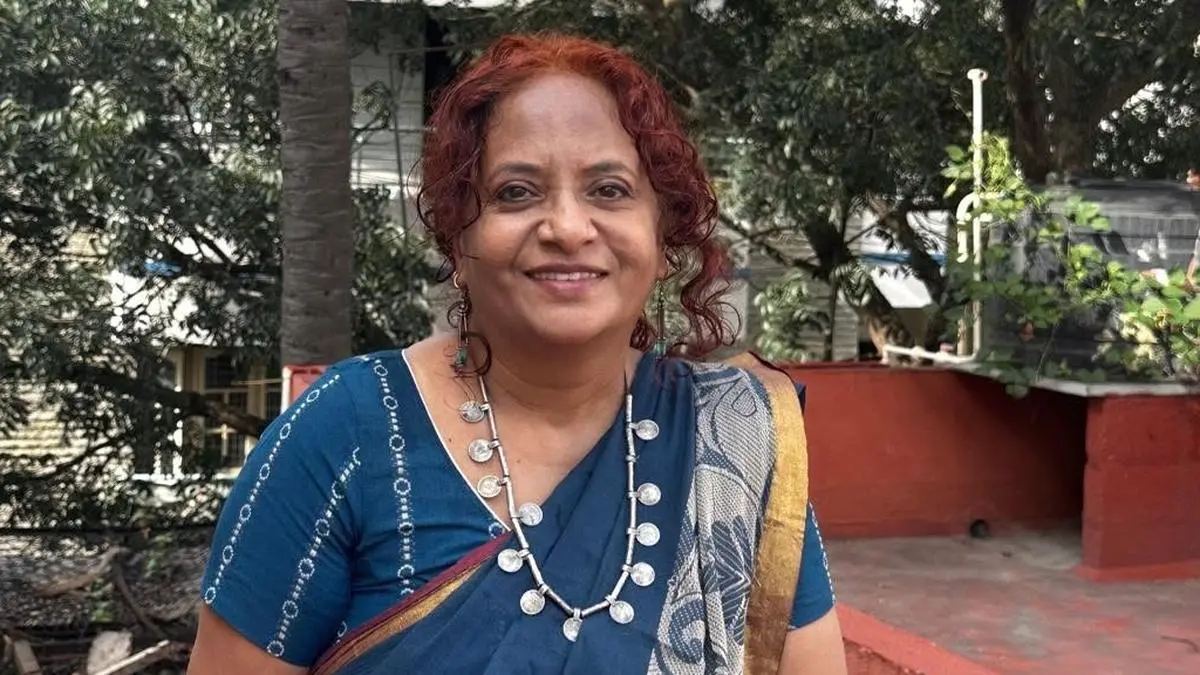
Frontline interviewed the public health specialist Sylvia Karpagam, who focuses on the social determinants of health. She spoke about why vegetarian alternatives to eggs fall short, the caste-corporate nexus in India’s food policy, the long-term impact of malnutrition, and the other issues tied to the mid-day meal scheme. Excerpts:
Indian officials and politicians often frame soya, paneer, and other vegetarian foods as replacements for eggs. Someone once proposed a groundnut chikki. What makes these options attractive to them?
Nutrition research in India aligns with the traditional eating practices of many communities. Data from the National Institute of Nutrition (NIN) show that dietary diversity is protective, and that eating from different food groups prevents deficiencies such as stunting, being underweight, anaemia, and vitamin B12 and zinc deficiency. Communities that eat organ meat, fish, eggs, and other meats pass this knowledge down the generations.
But a section of people from the elite classes and privileged castes, who occupy positions in the media, academia, religious institutions, research, and bureaucracy, interpret nutrition research in problematic and harmful ways. They often begin with “since India is a vegetarian country” or “since Indians are too poor to afford non-vegetarian food”, and go on to erase animal-source foods entirely, except milk and milk products, which get labelled “pure vegetarian”. Having erased nutrient-dense foods, they are then in permanent search of nutritious, pure-vegetarian alternatives.
It is also worth noting that these organisations refuse to add onion and garlic to the food, calling them “tamasic” or “rajasic”. These are not scientific positions; they are rooted in mythology. A study in Karnataka found that the bioavailability of zinc and iron, both of which many children lack, improves in the presence of onion and garlic. The mid-day meal scheme needs to be built on science, not caste-based mythology.
There are also considerable economic gains for certain industries, including multinationals, in this arrangement. Veganism and plant-based foods are making inroads too, benefiting global businesses. Food in India is becoming a nexus of caste and corporate interests.
When soya replaces egg or meat, what is lost? What nutrients disappear from a child’s plate?
Soya belongs to the legume family. Like millets, such as ragi, jowar, and bajra, and many pulses, it contains anti-nutrients, phytates, tannins, oxalates, and lectins, which inhibit the absorption of vitamins and minerals. These foods are also difficult to cook and digest. Sprouting, milling, and fermentation improve bioavailability, but even then, they do not match animal-source foods, particularly eggs, which are considered a complete food and the gold standard for protein quality.
Legumes are generally hard to digest, and soya is a particularly difficult one, which is why it is never simply boiled and eaten. Soya chunks go through several industrial processes; they are a by-product of soya oil extraction, carried out at high temperatures and pressures using solvents such as hexane. This makes soya an ultra-processed food.
A study by the NIN found no advantage of soya over even skimmed milk. Whole milk is better still for older children.
Children, because of their small stomach size, rarely eat large meals, and India has a serious malnutrition crisis, barring a few States. Sound nutritional science requires that children have frequent access to nutrient-dense food. Millets and soya, being difficult to digest, make children feel full even in small quantities, which reduces overall food intake.
Soya is also not traditionally eaten in many Indian communities. When its promoters point to consumption in Japan or China, this is either a deliberate attempt to mislead or plain ignorance: in those countries, soya is eaten in small quantities, as part of larger meals rich in animal-source foods and vegetables, and almost always in fermented form.
The mid-day meal scheme provides schoolchildren with a nutritious lunch, supporting their education and well-being. A scene at a government school in Vijayawada on June 16, 2026. | Photo Credit: KVS Giri/The Hindu
Malnutrition in childhood has lasting effects on outcomes in adulthood. What is the long-term cost of these vegetarian policy choices?
Malnutrition in children causes several health consequences. It leads to stunting and being underweight, both of which increase morbidity and mortality before the age of five. At the current levels of stunting and being underweight, around 32-37 per cent, many children are also likely to be deficient in zinc, vitamin B12, vitamin A, folate, riboflavin, and iron. This raises their risk of gastrointestinal and respiratory infections, which cause further malnutrition, trapping children in a cycle they cannot escape.
Preventable blindness in India, largely caused by vitamin A deficiency, anaemia, and zinc deficiency, an independent cause of stunting and a higher risk of diarrhoea, are all consequences of poor diets. Many of these effects carry across generations, as malnourished children grow into stunted adults at greater risk of non-communicable diseases.
Eggs address many of these nutritional gaps. Though not very high in iron themselves, they supply the other nutrients needed to prevent anaemia, along with high-quality protein. These deficiencies carry economic costs too. A child who is malnourished grows into an adult who places greater demands on the health system and is less productive. Obesity, diabetes, hypertension, and heart and kidney disease are rising in India largely because of poor diets. People who eat unhealthily as children are unlikely to adopt healthy diets as adults, so we are creating eating habits that are hard to change later, by which point much of the damage has already occurred.
Women who are stunted and anaemic have poorer pregnancy outcomes, and their children are likely to inherit the same nutritional deficiencies. This should alarm us as a country, but caste and corporate interests have overwhelmed our thinking on the subject, leaving us unable to reckon with these largely irreversible consequences.
Is it possible to design a vegetarian-only mid-day meal that delivers the same benefits as eggs?
Vegetarians also consume animal-source foods such as milk, curd, paneer, butter, and ghee, while rejecting all other animal-source foods as impure. This can produce good secular gains in height, which is a reliable measure of nutritional status, and this is achievable in vegetarian families. It is also worth distinguishing between the vegetarianism of the wealthy, which includes dairy, nuts, sprouts, and vegetables, and the vegetarianism imposed on the poor, which is largely cereal, millet, or watery dal.
In Odisha, the government runs a separate egg distribution scheme in schools served by Akshaya Patra. Is this a solution, or a quick fix that still lets religious trusts control the menu?
This is a poor option. It is a waste of taxpayers’ money to set up a parallel food system solely to meet the ideological needs of a contractor.
Field visits in Karnataka found that, despite a government mandate to provide eggs in the mid-day meal, children in schools supplied by the Akshaya Patra Foundation do not receive them. The government tried a parallel system through the school development and management committee, which then sub-contracted the task to headmasters, who resent the added responsibility. School-based kitchens were dismantled to hand contracts to Akshaya Patra, in violation of basic mid-day meal norms, and now infrastructure has to be built simply to boil eggs. This undermines the message children receive about respecting food and eating together. It is a new form of segregation.
Students served by the Akshaya Patra Foundation at Mysuru, at an event commemorating the cumulative serving of three billion meals in February 2019. | Photo Credit: Sriram M A/ The Hindu
Cost is often cited to justify centralising mid-day meal supply and dropping eggs. Is cost really a binding constraint? Should it be?
If eggs are given in large numbers and regularly, costs come down. Contracts awarded to women’s groups also improve family incomes. It is a shame to calculate children’s nutrition based on costs. Many States already provide nutritious meals. In Karnataka, even though eggs are provided, it is a shame that the funding for this comes from a private entity. Ensuring good, scientifically grounded nutrition is the state’s primary responsibility.
Proponents of egg—and meat—based meals are often criticised over protein quality, or told that transporting protein is difficult because it must be consumed immediately. There seems to be both misinformation and wilful misrepresentation here. What are your thoughts?
The Akshaya Patra Foundation’s pitch to parents, teachers, bureaucrats, elected representatives, and its supporters is that its food is “hygienic”. This carries overt caste connotations: it implies that the women, largely Dalit and from other marginalised communities, who cook school-based meals are not hygienic. In reality, most large-scale Indian food preparation leaves much to be desired, and there is a need for specific training, not just in hygienic food preparation but in storage and cooking methods, to ensure a healthy, nutritious, tasty meal.
It is also worth asking why the safety standards of vegetarian substitutes rarely come under scrutiny. According to the Food Safety and Standards Authority of India (FSSAI), the level of adulteration in paneer is extremely high. Are we going to pass this off on children in West Bengal?
Centralised kitchens have been presented as a quality-controlled alternative, yet quality concerns about Akshaya Patra’s kitchens were raised as far back as 2018-19 in Karnataka. What have been the recurring complaints?
Transportation issues are often raised about eggs, but the entire Akshaya Patra model works against local food sovereignty. There have also been complaints that food is not fresh by the time it reaches schools, some up to 40 km from the centralised kitchen. In every school we visited, hot meals prepared on-site were well received by children, though they too need improvement. Preparation at Akshaya Patra’s centralised kitchens starts around 4 am, and food is delivered around 9-10 am. By the time children eat it, the rice, in Karnataka, has turned into a cold, solid lump, and the watery sambar is cold too.
The children eating these meals are overwhelmingly Dalit, OBC, Adivasi, and Muslim. How does the imposition of “sattvik” food shape their relationship with food, religiously, culturally, and regionally?
For generations, caste has attached shame to food that is, in fact, highly nutritious. Grandmothers held up as icons of clean, sanitised cooking are celebrated, while those who prepare dry fish, organ meat, fish curry, or red ant chutney are not. That dismissal of nutrient-dense food used to happen at the level of the community or the individual.
What we are seeing now is large-scale institutionalisation. People are being killed over their food choices, and this is being normalised.
Targeting animal-source foods this way can make children lose their cultural memory. They may grow ashamed of nutritious foods they once knew, without understanding the political, social, and economic context behind this denial and criminalisation. They are then more likely to face nutritional and health problems of their own.
There is an urgent need to link traditional foods with sound research, since together they offer the strongest tools to challenge the caste-corporate nexus.
The vegetarianism imposed on the poor is often limited to cereals, millets, and watery dal. | Photo Credit: By special arrangement
The mid-day meal is a legal entitlement under the National Food Security Act, not a favour. Yet once religious NGOs enter the supply chain, it is often rebranded as charity or seva, even though these NGOs are paid by the government for the meals they provide. Why should this framing concern us?
There is a failure to recognise that these organisations are contractors. They claim to feed “poor children” and collect crores in “charity” without adequately disclosing that they also receive government funds. This is a major failure of the public-private partnership model, even though the contract requires transparency about the funds an agency receives. This failure of transparency and accountability was one reason several independent trustees resigned from the Akshaya Patra Foundation’s board in 2020.
The organisation also runs propaganda within schools, teaching children to see sattvik, or pure, food as opposed to tamasic and rajasic, or impure and corrupting, food. The mid-day meal guidelines for NGOs explicitly state that the scheme should not be used to propagate religion or caste. Handing over a government scheme to a body that is not just religious but openly casteist produces exactly these outcomes.
One founding principle of the mid-day meal scheme was decentralisation: food cooked and served at the school, with cooks and workers hired from the local community, particularly women from marginalised castes. What is lost when centralised kitchens replace this model?
This is a crucial issue that has not received the attention it deserves. Employing Dalit women as cooks was a far-sighted idea, and even though implementation has been patchy, it remains a genuinely progressive one. A caste-based organisation such as Akshaya Patra Foundation is highly unlikely to hire Dalit cooks, and that issue has been sidelined. In the schools we visited, the cooks are affectionate towards the children and attentive to their needs. This does not mean school-based kitchens are without problems, but dismantling them has broken a system that employed local women from marginalised communities. It is a loss for the country’s efforts to dismantle caste-based practice.
Finally, how should mid-day meals be designed? Who should decide what goes on a child’s plate?
The state has to offer nutritious meals with choices for different preferences. Imposing the nutrient-poor preferences of one minority group on others, especially when those others are already marginalised and vulnerable, amounts to state-sponsored discrimination. The only way forward is to let science decide eating practices.
Much of the Western research on this subject carries conflicts of interest. The FSSAI hosted the release of the EAT-Lancet Commission report, which promotes “plant-based foods” and holds up India, despite its high rates of malnutrition, as a model for the world, reinforcing the same casteist myth that India is a vegetarian country. Multinational lobbies are attempting, in every way, to infiltrate the mid-day meal scheme, targeting adolescents in particular. The only way to counter this is with fact-based information on sound nutrition. Otherwise, the country faces a looming crisis in nutrition and health outcomes.
Also Read | Tamil Nadu’s mid-day meal scheme under scanner
Also Read | 1956: Free meal scheme for schoolchildren in Tamil Nadu introduced
Related Stories
 AI News
World Cup 2026: England midfielder Jordan Henderson expected to have surgery on injured wrist
51 minutes ago
 AI News
Aurélien Tchouaméni likely to miss France’s World Cup quarter
51 minutes ago
 AI News
World Cup 2026 tactics: How England beat Mexico in five mini games
51 minutes ago
 AI News
Severe blowback over FIFA's 'shameful, incomprehensible' Balogun decision
51 minutes ago
 AI News
AI ‘actor’ Tilly Norwood to appear in feature film set in the ‘Tillyverse’
51 minutes ago
 AI News
Canada to buy 'up to 12' submarines from German shipbuilder
52 minutes ago
 AI News
Canada to receive 'tens of billions in investments' as part of sub deal, Carney says
52 minutes ago
 AI News
Stormy weekend leaves Windsor with flooding, backlog of service calls
52 minutes ago