
Are some teams getting favorable calls in World Cup matches? Here’s what the data shows
Are some teams in the World Cup receiving more favorable calls on fouls than others?
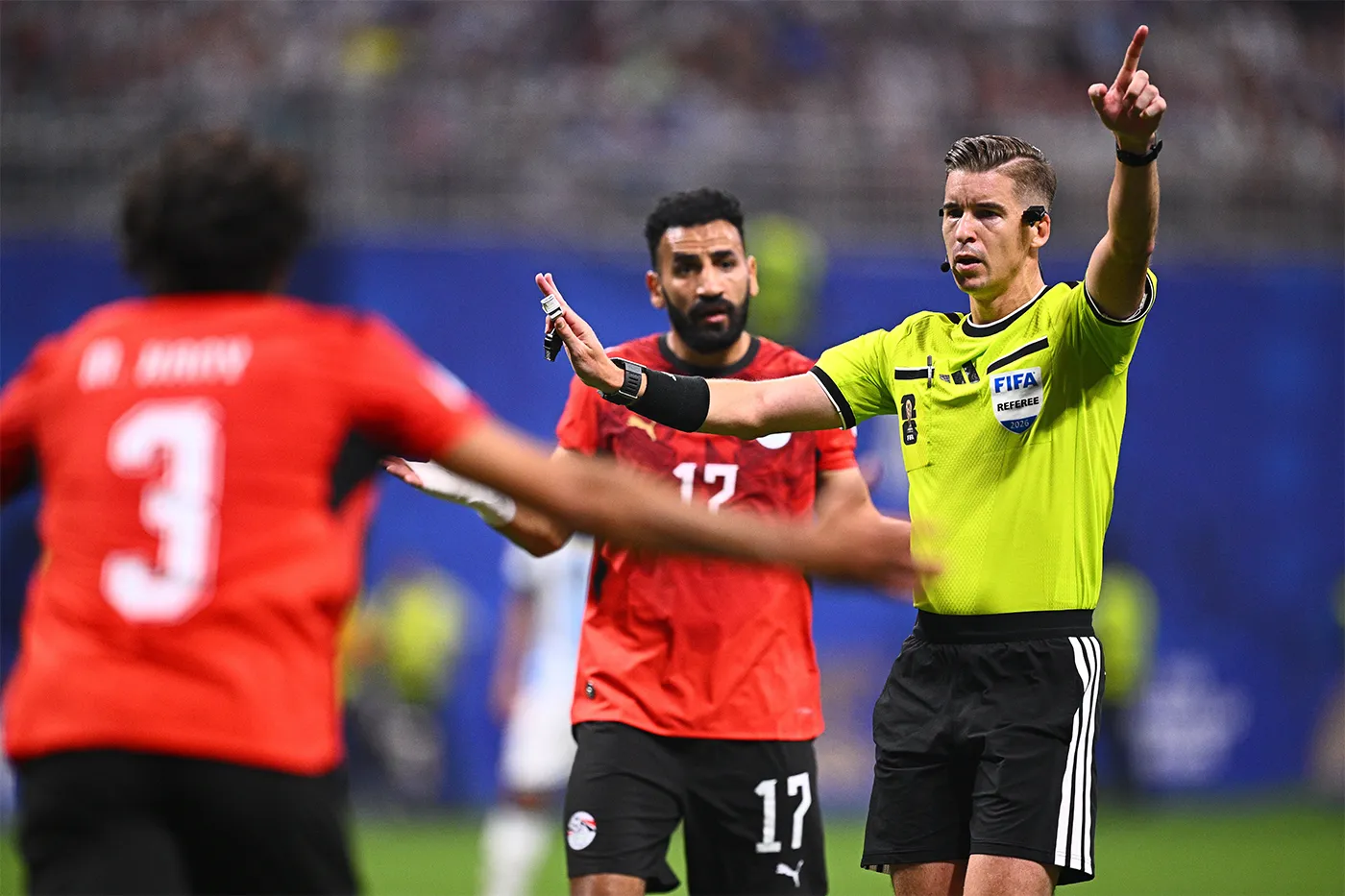
That question came to a head earlier this week during Argentina’s 3-2 win over Egypt when a referee disallowed a goal for the Egyptians after video assistant referee, or VAR, review, a system that allows referees to replay game footage and consult with other match officials monitoring the game from a control room.
The referee said that a foul was committed leading up to the shot, but critics argue that it was a bad call and a sign of bias in favor of Argentina.
But what does the raw data and numbers actually show? Is there a real bias in World Cup games?
Brennan Klein, director of the Northeastern NetSI Sport research group, said the answer is complicated, as it’s not possible to definitively show through the data that a referee is working for or against a team.
“It might be easy to see with your eyes, ‘Oh God, that was a bad call,” he said. “But the data that I see just says the foul occurred in this minute by this player at this X, Y coordinate on the pitch.”
While there is no quantitative way to answer this question, “there are ways to poke at it,” he said.
For example, researchers do collect rich, detailed information on VAR interventions – how many times the technology is used in a game — and how often a call is ruled against or in a team’s favor.
And some notable trends can be observed.
There have been 35 VAR interventions across the 97 World Cup games that have been hosted so far this year. In 2022, there were 26. And in 2018 – the year it was introduced – there were 22, Klein said
Below is a chart created by NetSI Sport breaking down which teams during this year’s World Cup have seen the most favorable VAR outcomes (in blue) and which have seen the least (in red) using a baseline of per 100-fouls committed or won.
Klein noted that this chart is not a “smoking gun” that definitively shows refs are biased for one team over another, but it does provide measurable numbers on how some fouls are being determined using the tech.
Argentina and Mexico have received the most VAR interventions in their favor so far in the tournament, both seeing a total of four changes that went their way on foul-related decisions after review. Paraguay and Croatia have received the most against them, with both seeing three VAR intervention decisions that didn’t go their way after review.
Northeastern Global News, in your inbox.
Sign up for NGN’s daily newsletter for news, discovery and analysis from around the world.
While at a glance it may appear to be favoritism for some teams over others, Klein said, the data doesn’t point to that definitively. It just shows how different VAR interventions played out.
“Why are Argentina and Mexico topping this list?” he said. “They are topping this list because the referees missed fouls that the VAR thought should have been fouls. There’s a hop, step and a jump away from: ‘They’re biased against my team or for this team.’”
“These are just games in which the referees made more mistakes or missed more calls,” he added. “But this doesn’t really help the counter-narrative that referees are not biased toward Argentina.”
Related Stories
 World
World
Video. Latest news bulletin | August 29th, 2026
48 minutes ago
 World
World
Thailand and China earn World Cup spots, advance to Asian Championship final
1 hour ago
 World
World
Niger's security forces battle mutinous soldiers in the capital
1 hour ago
 World
World
Venezuelan opposition up in arms over reports US wants big stake in oil and gas
1 hour ago
 World
World
An island mysteriously appeared — then disappeared
1 hour ago
 World
World
World Triathlon Championship Series: Cassandre Beaugrand wins again in Weihai with Beth Potter second
2 hours ago
 World
World
Triple Gold for U.S. Fours at World Championships
2 hours ago
 World
World
Trump announces 'historic' US-Venezuela oil deal that he says will lower gas prices
2 hours ago