
Artificial intelligence-based phenotypic screening using Aspergillus oryzae identified a novel antifungal RK-1205
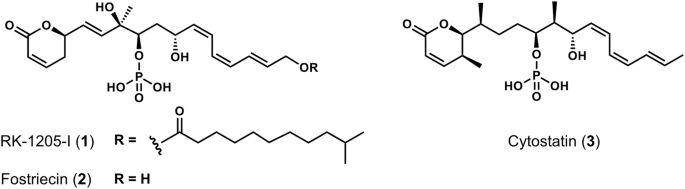
When treated with various compounds, fungi exhibit characteristic morphological changes depending on their mode of action. Previously, we constructed morphology-based databases of the rice blast fungus Pyricularia oryzae and human pathogenic fungus Candida albicans and used them for antifungal screening. As these databases are manually created by human experts, objectivity and throughput may be a concern. To overcome these limitations, we developed a new artificial intelligence (AI)-based automated classification system for morphological changes in the filamentous fungus Aspergillus oryzae. Using this system, we screened a library of 7602 microbial broths and found that the culture broth of Streptomyces sp. RK21-A1205 exhibited potent antifungal activity and induced unique morphological changes distinct from those induced by conventional antifungal agents. Antifungal-activity-guided purification yielded the active metabolite RK-1205-I (1), whose chemical structure was identified as a new fostriecin derivative. 1 showed strong growth inhibitory activity against A. oryzae and other fungi, including A. fumigatus and C. auris, with IC50 value of 0.020 and 0.21 µM, respectively. Furthermore, 1 inhibited protein phosphatase 2A (PP2A) activity in the fungal cells. This study demonstrates that our newly developed AI-based phenotypic screening system can effectively distinguish morphological changes induced by microbial broths and facilitates the identification of novel antifungal compounds.
This is a preview of subscription content, access via your institution
Prices may be subject to local taxes which are calculated during checkout
Fisher MC, et al. Emerging fungal threats to animal, plant and ecosystem health. Nature. 2012;484:186–94. https://doi.org/10.1038/nature10947.
Article CAS PubMed PubMed Central Google Scholar
Sato T. Plant diseases and their pathogenic microbes in Japan. Microbiol Cult Collect. 2013;29:79–90. https://doi.org/10.60369/microresys.29.2-79.
Osada H. Discovery and applications of nucleoside antibiotics beyond polyoxin. J Antibiot. 2019;72:855–64. https://doi.org/10.1038/s41429-019-0237-1.
Takahashi Y, Igarashi M. Destination of aminoglycoside antibiotics in the ‘post-antibiotic era. J Antibiot. 2018;71:4–14. https://doi.org/10.1038/ja.2017.117.
Swinney DC, Anthony J. How were new medicines discovered? Nat Rev Drug Discov. 2011;10:507–19. https://doi.org/10.1038/nrd3480.
Article CAS PubMed Google Scholar
Zheng W, Thorne N, McKew JC. Phenotypic screens as a renewed approach for drug discovery. Drug Discov Today. 2013;18:1067–73. https://doi.org/10.1016/j.drudis.2013.07.001.
Liu N, et al. Scalable, compressed phenotypic screening using pooled perturbations. Nat Biotechnol. 2025;43:1324–36. https://doi.org/10.1038/s41587-024-02403-z.
Ghanegolmohammadi F, et al. Rational selection of morphological phenotypic traits to extract essential similarities in chemical perturbation in the ergosterol pathway. Sci Rep. 2024;14:17093. https://doi.org/10.1038/s41598-024-67634-1.
Zhao Y, Liu DY, Clark TN, Linington RG, Kennelly EJ. Prediction of bioactive metabolites from American aconitum using network integrating cellular morphological profiling and mass spectrometry data. J Nat Prod. 2025;88:1557–67. https://doi.org/10.1021/acs.jnatprod.4c01458.
Futamura Y, et al. Morphobase, an encyclopedic cell morphology database, and its use for drug target identification. Chem Biol. 2012;19:1620–30. https://doi.org/10.1016/j.chembiol.2012.10.014.
Yamamoto K, et al. YO-001A, a new antifungal agent produced by Streptomyces sp. YO15-A001. J Antibiot. 2019;72:986–90. https://doi.org/10.1038/s41429-019-0239-z.
Futamura Y, et al. Inhibitory effect of copper chelators on the budding in Candida albicans. Antimicrob Agents Chemother. 2025;69:e0003325. https://doi.org/10.1128/aac.00033-25.
LeCun Y, Bengio Y, Hinton G. Deep learning. Nature. 2015;521:436–44. https://doi.org/10.1038/nature14539.
Chen H, Engkvist O, Wang Y, Olivecrona M, Blaschke T. The rise of deep learning in drug discovery. Drug Discov Today. 2018;23:1241–50. https://doi.org/10.1016/j.drudis.2018.01.039.
Kraus OZ, et al. Automated analysis of high-content microscopy data with deep learning. Mol Syst Biol. 2017;13:924 https://doi.org/10.15252/msb.20177551.
Rawat W, Wang Z. Deep convolutional neural networks for image classification: a comprehensive review. Neural Comput. 2017;29:2352–449. https://doi.org/10.1162/NECO_a_00990.
Tang Q, et al. Morphological profiling for drug discovery in the era of deep learning. Brief Bioinform. 2024;25. https://doi.org/10.1093/bib/bbae284
Gomi K ASPERGILLUS | Aspergillus oryzae. In: Encyclopeida of Food Microbiology. Second Edition: Elsevier Inc.; https://doi.org/10.1016/B978-0-12-384730-0.00011-2 (2014).
Machida M, et al. Genome sequencing and analysis of Aspergillus oryzae. Nature. 2005;438:1157–61. https://doi.org/10.1038/nature04300.
Knowles SL, et al. Gliotoxin, a known virulence factor in the major human pathogen Aspergillus fumigatus, is also biosynthesized by its nonpathogenic relative Aspergillus fischeri. mBio. 2020;11:e03361-19. https://doi.org/10.1128/mBio.03361-19.
Article PubMed PubMed Central Google Scholar
Takahashi T, Ogawa M, Sato A, Koyama Y. Translocated duplication of a targeted chromosomal segment enhances gene expression at the duplicated site and results in phenotypic changes in Aspergillus oryzae. Fungal Biol Biotechnol. 2018;5:17. https://doi.org/10.1186/s40694-018-0061-6.
CDC (Centers for Disease Control and Prevention). Increasing Threat of Spread of Antimicrobial-Resistant Fungus in Healthcare Facilities. https://www.cdc.gov/media/releases/2023/p0320-cauris.html (2023).
Hamamoto H, Horie R, Sekimizu K. Pharmacokinetics of anti-infectious reagents in silkworms. Sci Rep. 2019;9:9451. https://doi.org/10.1038/s41598-019-46013-1.
Kaito C, Akimitsu N, Watanabe H, Sekimizu K. Silkworm larvae as an animal model of bacterial infection pathogenic to humans. Micro Pathog. 2002;32:183–90. https://doi.org/10.1006/mpat.2002.0494.
Matsumoto Y, Sekimizu K. Silkworm as an experimental animal for research on fungal infections. Microbiol Immunol. 2019;63:41–50. https://doi.org/10.1111/1348-0421.12668.
Tohyama S, et al. The potent protein phosphatase 2A inhibitors aminocytostatins: new derivatives of cytostatin. J Antibiot. 2021;74:743–51. https://doi.org/10.1038/s41429-021-00455-w.
Lopez JAV, Nogawa T, Futamura Y, Shimizu T, Osada H. Nocardamin glucuronide, a new member of the ferrioxamine siderophores isolated from the ascamycin-producing strain Streptomyces sp. 80H647. J Antibiot. 2019;72:991–5. https://doi.org/10.1038/s41429-019-0217-5.
Rawa MSA, et al. A new peptaibol, RK-026A, from the soil fungus Trichoderma sp. RK10-F026 by culture condition-dependent screening. Biosci Biotechnol Biochem. 2021;85:69–76. https://doi.org/10.1093/bbb/zbaa051.
Clinical and Laboratory Standards Institute (CLSI). Methods for Dilution Antimicrobial Susceptibility Tests for Bacteria That Grow Aerobically; Approved Standard-Eighth Edition. CLSI document M07-A8. Wayne, PA: Clinical and Laboratory Standards Institute; (2009).
Sato S. Graphic representation of 13C-chemical shifts and 31P-13C spin coupling constants of organophosphorus compounds and its application to the structural analysis. Bunseki Kagaku. 1983;32:246–52. https://doi.org/10.2116/bunsekikagaku.32.4_246.
Shibahara S Total synthesis of (+)-fostriecin and (+)-phoslactomycin B. Synthesis. 2009 2035-53. https://doi.org/10.1055/s-0029-1216930
Walsh AH, Cheng A, Honkanen RE. Fostriecin, an antitumor antibiotic with inhibitory activity against serine/threonine protein phosphatases types 1 (PP1) and 2A (PP2A), is highly selective for PP2A. FEBS Lett. 1997;416:230–4. https://doi.org/10.1016/s0014-5793(97)01210-6.
Kawada M, Amemiya M, Ishizuka M, Takeuchi T. Cytostatin, an inhibitor of cell adhesion to extracellular matrix, selectively inhibits protein phosphatase 2A. Biochim Biophys Acta. 1999;1452:209–17. https://doi.org/10.1016/s0167-4889(99)00126-3.
Mumby M. PP2A: unveiling a reluctant tumor suppressor. Cell. 2007;130:21–4. https://doi.org/10.1016/j.cell.2007.06.034.
Brautigan DL, Farrington C, Narla G. Targeting protein phosphatase PP2A for cancer therapy: development of allosteric pharmaceutical agents. Clin Sci. 2021;135:1545–56. https://doi.org/10.1042/CS20201367.
Offley SR, Schmidt MC. Protein phosphatases of Saccharomyces cerevisiae. Curr Genet. 2019;65:41–55. https://doi.org/10.1007/s00294-018-0884-y.
We are grateful to Drs. Yasuhiko Imai and Masahiro Ogawa (Noda Institute for Scientific Research) for Aspergillus oryzae and Drs. Anuradha Chowdhary (University of Delhi), Leah E. Cowen (University of Toronto), and Yoko Yashiroda (RIKEN) for kindly providing Candida auris VPCI 673/P/12. We gratefully acknowledge RIKEN and BIKAKEN members for their technical assistance; Dr. Shinya Adachi and Ms. Yumiko Kubota for MS and NMR spectrum analysis, Dr. Yoshimasa Ishizaki, Ms. Keiko Watanabe, Ms. Mari Shime, Dr. Motoko Uchida, and Ms. Emiko Sanada for biological assays, Dr. Sho Kato and Ms. Mayu Kawasaki for providing soil samples and isolating a producing strain, Mr. Hiroyuki Hirano, NPDepo staff, and Dr. Shigehiro Tohyama for storage and handling of the chemical library. This study was financially supported in part by JSPS KAKENHI (Grant-in-Aid for Transformative Research Area (#23H04885 and #26H00810) and Grant-in-Aid for Scientific Research (#21H04720, #21K05319, #22H04922, #24K08625, and #24K08739)) and the Noda Institute for Scientific Research.
Present address: Central Instrumentation Facility (Laguna Campus), Office of the Vice President for Research and Innovation, De La Salle University, 2401 Taft Avenue, Manila, 1004, Philippines
These authors contributed equally: Yushi Futamura, Hiroyuki Uno, Hiro Sakuma.
Institute of Microbial Chemistry (BIKAKEN), 3-14-23 Kamiosaki, Shinagawa-ku, Tokyo, 141-0021, Japan
Yushi Futamura, Hiro Sakuma, Harumi Aono, Tomoyuki Kimura, Ryuichi Sawa, Hideyuki Muramatsu, Yuko Shibuya, Masayuki Igarashi & Hiroyuki Osada
RIKEN Center for Sustainable Resource Science, 2-1 Hirosawa, Wako, Saitama, 351-0198, Japan
Yushi Futamura, Hiroyuki Uno, Hiro Sakuma, Harumi Aono, Rachael Uson-Lopez, Kai Yamamoto, Makoto Muroi, Toshihiko Nogawa, Akiko Okano, Yasuhiro Hori & Hiroyuki Osada
Waseda University, 3-4-1 Okubo, Shinjuku-ku, Tokyo, 169-8555, Japan
Yushi Futamura, Hiroyuki Uno, Hiro Sakuma, Kuniki Kino & Hiroyuki Osada
Search author on:PubMed Google Scholar
Correspondence to Yushi Futamura or Hiroyuki Osada.
The authors declare no competing interests.
Publisher’s note Springer Nature remains neutral with regard to jurisdictional claims in published maps and institutional affiliations.
Springer Nature or its licensor (e.g. a society or other partner) holds exclusive rights to this article under a publishing agreement with the author(s) or other rightsholder(s); author self-archiving of the accepted manuscript version of this article is solely governed by the terms of such publishing agreement and applicable law.
Futamura, Y., Uno, H., Sakuma, H. et al. Artificial intelligence-based phenotypic screening using Aspergillus oryzae identified a novel antifungal RK-1205-I. J Antibiot (2026). https://doi.org/10.1038/s41429-026-00937-9
Version of record: 19 June 2026
DOI: https://doi.org/10.1038/s41429-026-00937-9
Related Stories
 AI News
AI in Infection Prevention: How IPs Can Use Artificial Intelligence for Surveillance, Training, and Patient Safety
30 minutes ago
 AI News
Model
30 minutes ago
 AI News
Trump admin partners with OpenAI to equip federal employees with artificial intelligence tools
1 hour ago
 AI News
Top Artificial Intelligence Stocks To Research
1 hour ago
 AI News
‘AI could kill all humans’: U.S. lawmakers call for new rules after warnings from researchers
1 hour ago
 AI News
Building fintech for greater financial access: How Welcount uses AI to serve more customers
1 hour ago
 AI News
Artificial Intelligence Reshapes Mali's Propaganda War
2 hours ago
 AI News
Bending Spoons enters definitive agreement to acquire AI innovation workspace Miro for €1.7 billion
2 hours ago