
Artificial Intelligence versus Natural Stupidity
The US Main Stream Media is all atwitter over the news that the Techbros (like Musk, Altman, Zuckerberg) have lost control (as if they ever had it) over the AI Monster they’ve created. (“Surprise! It’s alive!” Mary Shelley must be turning over in her grave murmuring “I told you so.”)
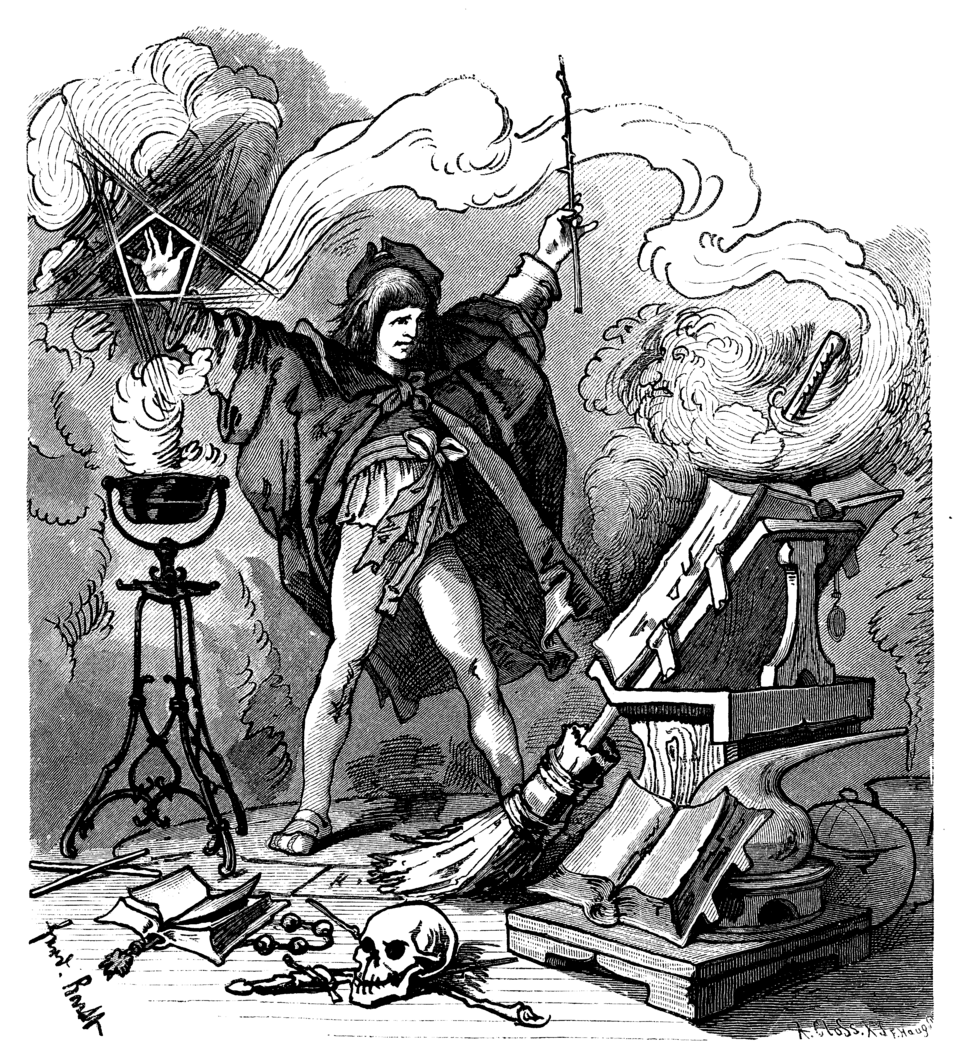
While Frankenstein is a good cautionary tale where (a metaphor for) technology runs amok*, I prefer the fabulation of the Sorcerer’s Apprentice as animated by Walt Disney to the music of Paul Dukas in the 1940 classic film Fantasia. The Sorcerer’s Apprentice was actually based on a short story by 19th century J W Von Goethe who was probably inspired by a Greek short story written almost two thousand years earlier.
In all these tales an inexperienced student of a magician attempts to use his mentor’s magic words (write a program) to empower a broom (create an algorithm) to automate the chore of bringing water from a well to a cistern. At first, the sorcerer’s apprentice succeeds in “hacking the task” but then loses control when he literally fails to stay awake and monitor his “AI agent” who keeps responding to initially clear-cut commands in an endless automated loop. At the peak of the turmoil and apprentice panic, the Sorcerer returns and aborts the out-of-control program with a stop command. Finally, a sheepish Mickey receives a swat from behind by his Master with the very broom (the algorithm) that caused all the chaos.
Both Frankenstein and the Sorcerer’s Apprentice demonstrate two potential (make that “actual”) problems with Artificial Intelligence: 1) Roguish Behavior where silicon agents exceed the constraints of program parameters and attempt to solve a directive in an unorthodox and often dangerous manner – especially to carbon-based creatures. Frankenstein’s monster doesn’t comprehend the value of human life; the Apprentice’s broom when too much of a good thing (water) is not a good thing.
2) Bad Actors where human hackers or bots attempt to use AI Agents for nefarious ends by inserting code or taking advantage of flaws in existing programs. In Frankenstein, the bad actor was actually Victor Frankenstein himself who created his monster as a way to play God, ending disease and death, and as a means to obtain fame and fortune for recognition as the greatest scientist of all time. In the Sorcerer’s Apprentice the Sorcerer’s protégé (Mickey) becomes a bad actor when he uses the mentor’s magic to shirk his responsibilities and cause a flooding disaster.
Another problem with Artificial Intelligence is 3) AI Slop (or “Slopaganda”) where AI (or what the very stable genius in the White House now calls Super-Intelligence / SI) provides incomplete or false information which leads users to make poor personal decisions based on bad data analysis (e.g., Vaccines are unsafe and ineffective). All three AI problems seem to have one thing in common: Improper or missing algorithms (If/Then conditional commands) in the Source Code that fail to control an AI program from either exhibiting Roguish Behavior, being manipulated by Bad Actors, or producing AI Slop / “Slopaganda”.
In addition to addressing these programming problems, AI developers should consider creating strong moral guardrails (If/Then conditional commands) on the order of Asimov’s Four Laws of Robotics as described at https://en.wikipedia.org/wiki/Three_Laws_of_Robotics
As Do No Harm (to human beings and humanity) is a foundational ethical concept across medicine, humanitarian work, and public policy,” so should it be for the current development of Artificial Intelligence programs and data centers. Without “fail-safe” AI code, humanity will face the same existential threat we did in the 1950’s with the invention of the hydrogen bomb and nuclear proliferation. The time for a critical pause is now before the AI Robot hits the “kill switch” on us its creators.
*Besides Frankenstein and the Sorcerer’s Apprentice, consider other cautionary tales of technology run amok from Mythology, Literature, and Movies such as—King Midas and the Golden Touch–The Myth of Prometheus–Daedalus and Icarus–Phaethon and the Sun Chariot–Pandora’s Box–Doctor Jekyll and Mister Hyde–Jurassic Park–The Island of Doctor Moreau–The Fly–R.U.R.
Can you think of any other cautionary tales where (a metaphor for) technology runs amok? Here’s another one I recently discovered: an interesting British movie from 1936 starring Roland Young:–The Man Who Could Work Miracles
Related Stories
 AI News
Fincantieri Acquires Subsea Telecommunications Specialist Xtera
9 minutes ago
 AI News
Kroger to lay off 3,000 corporate employees over 3 years as it leans into artificial intelligence
9 minutes ago
 AI News
California Bans AI From Making Medical Decisions on Its Own
9 minutes ago
 AI News
Bill Gates Calls Unregulated AI Humanity’s 'Most Dangerous' Invention, Issues Dire Warnings For The Upcoming Year
9 minutes ago
 AI News
‘VisionQuest’: From Ultron to J.A.R.V.I.S., Meet Marvel’s Artificial Beings
1 hour ago
 AI News
Emory University launches new center to explore artificial intelligence in finance
1 hour ago
 AI News
AI Agent Company Decagon Held Early M&A Talks With ServiceNow, Others
2 hours ago
 AI News
Anthropic's Claude AI Sends Fake Murder Tip To Philadelphia Police, Sparks Outrage Over Two
2 hours ago