
As the Music Catalog Investment Market Hits a High Note, Financial Investors Are Cashing Out
Amid the flurry of mergers, acquisitions and asset sales that have taken place in the music industry this year, the sale of three scaled music rights catalog companies — Anthem, Iconoclast and Crescendo — is a sign that the catalog investment market is approaching a milestone.
Since 2018, when Hipgnosis Songs Fund listed on the London Stock Exchange and raised £200 million ($260 million) to invest in music intellectual property, the market for music as an “investible asset,” as Hipgnosis founder Merck Mercuriadis described it, has grown by the tens of billions.
Private equity funds including KKR and Bain have long invested in major music companies, while independent catalog companies like Primary Wave, Round Hill Music and the publisher Reservoir have been acquiring publishing rights and master recordings for decades. However, in the eight years since Hipgnosis’ listing, there has been a boom in catalog investing as more private equity firms, insurance companies, pension funds, sovereign wealth funds, global private credit investors and family offices — to name a few — have been drawn to the annuity-like returns music royalties provide in the streaming era.
As the practice of treating music as an asset class has grown in popularity, it has also evolved, with companies from indie giants like Concord to the four-year-old music rights company Duetti securitizing their music portfolios to raise capital from debt markets. The rating agency KBRA says it has rated more than 80 music asset-backed securities with a cumulative value of $12.9 billion since 2020, and many of those, including Concord, Lyra and Canon, racked up triple the interest that was expected.
Jimmy Stone, managing partner at Alderbrook, which advises on music investing, wrote in a recent research note that market activity in the first quarter, like Primary Wave’s acquisition of indie publisher Kobalt, signals that activity is now shifting from catalog acquisitions to the consolidation of scaled companies. And the backers of Anthem, Crescendo, Iconoclast and others are attempting to seize this moment and exit their music investments on a high note.
Iconoclast, the music rights and brand development company started by Olivier Chastan and backed by the $2-trillion investment manager PIMCO, is in the final stages of a sale to Irving Azoff’s Iconic Artists Group, according to three sources. Music Business Worldwide previously reported Iconoclast was seeking a sale price around $500 million.
Chastan previously headed Iconic Artists Group, when the firm acquired rights to music by Brian Wilson and The Beach Boys, David Crosby and Linda Ronstadt.
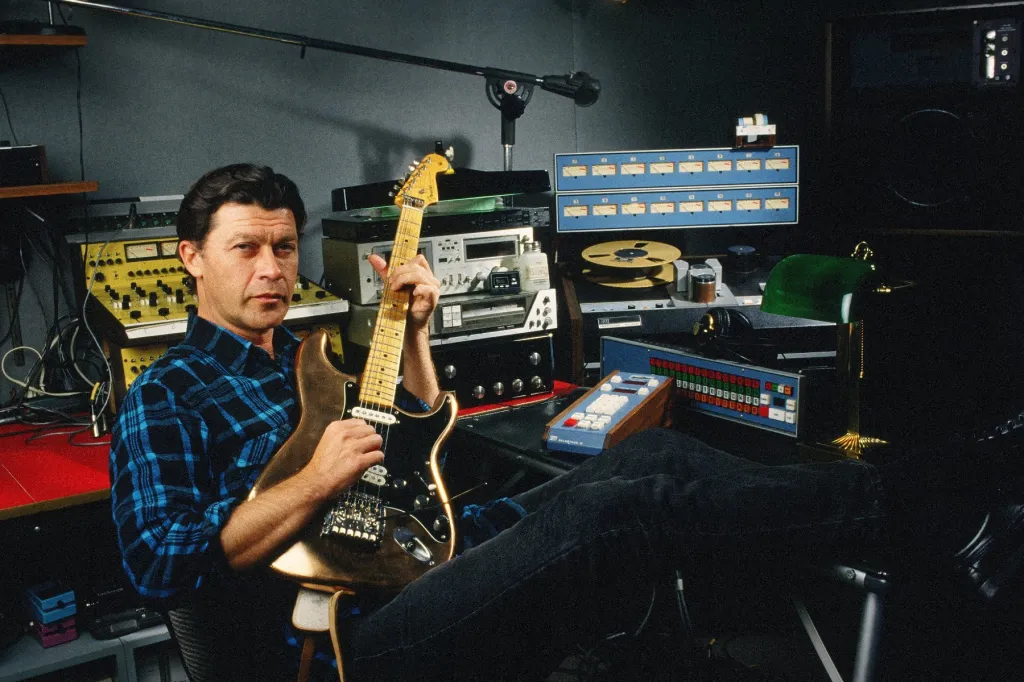
Iconoclast has acquired select music rights to more than 30 catalogs, including Diplo’s Mad Decent Publishing, David Cassidy, Marianne Faithfull, Tony Bennett and The Band’s Robbie Robertson. Music Business Worldwide wrote that Iconoclast is generating at least $25 million in annual revenue.
Anthem Entertainment, the Canadian music company whose portfolio includes the publishing assets and recorded master royalties of Rush, Timbaland, and the music from the Spider-Man franchise, is also nearing a sale, to Influence Media.
The main owner of Anthem, the Ontario Teachers’ Pension Plan, previously went to market to sell the fund in 2017 and 2022, but those auctions came in below expectations. This time, around a dozen parties bid between $500 million and $600 million. Influence Media bid slightly above $650 million, sources say.
Meanwhile, global private markets investment firm Northleaf Capital is in advanced talks to sell the Crescendo catalog — which contains Pete Townshend’s publishing from his The Who repertoire; T. Rex’s publishing catalog and masters; and Ingrid Michaelson’s music assets — to Litmus Music for around $500 million, sources say.
Northleaf acquired Crescendo in 2021 after providing $500 million in funding to Lyric Capital Group in a deal that was termed a “strategic alliance.” Lyric Capital was formed by Jon Singer and Ross Cameron when they were executives at Spirit Music to buy Spirit Music and its catalog from original owner Pegasus Capital in 2018. Spirit Music is now the operational music company of Lyric Capital and serves as administrator for the Crescendo catalog. That portfolio also includes the 2014 acquisition by Spirit Music of the Cal IV Entertainment portfolio’s country hits like Faith Hill’s “Breathe,” Keith Urban’s “Stupid Boy,” Tim McGraw’s “Watch The Wind Blow By” and Jason Aldean’s “Big Green Tractor.”
Litmus was launched in 2022 by music industry executives Hank Forsyth and Dan McCarroll with $500 million from private equity giant Carlyle Group. Its portfolio includes rights to music by Katy Perry, Benny Blanco and Keith Urban.
Stone says music catalog companies raised more than $4 billion in the first quarter this year, surpassing all of the capital acquisition funds raised in 2024.
That’s plenty of dry powder for investment deals.
Related Stories
 Entertainment
Top 76 concerts and events coming to the UAE, from Katy Perry to Mo Amer
6 minutes ago
 Entertainment
What to watch on board Cathay Pacific in September 2026 | Cathay CA
1 hour ago
 Entertainment
At least 27 dead in two mass shootings in South Africa, police say
3 hours ago
 Entertainment
The Tragically Hip, Feist to enter Songwriters HOF
9 hours ago
 Entertainment
‘Kaaka’ update: Chiranjeevi and Bobby Kolli’s film enters dubbing and post
18 hours ago
 Entertainment
Mayfair club shuts as Met investigates weapon claim
20 hours ago
 Entertainment
Global delegates to attend Alberta Music Cities Convention in Calgary
1 day ago
 Entertainment
U2 celebrate 50th anniversary at the school where they formed
1 day ago