
Assessing long
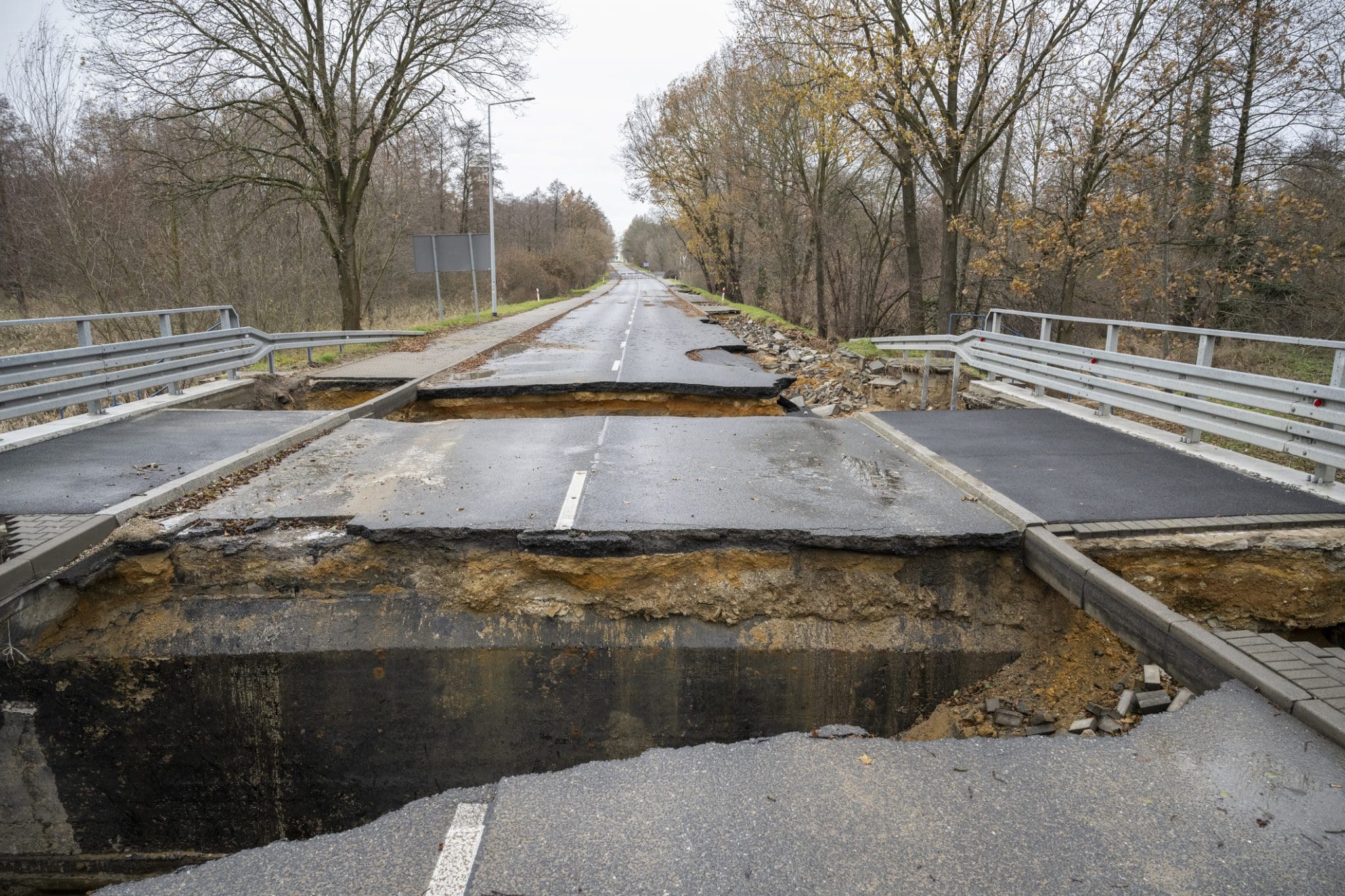
Researchers at Seoul National University of Science and Technology have created an automated computer vision system that tracks and measures bridge damage over time using routine drone inspections
Bridges naturally develop cracks, spalling, and water leakage as they age, making regular inspections essential. However, these inspections are often labour-intensive and costly.
To address this, the researchers developed an AI-powered computer vision framework that combines routine drone images, 3D reconstruction, and satellite positioning data to accurately track and measure structural damage over time.
This enables more efficient bridge maintenance while supporting predictive management of ageing infrastructure.
Bridges form an important part of the road systems. Monitoring them is essential for ensuring structural safety, as these bridges develop cracks, concrete spalling, and water leakage over time due to traffic loads, weather, and environmental exposure.
Traditional visual inspections are often labour-intensive, costly and sometimes hazardous, but computer vision has made automated bridge inspections more practical. However, comparing damage captured months apart remains difficult because images are typically taken from different positions and viewing angles.
The automated computer framework that tracks structural damage over time using drone images collected during routine bridge inspections, making bridge damage inspection more practical.
It enables long-term monitoring by combining artificial intelligence with 3D bridge reconstruction. The 3D model of the bridge is built using images captured during the initial inspection.
Images from subsequent inspections are then automatically aligned with this model using hierarchical localisation and image clustering, allowing the same damage to be identified and compared over time even when photographs are taken from different camera angles or distances.
Additionally, the framework uses Global Navigation Satellite System data to convert image measurements into real-world dimensions.
“Long-term structural monitoring requires more than simply detecting damage; it requires understanding how that damage evolves,” said Assistant Professor Hyunjun Kim, who led the research.
“Our framework allows engineers to visualise damage progression and measure its severity using images collected during routine inspections.”
The system was validated over 120 days by monitoring an in-service prestressed concrete bridge using drone imagery. The framework tracked the progression of cracks, spalling, and water leakage throughout the study period despite changes in camera viewpoint. It measured the damaged areas with a maximum error of only 4.61% compared to conventional manual measurements.
Unlike traditional inspection methods, which could analyse damage only at a single point in time or which require rebuilding 3D models for every inspection, this study suggests continuous monitoring of damage using a single reference model. This approach improves consistency while reducing the computational effort needed for long-term assessments. Although the current method is best suited for relatively flat structural components and its accuracy might differ on highly curved surfaces, it can report most bridge elements commonly encountered during routine inspections.
“We believe this framework can help engineers make more informed maintenance decisions and contribute to extending the service life of critical infrastructure,” Kim concluded.
Related Stories
 AI News
Bill Gross bets AI can help mass
1 day ago
 AI News
Nigeria records 93% rise in AI micro
1 day ago
 AI News
The Italian gelato maker using AI to invent new flavours
1 day ago
 AI News
Closing the Gap Between Agentic CX Pilots and Production
1 day ago
 AI News
New Brunswick data centre debate highlights cross
1 day ago
 AI News
How to Structure an AI Agent Referral Fee Agreement Between Startups
1 day ago
 AI News
No, AI didn’t delete a Swedish reality TV series
1 day ago
 AI News
There is no AI in Armageddon. Artificial intelligence is a tool, not an apocalypse
1 day ago