
Auto China 2026: How Artificial Intelligence Is Redefining the Future of the Automotive Industry
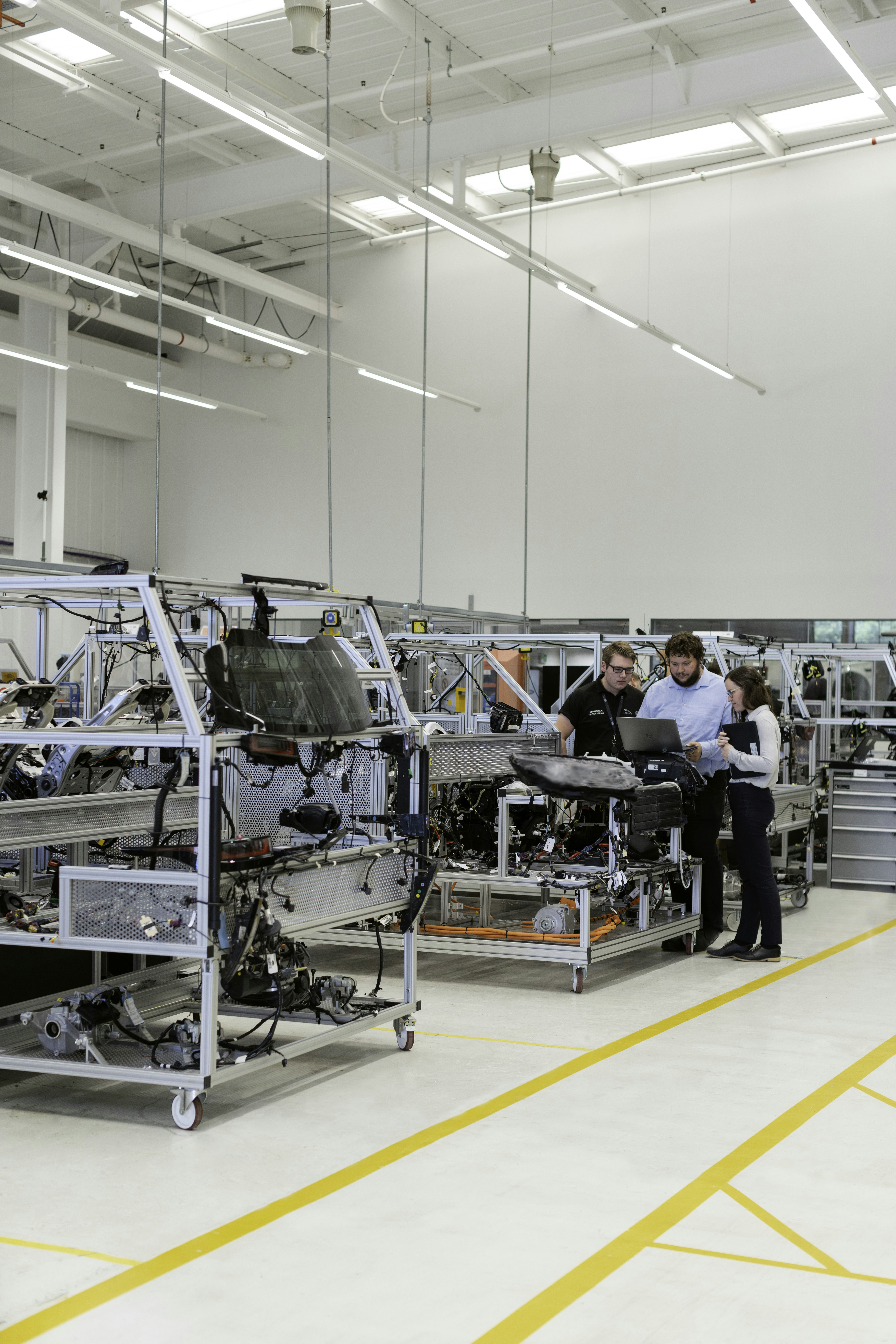
For decades, major auto shows were primarily about horsepower, styling, and the unveiling of new vehicles. Manufacturers competed to showcase faster engines, sleeker designs, and innovative mechanical engineering. Visitors would crowd around concept cars, admire futuristic bodywork, and debate performance figures.
At Auto China 2026, however, a different story is taking center stage.
While new vehicles remain a major attraction, the spotlight has shifted from traditional automotive engineering to something far more transformative: artificial intelligence. This year's exhibition demonstrates how software, centralized computing, large language models, and advanced autonomous driving technologies are rapidly becoming the defining features of modern vehicles.
The automobile is no longer just a machine. It is evolving into a rolling computer powered by AI.
One of the biggest themes emerging from Auto China 2026 is the concept of the software-defined vehicle. Unlike traditional cars, where functionality is largely fixed at the time of purchase, modern vehicles increasingly rely on software that can be updated, improved, and expanded throughout their lifespan.
Manufacturers are investing heavily in centralized computing architectures that replace dozens of individual electronic control units with powerful integrated computing systems. This approach allows vehicles to process vast amounts of data more efficiently while enabling new features through software updates.
The result is a car that can evolve long after it leaves the factory.
Features such as enhanced driver assistance, improved energy management, smarter navigation systems, and upgraded infotainment capabilities can now be delivered through over-the-air updates rather than requiring physical modifications.
For consumers, this means their vehicle could become more capable over time rather than gradually becoming outdated.
Artificial Intelligence Takes the Driver's Seat
Artificial intelligence is becoming the central nervous system of the modern automobile.
At Auto China 2026, manufacturers are showcasing vehicles equipped with increasingly sophisticated AI systems capable of understanding natural language, learning driver preferences, and making real-time decisions.
Large Language Models (LLMs), similar to the technology behind advanced AI assistants, are now being integrated into vehicle operating systems. Instead of relying on rigid voice commands, drivers can interact with their cars using natural conversation.
"I'm feeling tired. Find a quiet coffee shop on the way home and avoid heavy traffic."
The vehicle's AI system can interpret the request, evaluate multiple variables, and generate a personalized solution without requiring specific commands.
This represents a major shift from traditional infotainment systems toward truly intelligent automotive assistants.
Perhaps the most significant development highlighted at Auto China 2026 is the progress toward Level 4 autonomous driving.
While fully autonomous vehicles have long been discussed as the future of transportation, practical deployment has often faced technological and regulatory hurdles. However, advances in AI processing, sensor technology, and computing power are accelerating development.
Level 4 autonomy allows a vehicle to handle all driving tasks within specific operating conditions without human intervention. In designated environments, the car can effectively drive itself while the occupant becomes a passenger rather than an active driver.
Several manufacturers at the show are demonstrating systems that move closer to this reality.
Unlike earlier driver-assistance technologies, which still require constant human supervision, Level 4 systems aim to deliver genuine autonomous operation within predefined areas or situations.
Although widespread adoption remains some years away, the technology displayed at Auto China 2026 suggests the industry is making meaningful progress toward autonomous mobility.
China's Growing Leadership in Automotive Innovation
The prominence of AI technologies at Auto China 2026 also highlights China's expanding influence within the global automotive sector.
For many years, traditional automotive innovation was dominated by manufacturers from Europe, Japan, and North America. Today, China is increasingly setting the pace, particularly in electric vehicles, battery technology, software development, and AI integration.
Chinese automakers have embraced digital-first vehicle development, allowing them to move quickly in areas such as connected services, autonomous driving, and intelligent cockpit systems.
Many domestic brands now compete directly with established global manufacturers not only on price but also on technological sophistication.
As a result, Auto China has evolved into one of the industry's most important showcases for future mobility technologies.
The developments on display suggest that the future automotive market will be defined less by mechanical specifications and more by digital capabilities.
Consumers are beginning to evaluate vehicles not only on performance and design but also on software features, AI functionality, connectivity, and autonomous capabilities.
This shift mirrors broader trends across the technology sector, where hardware increasingly serves as a platform for software-driven experiences.
In the coming years, competition among automakers may focus as much on computing power and artificial intelligence as it does on acceleration times and driving dynamics.
Auto China 2026 demonstrates that the automotive industry is entering a new chapter. Cars are evolving from transportation tools into intelligent digital platforms capable of learning, communicating, and making decisions.
Centralized computing systems are replacing fragmented electronics. Large language models are transforming human-vehicle interaction. Autonomous driving technology is advancing toward real-world deployment. Artificial intelligence is becoming a core component of vehicle design rather than an optional feature.
The significance of these changes extends far beyond the show floor.
The future of automotive competition will increasingly be shaped by software engineering, AI development, and digital ecosystems. Manufacturers that successfully integrate these technologies will be better positioned to lead the next generation of mobility.
For visitors attending Auto China 2026, the message is clear: the future car is no longer defined by what is under the hood. It is defined by what is inside the computer.
And that future is arriving faster than many expected.
Related Stories
 AI News
Bill Gross bets AI can help mass
2 days ago
 AI News
Nigeria records 93% rise in AI micro
2 days ago
 AI News
The Italian gelato maker using AI to invent new flavours
2 days ago
 AI News
Closing the Gap Between Agentic CX Pilots and Production
2 days ago
 AI News
New Brunswick data centre debate highlights cross
2 days ago
 AI News
How to Structure an AI Agent Referral Fee Agreement Between Startups
2 days ago
 AI News
No, AI didn’t delete a Swedish reality TV series
2 days ago
 AI News
There is no AI in Armageddon. Artificial intelligence is a tool, not an apocalypse
2 days ago