
Avoid These 5 PR Mistakes That Startups Make
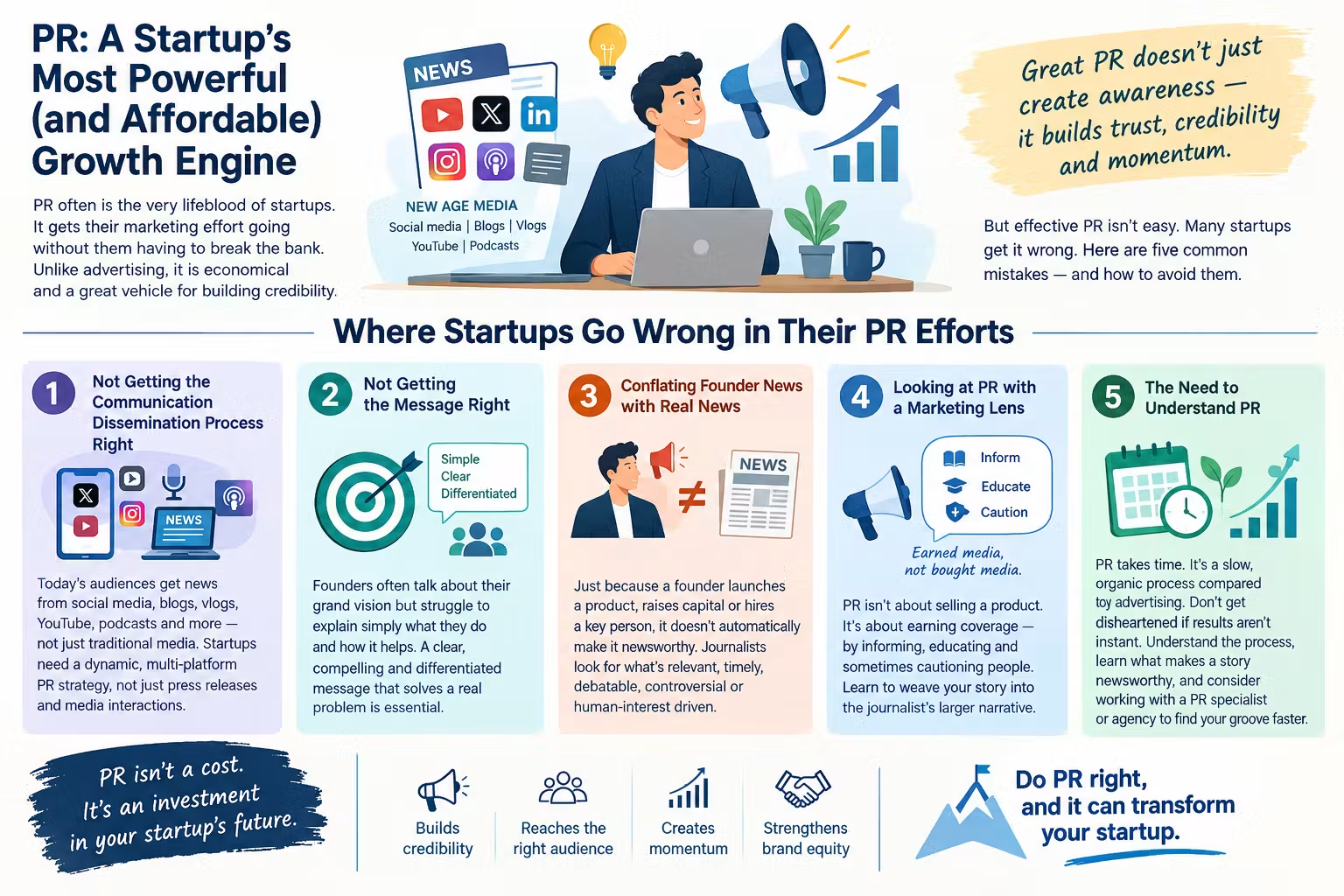
1. Not Getting the Communication Dissemination Process Right
PR in 2026 is not the PR of ten to fifteen years back. Storied publications like the New York Times, The Times of India, The Washington Post, and the Hindustan Times are not what people automatically turn to these days for their news. The disseminators of news and information are a diffused lot these days, with social media platforms, blogs, vlogs, YouTube videos and podcasts catering to their own specific audiences, largely replacing traditional media outlets.
Startups can no longer rely on old-style press releases and media interactions, with an Op-Ed thrown in for good measure, targeting traditional media outlets to promote the offerings of their business. They need an evolved and dynamic PR strategy that speaks to the new-age media platforms of news dissemination.
2. Not Getting the Message Right
This is the trickiest part and could make or break a startup’s PR initiative. Founders can talk passionately about their grand vision, but when it comes to explaining in simple terms what they exactly do and help accomplish, they flounder and are unable to come up with an unmistakable, crystal-clear message for their target audience.
A startup founder should know exactly what it is that they offer to their prospects in terms of solving their problems in a manner that they sit up and take notice. You get that right, and that is an important step in the direction of making them care about engaging with you. The key here is to differentiate your product or service from the others.
3. Conflating Founder News with Real News
Startups more often than not are the passion projects of extremely committed founders. It is, therefore, easy to conflate founder news with the real news. Just because a startup company is all pumped up about an important announcement relating to the founder, it does not naturally follow that journalists and their readers or viewers will share the same sense of excitement. He or she may have launched a new product, managed to raise capital or hired someone with a sterling reputation; it won’t cut much ice with journalists and media outlets unless they find something newsworthy in the proposed story.
This could be something that ties in with a trend that the latter (journalist) might already be following, or it is something that sparks a debate or even a controversy. It could also be something that has a human interest angle to it. It is always about newsworthy debate and discussion and rarely about founder news.
4. Looking at PR with a Marketing Lens
Founders are, at the end of the day, business people with a product to sell. Unfortunately, that is not the way one can look at PR. Coverage obtained via PR is earned coverage and not bought coverage. Journalists are not obligated to provide coverage to a company, but to inform, educate, and sometimes caution people about things and matters that concern them.
It may, for instance, apprise them of any future trends that might impact their lives or educate them about the importance of a new concept or phenomenon making an appearance, often by weaving evocative stories. It is in learning to seamlessly integrate one’s narrative into what the journalist’s story or report is trying to accomplish that one finds success.
Founders need to understand the PR process and not get disheartened if their initial efforts don’t quickly get them the expected results. PR takes time to deliver as it is a relatively slow and organic process, as compared to advertising, but it is ultimately believed to deliver better results and more bang for the buck, given that the media coverage is earned and not bought.
Founders, as it is under a lot of pressure from multiple sources and seeing one’s intense PR efforts not seeming to deliver any results for quite some time, can be disconcerting. Getting disheartened and losing faith in PR is something that startup founders need to guard against.
They need to understand the PR process and devise a strategy that helps them obtain an understanding of how to get a journalist, publication, or media platform interested in their pitches. That is where a dedicated PR specialist or an agency can help them find their groove faster.
PR is something that every startup needs. It is, therefore, imperative for founders to accord it the importance it deserves and see PR help them engage with the target audience in the most impactful way possible. In fact, if done right, PR has the potential to transform the fortunes of any business, especially a startup.
Related Stories
 Immigration
Sweden’s PM resigns after centre
8 hours ago
 Immigration
New Green Card rule takes effect Sept 18: What changes for Indian applicants under the new public charge guidance? | Hindustan Times
1 day ago
 Immigration
Former Saskatoon private school admin, pictured with paddle in 1997, testifies at former principal's trial
2 days ago
 Immigration
Canada releases data on Express Entry candidate scores
2 days ago
 Immigration
Carney says visa rules to be discussed with EU. Live updates here.
2 days ago
 Immigration
Sweden’s political parties launch coalition talks as both blocs try to secure power
2 days ago
 Immigration
Canada permanent residency pathways 2026: Canada announce new Express entry for international doctors
2 days ago
 Immigration
‘I believed the hype’: the white South Africans denied refugee status in the US
2 days ago