
Bank of Canada to make rate decisions based on domestic economy, not markets or the Fed, says Macklem
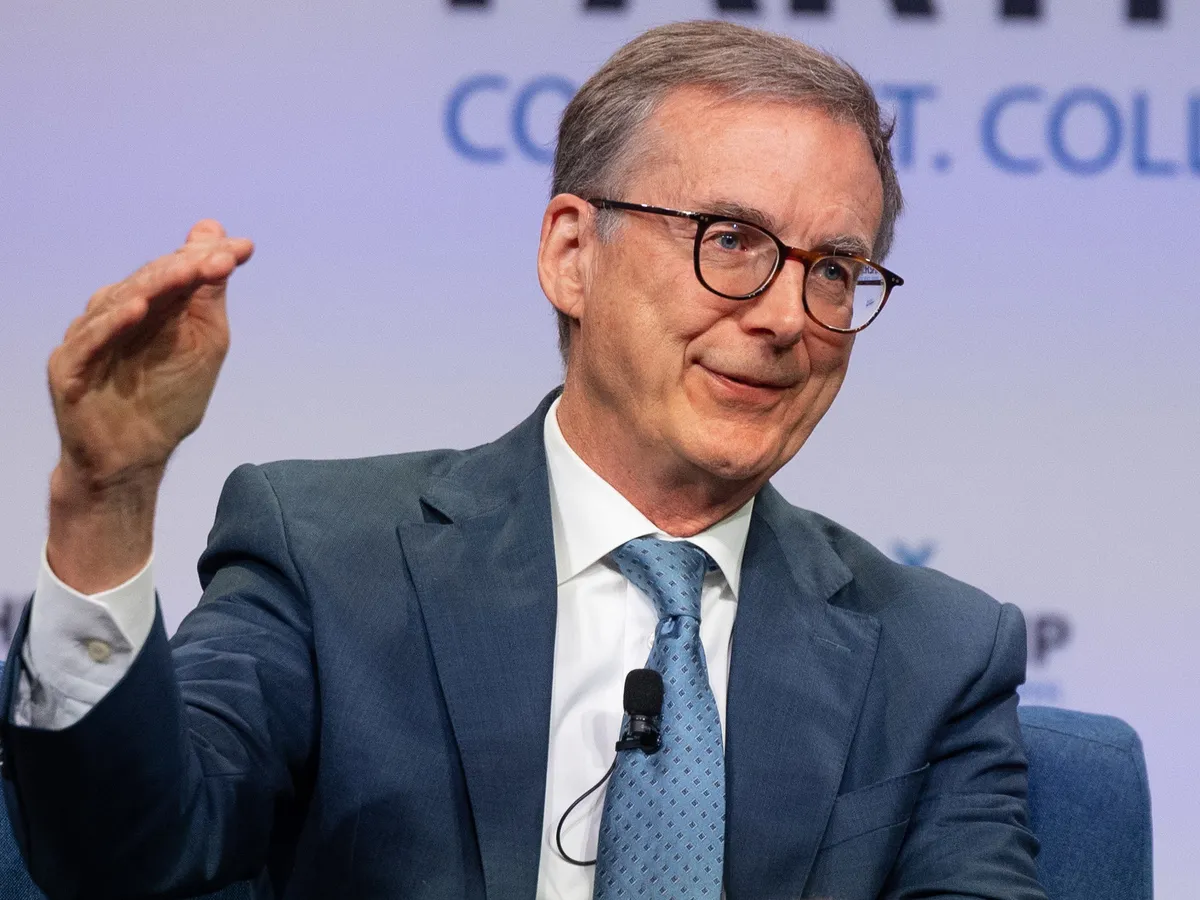
Bank of Canada governor Tiff Macklem said the central bank’s governing council will continue to make monetary policy decisions based on economic realities in Canada, rather than be influenced by Federal Reserve decisions or market predictions.
Speaking to reporters after a speech in Halifax on Monday, Macklem said there are key differences between the Canadian and American economies, leading to different interest rate decisions.
Inflation rates in both countries have been running hot for months due to higher global oil prices from the conflict in the Middle East, which has severely reduced refining capacity the region. Canada’s inflation rate remained steady at three per cent year over year in August and July, while U.S. inflation topped 3.4 per cent annually during the same time period.
However, Canada’s inflation rate gradually returned to the two per cent target in August 2024 after a post–COVID-19 inflation surge that hit a 40-year high of 8.1 per cent in June 2022. The inflation rate then hovered around that target for roughly 1.5 years before rising again in March due to the Iran war.
The U.S. inflation rate never returned to the Fed’s two per cent target after the pandemic. It surged dramatically to 9.1 per cent in June 2022, a 40-year high, before gradually cooling down to three per cent in 2023. It has hovered around that mark ever since.
“We can run a monetary policy in Canada that is geared to the situation in Canada, and that’s what we’re going to keep doing,” Macklem said at Monday’s news conference.
His statement came after the Federal Reserve hiked its benchmark interest rate by a quarter-percentage point to a target range of 3.75 to four per cent last Wednesday, bringing the Canada–U.S. rate differential to 1.5 to 1.75 percentage points.
The Bank of Canada has been sitting on the sidelines for almost a year, leaving its key interest rate at 2.25 per cent as it waits to see how the economy adjusts to the U.S. tariffs and global oil price shock.
Canadian markets, however, are expecting another rate hike before year’s end due to inflationary concerns. Long-term Government of Canada bond yields reached 4.19 per cent last Friday, while 10-year bond yields reached 4.14 per cent.
Most economists remain unconvinced that the central bank will raise borrowing costs this year, though concerns about inflation becoming more persistent and generalized have increased. Many expect a rate hike in early 2027.
“Our new forecast expects growth to sag after the latest tariffs and trade restrictions by the United States come into effect. Softer growth is expected to drag on the labour market and maintain slack in the economy,” TD Economics wrote in a weekly update published last Friday. “Canada is also importing tighter financial conditions from the U.S. via higher bond yields. The combination of these forces underpins our expectation that the BoC will be able to stay on the sidelines.”
Related Stories
 Canada
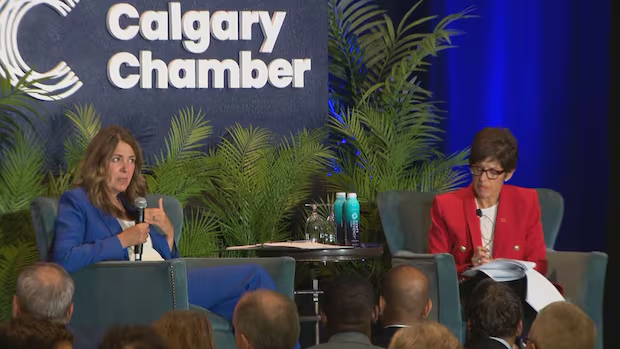
Danielle Smith floats charging temporary residents $1,900 to access public health care
47 minutes ago
 Canada
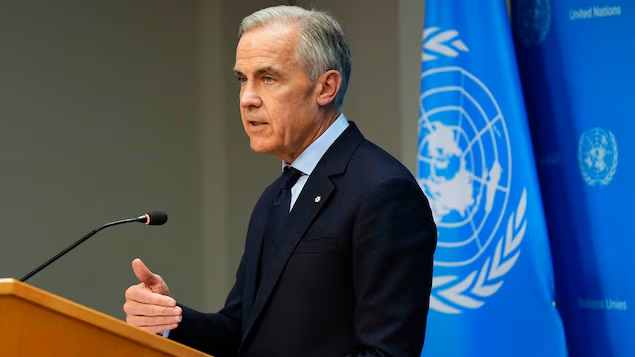
Canada pledges $100M for Palestine at United Nations General Assembly
47 minutes ago
 Canada
Melania Trump breaks with the U.S. president on media ban
1 hour ago
 Canada
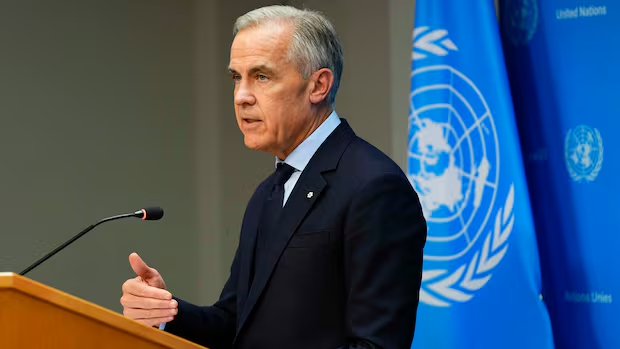
Canada pledges $100M for Palestine at United Nations General Assembly
1 hour ago
 Canada
Federal government selects non
1 hour ago
 Canada
Feds open up Trans Mountain equity stake to Indigenous groups on pipeline’s path
1 hour ago
 Canada
Belleville gunman spouted COVID
1 hour ago
 Canada
Sask. premier unsurprised that Trump now says U.S. will continue with Canadian potash
1 hour ago