
Brian Lichty is helping build Canada’s next generation of biomanufacturing
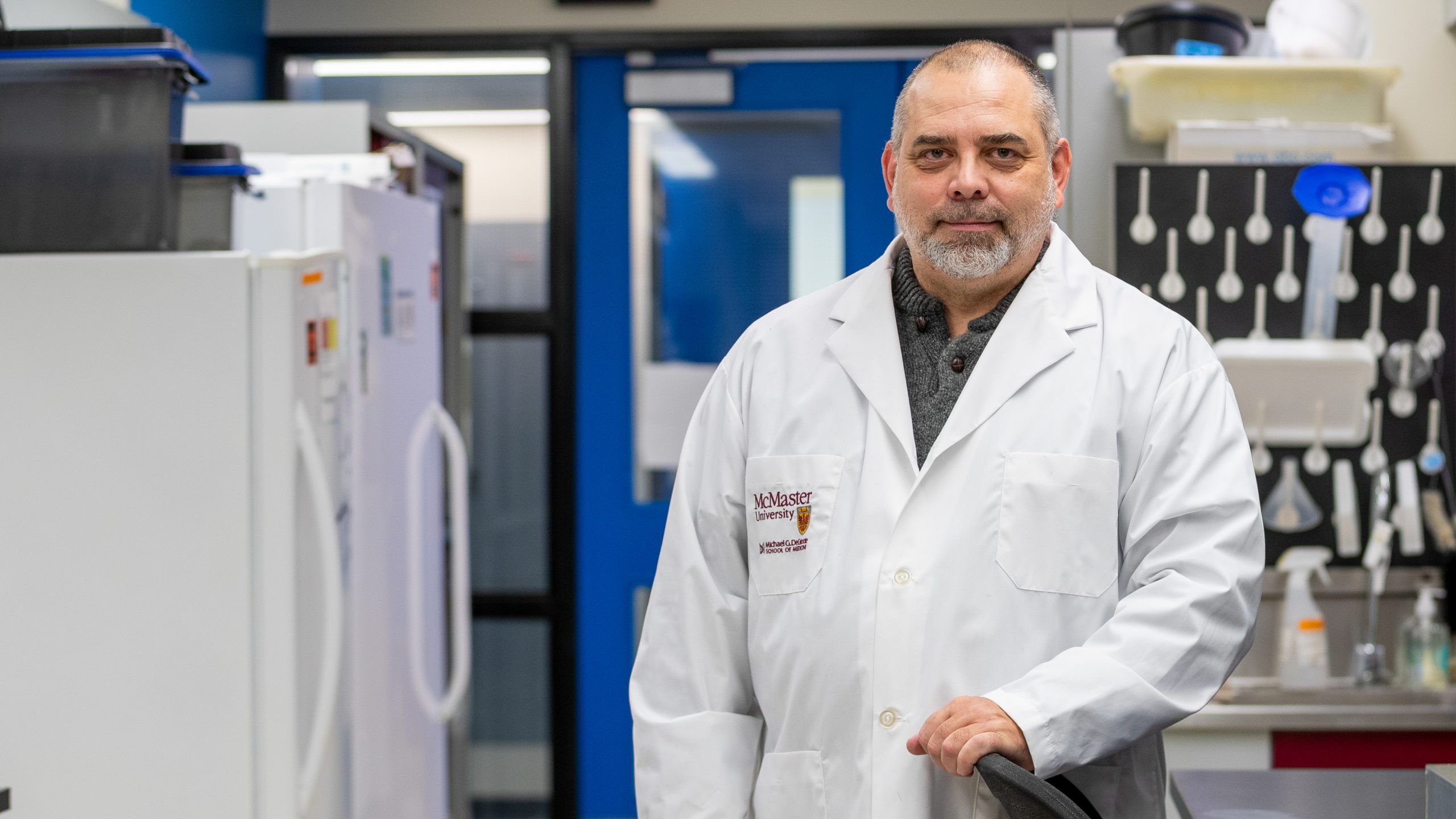
When the COVID-19 pandemic exposed how much Canada’s domestic capacity for vaccine and biologics manufacturing had diminished, Brian Lichty and his colleagues at McMaster University were working from an unusually strong academic position. They already had relevant infrastructure, translational expertise and an established biomanufacturing facility that could quickly mobilize.
That foundation allowed McMaster experts to design, test and manufacture a made-in-Canada COVID-19 vaccine candidate on an accelerated timeline. It also presented a larger institutional opportunity: expanding McMaster’s strengths in biomanufacturing into a broader platform for translational research, clinical development and workforce training.
For Lichty, who is an associate professor in the Department of Medicine and director of the Fitzhenry Vector Laboratory, the significance of this moment lies less in any single achievement than in the steady development of scientific capacity over time. His expertise sits at the intersection of virology, immunotherapy, vaccine development and bioprocessing. A combination, alongside the expertise of his colleagues, that has helped position McMaster as an important contributor to Canada’s health innovation landscape.
Lichty’s research program has focused primarily on using viruses as therapeutic platforms, particularly as cancer immunotherapies and vaccine vectors. Over time, his work has also contributed to biotechnology partnerships and founding companies.
However, one of his most important institutional outcomes has been helping develop biomanufacturing capacity at McMaster.
The university’s current facility dates back to 2004, when funding supported the establishment of what became the Robert E. Fitzhenry Vector Laboratory — at the time, the first academically owned and operated biomanufacturing facility in Canada. Over the following years, the facility manufactured vaccines for both human and veterinary applications and supported products entering early-phase clinical trials in Canada and the United States.
Lichty assumed leadership of the facility roughly a decade later, after becoming closely involved in its use through his own translational and industry-linked work. By the time the COVID-19 pandemic emerged, McMaster had more than laboratory expertise. It had become home to the knowledge, experience, established collaborators and infrastructure that could support rapid biomanufacturing processes.
At the same time, the pandemic exposed the instability of Canada’s broader biomanufacturing environment. National capacity had not entirely kept pace with the requirements of a large-scale public health emergency.
“The pandemic made clear that Canada needed stronger infrastructure to design, manufacture and test vaccines domestically, and that created an important opportunity to rebuild that capacity,” Litchy explains.
New capacities for research, training and care
With funding secured over the past several years, McMaster will not only preserve its existing work but also modernize and diversify it. Altogether, thanks to Lichty and colleagues, McMaster’s share of funds to build and equip this expanded biomanufacturing capacity exceeds $56 million, combining its portion of a Canada Foundation for Innovation award, Ontario matching funds and related infrastructure support.
So far, the current facility has mainly produced virus-based products, including vaccine vectors, modified viruses used to deliver instructions to the body safely, and virus-based immunotherapies, which are treatments designed to help the immune system fight diseases like cancer.
The planned next-generation facility will expand that work to produce recombinant proteins and monoclonal antibodies, laboratory-made versions of substances the body naturally uses to fight illness. Ultimately meaning McMaster will be able to develop and manufacture a much wider range of biologic medicines on site.
From a translational perspective, this expansion matters because it provides McMaster with stronger facilities and equipment to advance promising therapies from early laboratory testing into the first stages of clinical use in people. It also creates a clearer path for local researchers and smaller biotechnology companies that might not otherwise be able to afford or access the specialized manufacturing support needed to produce these treatments safely and at the right scale.
“We will support small biotech in Canada while also supporting Canadian grant-funded academics so that they can take their biologics from the bench to the bedside,” says Lichty. “This expansion will make things possible that were not possible before.”
Lichty also emphasizes the importance of training. Biomanufacturing does not simply come from scientific knowledge; it also requires highly skilled personnel who can work in regulated environments with certified equipment and associated processes. For that reason, the broader infrastructure renewal has workforce and research implications.
“You need the modern equipment,” he says. “And you need a facility first and foremost.”
McMaster intends to retain clean-room capacity in the existing space for training, creating opportunities for technicians and trainees to gain hands-on experience in a sector where qualified personnel remain in short supply. Lichty also points to the potential for training pathways and partnerships, including with local institutions, to help prepare people for roles in Hamilton’s growing life sciences and biomanufacturing sector.
McMaster’s expansion in this area is part of the Canadian Pandemic Preparedness Hub (CP2H), a broader national collaboration co-led by the University of Ottawa and NexusHealth at McMaster. More broadly, the biomanufacturing infrastructure work is progressing through the Canadian Biomanufacturing Cooperative (of which Lichty is co-director), which brings together partner sites in Ontario, Nova Scotia, Saskatchewan, Alberta and British Columbia. Different sites contribute different expertise and equipment, including vaccine and cell therapy production, pathogen manufacturing, veterinary testing and sterile fill-finish services.
Lichty believes that this distributed model is strategically important because it increases the likelihood that multiple therapeutic or vaccine approaches can be developed and evaluated quickly at a national scale, rather than relying on a smaller group of centralized partners.
The collaboration is also rooted in long-standing scientific relationships. Lichty himself completed postdoctoral training in Ottawa and has worked with collaborators there for years. That history helped support a joint funding application and reinforced the case for a coordinated academic manufacturing network.
In a future public health emergency, this new model strengthens Canada’s ability to respond more rapidly with domestic biomanufacturing and testing capacity. Outside emergency periods, it supports the development, manufacturing, and advancement of novel therapeutics and vaccines within Canada.
“In between pandemics, we hope to make novel medicines and make them available to Canadians,” says Lichty.
These investments are therefore set to have both institutional and national impacts. It strengthens Canada’s preparedness for future health threats while also expanding the capacity for translational science, biologics development and specialized training required to make it possible.
Related Stories
 Canada
Mark Carney doesn't stop the United States from driving negotiations over a cliff
47 minutes ago
 Canada
Premier says B.C. government will support Canada's countermeasures to U.S.
1 hour ago
 Canada
U.S. administration not unified during trade negotiations, Carney says
1 hour ago
 Canada
Manitoba Premier Wab Kinew 100% behind prime minister's decision to pull out of U.S. trade negotiations
1 hour ago
 Canada
Canadians like to think we're nice. But loaning my car to a stranger made me question what that really means
2 hours ago
 Canada
Canadians backing tough response to U.S. tariffs, says Windsor professor
2 hours ago
 Canada
'We got attacked': Carney says retaliatory tariffs on U.S. to take effect next month
2 hours ago
 Canada
CBC News speaks with Heather Hurlburt about Canada
2 hours ago