
CaixaBank DayOne and Afi analyse Spain’s new startup generation, with AI driving growth
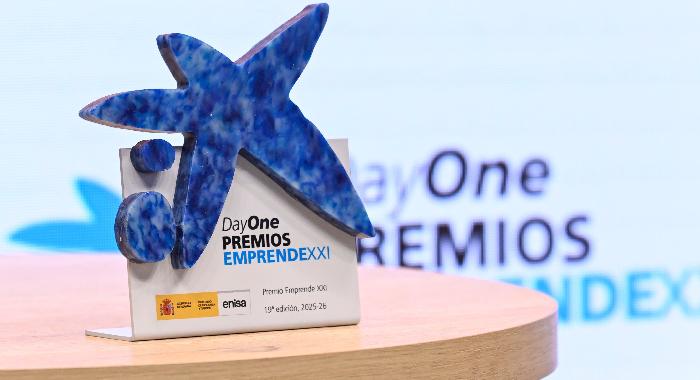
CaixaBank, through DayOne, and Afi (International Financial Analysts) have partnered to prepare a report analysing the main characteristics, trends and challenges facing startups in Spain and Portugal. The study "EmprendeXXI Awards 2025-2026: Signs of a New Entrepreneurial Generation in Spain and Portugal" analyses over 1,000 nominations presented in the latest edition of the EmprendeXXI Awards, a sample that is equivalent to roughly one-fifth of all startups identified in Spain.
The report offers an in-depth analysis of the main trends defining this new, increasingly young, more international and more business-oriented entrepreneurial generation. One of these trends that especially stands out is the evolution of the ecosystem from models mainly focused on digitalisation to initiatives driven by deep tech, with a particular emphasis on artificial intelligence. AI has shifted from a niche technology to a cross-cutting layer of business innovation, now present in one in four startups, showing a 10% increase from the previous year, jumping from 15% to 25% of all startups.
The growing relevance of AI is seen not only in the number of companies adopting it, but also in its ability to attract investment.
The AI-based startups attracted €72.7 million in funding, nearly matching the level of biotechnology companies (€73.3 million), and ranking well above the other tech categories analysed. In addition, the funding raised by AI companies increased by 59% compared to the previous edition, while most other technologies experienced declines.
A more international, business-oriented generation of startups
Beyond technology, the report shows a significant shift in the commercial focus of these startups. The new entrepreneurial generation is emerging with a clear business and international vocation. The B2B model has become dominant and is now present in 77% of participating companies, confirming the growing business-to-business focus of startups across recent editions. At the same time, large companies continued to be the main sales channel, with a presence in 73% of the startups, while the retail customer segment lost ground, falling from 55% to 47%. At the same time, purely B2C models experienced a decline compared to previous editions, reflecting a growing commitment to solutions that can be integrated into corporate processes, business digitalisation and provision of advanced services.
Internationalisation has also established itself as a structural characteristic of the ecosystem. With 44% of the startups already marketing their products or services outside their domestic markets, foreign sales represent an average of 35% of turnover among those with an international presence. The European Union continues to be the main destination for expansion for 70% of companies operating internationally, and 16% of them are already selling in the United States and Canada – three points more than the previous year.
Younger companies and regional specialisations
The 2025-2026 edition of the EmprendeXXI Awards has achieved a record-breaking turnout, with 1,006 nominations – a 5% increase over the previous edition. The sample analysed shows an increasingly young ecosystem: 60% of the participant startups are less than two years old, and the weight of companies between three and four years old fell from 19% to 14%. These data confirm the ability of the EmprendeXXI Awards to identify new entrepreneurial initiatives from their earliest stages.
The volume of funding raised and declared by companies in the last edition declined compared to previous editions: from €606 million in 2023 to €468 million in 2024 and €345 million in 2025 – a drop of 43% from the peak recorded two years ago. This drop is explained, at least in part, by the greater weight of companies in very early stages, which accumulate fewer funding rounds and less debt – and, therefore, lower capital amounts per company.
In fact, the average amount of funding ranges from just over €100,000 for startups less than a year old to over €1 million among companies three to four years old. This trend demonstrates that the main challenge is not so much creating new companies as helping them scale and evolve towards more advanced stages of development and commercialisation.
Although Madrid, Catalonia, Valencia and Andalusia continue to concentrate most of the startups participants, the report also identifies signs of a gradual decentralisation of innovation. Communities such as Navarra and Castile and Leon are gaining prominence among the companies with the greatest growth potential and are beginning to consolidate technological specialisations linked to their productive and scientific capabilities.
The study also reveals an increasingly diverse map of regional specialisations. Castile and Leon and Castile-La Mancha stand out in Agrotech, Navarra in Biotech, while regions such as the Balearic Islands, Galicia, Extremadura, Cantabria and Portugal show a prominent presence of AI-based startups. This evolution points to an ecosystem where innovation no longer depends exclusively on traditional major tech hubs, but is driven by capabilities distributed across the country.
Funding has proven to be the main medium-term challenge for startups: the percentage of companies identifying funding as their main challenge increased from 68% to 76%. This speaks to the pressure on founding teams to raise funds in a more selective investment environment marked by strategic decision-making. In addition, shifting from the early stage to scale-up mode continues to be a major bottleneck in the ecosystem, meaning the challenge is no longer about launching new startups, but securing their growth and global competitiveness.
The 20th edition of the EmprendeXXI Awards kicks off
Hand-in-hand with the presentation of the study, CaixaBank, through DayOne, has announced the launch of the 20th edition of the EmprendeXXI Awards, held in collaboration with the Spanish Ministry of Industry and Tourism, through Enisa. This new call for applications will begin on 1 October, and tech-based and innovative companies based in Spain, incorporated from 1 January 2023, can register to participate until 22 January 2027.
The EmprendeXXI Awards seek to recognise projects with scalable business models and high growth potential, capable of transforming industries and tackling pressing challenges through tech and innovation. The 20th edition will be structured around 17 regional awards, nine Challenges of Tomorrow and two cross-cutting special awards, in addition to the Alumni Trajectory recognition. In the regional phase, each autonomous community will choose its winning company at the DayOne Innovation Summits, which will be held between February and April 2027. The 17 award-winning companies will receive €6,000, as well as access to training and the support initiatives offered by the international programme.
After the regional phase, the national phase of the Challenges of Tomorrow will take place in May, which will recognise solutions linked to nine strategic areas grouped into three main categories: Business Transformation; Human and Wellbeing; and Living Planet. In each of the nine challenges, a winning company will be selected to receive €15,000. Additionally, both the winner and the finalist will gain access to training and the international support programme.
One of the main new features is that this edition has updated the Challenges of Tomorrow categories to adapt them to current industrial and social transformations. Within Business Transformation, areas such as Fintech, Insurtech and Cybersecurity stand out, each acquiring a significant weight as their own standalone challenge following the trends analysed; Commerce, Retail and Business Digitalisation; and Tourism, Travel and Leisure. In the Living Planet category, the Bluetech Economy challenge joins the line-up, focused on solutions related to the sustainable use of seas, oceans and water resources across areas like the blue economy, ports, sustainable fisheries, water management and marine conservation.
The call for submissions will also feature two across-the-board runners-up awards, dedicated to Social Impact and Disruptive Innovation, worth €9,000 each, as well as the Alumni Trajectory recognition, which will recognise a past winner that has subsequently stood out for its growth, impact and innovation capacity.
The award-winning companies will also have access to Leadership Day by ESADE, the Alumni community and the international Moonshot Thinking for Entrepreneurs programme.
The awards are backed by various CaixaBank Group companies, business areas and divisions: AgroBank, CaixaBank Real Estate & Homes, CaixaBank Payments & Consumer, CaixaBank Negocios, CaixaBank Tech, CaixaBank Hotels & Tourism, VidaCaixa, CaixaBank Seniors, Sustainable Banking, CaixaBank Dualiza, imagin, MicroBank and CaixaBank Wealth Management, as well as the Innovation Area.
The Spanish National Innovation Company (ENISA) is a state-owned enterprise attached to the Ministry of Industry and Tourism. Its objective is to support innovative, viable projects driven by Spanish startups and small and medium-sized enterprises (SMEs) in securing the necessary funding to scale and compete globally.
Related Stories
 Technology
Three takeaways from Elon Musk's latest political donations
30 minutes ago
 Technology
Body of missing man found in Okanagan Lake after 23 days
2 hours ago
 Technology
QNX Launchpad Introduced to Help Startups Build and Scale Mission
2 hours ago
 Technology
Texas Tech Faces Arizona State With Five Players Out For Big 12 Clash
4 hours ago
 Technology
PU to help startups land first business orders
5 hours ago
 Technology
NetApp Selects Five Deep
6 hours ago
 Technology
Kenya reviews Nuclear Research Reactor plans with IAEA support
8 hours ago
 Technology
Virginia Tech Hokies News: Megan Duffy's recruiting heater, men edge Wofford, more
10 hours ago