
Can Artificial Intelligence Save Waste Pros from Compliance Headaches?
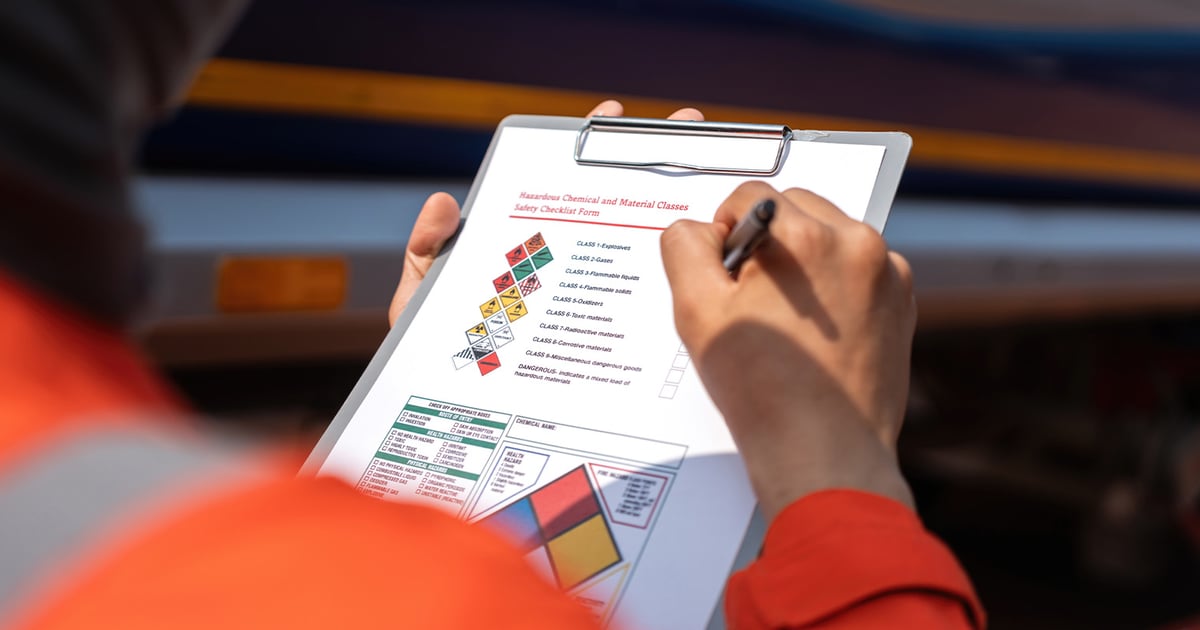
Mountains of red tape and continually shifting environmental laws have long bogged down the waste management sector. Now, forward-thinking companies are deploying artificial intelligence (AI) to digest complex regulatory codes, quickly flag compliance risks, and even for recommendations to ensure adherence.
In this Waste360 Q&A, Luke Jacobs, CEO of Encamp, explains how technology is transforming environment, health, and safety (EHS) compliance from a time‑consuming, reactive task into a proactive, strategic part of business operations.
Waste360: What are the most complex reporting requirements for waste generators in highly regulated industries?
Jacobs: The most complex requirements don't stem from any individual obligation. They come from all of them and how they change across multi-jurisdictional operations. Your waste, chemical, and air programs each carry internal complexity at a single site, but in aggregate it's the state-by-state and even county-by-county nuance you have to account for.
Related:Plastics Unscripted - The State of Plastics
For waste generators specifically, California is probably the most complicated: additional regulation around what would traditionally be conditionally exempt small-quantity generators, variation among certified unified program agencies, and requirements like SB-14. There are a lot of intricacies woven into these programs.
Waste360: How do you stay compliant with the patchwork of waste regulations from state to state?
Jacobs: Generators are adapting by leveraging systems like Encamp that not only track internal data but have the compliance knowledge built into the software to normalize the different requirements across a changing regulatory landscape.
It's not just a system where you record work that has happened. It has a first-principles foundation of what the regulations are and how they apply to your facilities, along with the mechanism to maintain that over time through your vendor, almost like an ongoing risk and legal register.
Waste360: What is happening as EHS veterans retire? What knowledge gaps must be addressed? And how are platforms like yours helping?
Jacobs: While knowledgeable new people are coming in to replace the veterans who are retiring, more are leaving than arriving. That creates knowledge gaps, a lot of which are experiential: understanding how complex operations actually work, assessing risk, and knowing the “why” behind a given rule.
Our platform helps in two ways. First, it codifies the whys and the rules, so people inherit clear business continuity rather than a pile of spreadsheets and piecemeal work. Second, our intelligent automation saves teams enormous time, which lets them invest in developing their people and spend more time in the field, working directly with stakeholders and regulators.
Related:Waste World – Episode 68: Todd Ellis on Building a Better Battery Recycling System
Waste360: Can you describe your EHS compliance platform, who uses it, and how?
Jacobs: Encamp is an environmental data system of action. In addition to tracking data – including waste generation through disposal, e-Manifest, reporting obligations, your compliance calendar and tasks, etc. – the system is built to take action for you. We focus on end-to-end work across the entire compliance lifecycle, from understanding your obligations to managing the data and processes to final submissions.
This is clearest in our ability to e-file directly to federal systems, handle state and local requirements and fire departments, and make payments on your behalf. Encamp is used by environmental teams across a wide range of industries.
Waste360: How are you using AI to support compliance?
Jacobs: Scout, our AI, is embedded across the platform, monitoring environmental rules at both the federal and state level, enriched by Encamp's knowledge base, and tied into federal data systems to aggregate a company's programs.
Related:GFL Environmental Inc. Announces Proposed Private Offering of Senior Notes
In practice, you have an expert in your corner who never sleeps, watching your program at all times. You can talk to it, take action, and analyze your data. It extends the capabilities of an EHS program, with humans in and over the AI loops, doing meaningful work without replacing people.
Waste360: How does Encamp’s system translate complex permit requirements into automated, executable tasks for facility managers?
Jacobs: Because we're built as a system of action rather than a system of record, Scout reads your real obligations, including things like waste stream limits, and turns them into executable tasks for the facility, rather than leaving a person to interpret a permit and build a checklist by hand. The system surfaces what needs attention and carries it through to action across every site.
Waste360: When the AI makes regulatory recommendations, how does it show its reasoning so that teams can defend those decisions to regulators?
Jacobs: Compliance-grade AI has to be defensible, so Scout always shows its reasoning, provides citations back to the underlying regulation, and requires user approval before changes are made or tasks executed. That traceability lets a team stand behind a decision in front of a regulator instead of pointing at a black box.
Waste360: What are the few emerging regulatory concerns of your clients that your tech helps with and how?
Jacobs: I'd point to PFAS and extended producer responsibility as emerging, and e-Manifest is still emerging as well, especially the record-retention requirements and the obligations associated with going digital.
We help by using Scout to analyze safety data sheets for contaminants and PFAS in historical records, and to extend visibility into waste vendors' data, tracking not just the waste but the documentation as it moves to the treatment, storage, and disposal facility, the manifest coming back to the facility, and the final copies on file.
Waste360: What in your view are the most promising new technologies for supporting compliance in highly regulated environments (beyond your own offering)?
Jacobs: AI broadly is the big one, but the value is in using it as a force multiplier rather than the product hook itself. Taking the complicated combinatorial landscape of a regulated environment, normalizing it, and being able to watch it more proactively is going to be huge.
Waste360: What are the biggest risks of using AI in compliance, and how do you mitigate them?
Jacobs: The biggest risks are over-automation, not having rules, and not understanding the “why” behind the work. AI slop is a factor in every industry, but in compliance the stakes are higher. If you don't understand your own data and you're just trusting AI to act on it, especially with no one (vendor or internal) who truly understands it, that's a problem.
Waste360: How do you balance automation with human oversight in compliance decisions?
Jacobs: It's important to keep human oversight on all compliance decisions. AI's job is to get more information to people quickly, so they can exercise judgment and decide. It should compress the measuring and gathering part of the role and give people more bandwidth for strategic decisions about their compliance program.
Waste360: How do you see AI evolving in compliance verification over the next 3 to 5 years? Are there emerging regulations that will shape AI's role in compliance?
Jacobs: I think it's more agents doing more of the work, with audit trails becoming table stakes. From there I'd expect continuous, real-time monitoring rather than point-in-time checks, and explainability standards firming up as regulators and customers demand to see how an automated decision was reached.
Waste360: What is your advice for organizations in regulated industries who are considering AI for compliance verification?
Jacobs: If you're building it yourself, start with a very narrow scope and solve a time-consuming internal process. If you're evaluating vendors, understand how much they can actually deliver on an AI roadmap to complete work for you. You don't just want a chatbot. The real question is the quantifiable amount of work AI can take off your plate, and what that opens up that you couldn't do otherwise.
Related Stories
 AI News
Othello uses AI to tell salespeople what to say during calls. See the pitch deck that helped it raise $8 million.
34 seconds ago
 AI News
Influential Women Acknowledges Dawn Love: Helping Professionals Pair Artificial Intelligence With Sound Human Judgment
1 minute ago
 AI News
What The Tech: How criminals are tricking artificial intelligence platforms
1 minute ago
 AI News
Broadcom CEO Delivers Stark Warning on Artificial Intelligence
1 minute ago
 AI News
Why Zelenskyy's claims that Ukraine drone attack halted Russian bot traffic don't hold up
57 minutes ago
 AI News
Regina council to hear from community about how Bell Canada AI data centre will affect city
58 minutes ago
 AI News
NetSuite Introduces Free AI
1 hour ago
 AI News
What is the US Super Intelligence Force and who leads it?
1 hour ago