
Can Canada’s counter
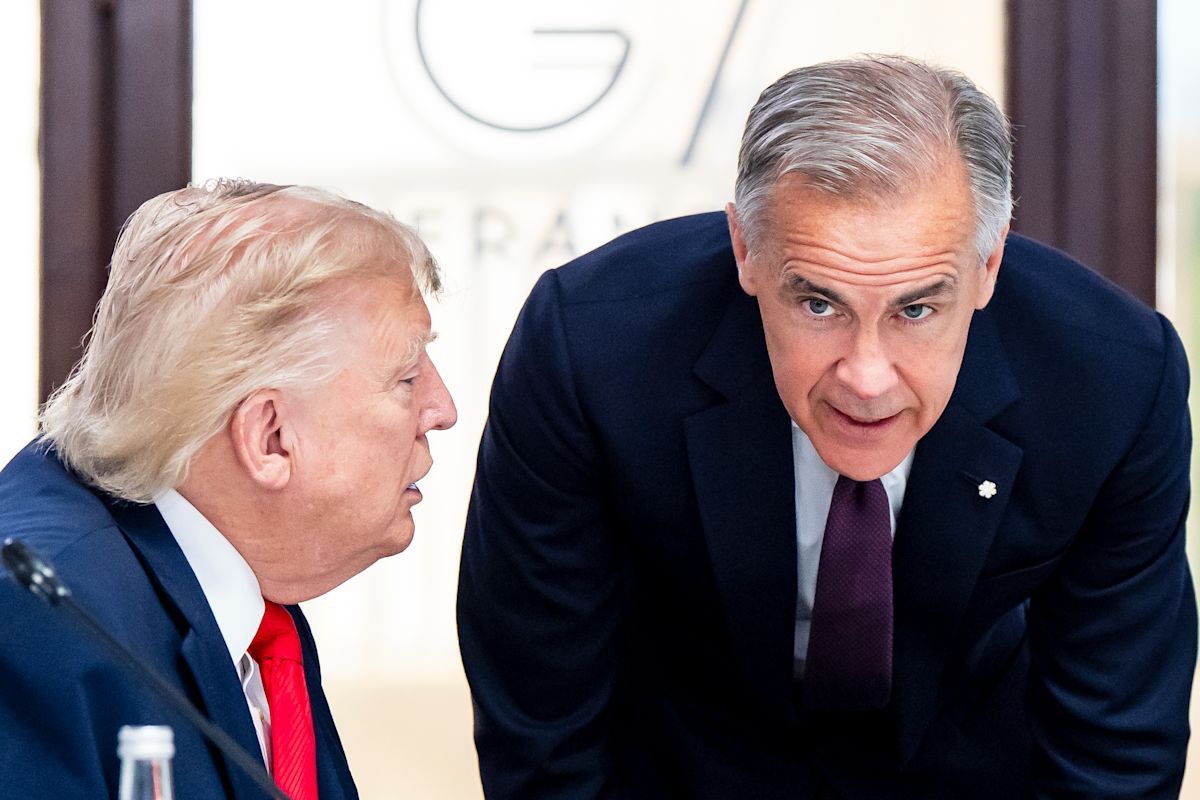
Canada has officially hit back at the United States.
A new round of Canadian counter-tariffs took effect at 12:01 a.m. Tuesday, covering $27.6 billion worth of U.S. imports. The duties range from 15 to 50 per cent and target products including steel and aluminum, dairy, appliances, agricultural equipment, pulp and paper, plastics and electronics.
The move matches U.S. tariffs imposed last month on $27.6 billion worth of Canadian goods, dollar-for-dollar and rate-for-rate.
But Ottawa is also looking beyond the immediate fight.
Prime Minister Mark Carney said Tuesday Canada needs to accelerate efforts to reduce its economic dependence on the U.S., acknowledging the shift will carry costs.
That leaves Canada trying to apply pressure now while building more room to manoeuvre later.
How much leverage does Canada have?
Akaash Maharaj, a senior fellow at the University of Toronto's Munk School of Global Affairs and Public Policy, says the size gap between the two economies doesn't settle that question.
"The Americans have been keen to mock and deride Mark Carney by pointing out that their economy is 10, 15 times larger than ours," Maharaj told Yahoo News Canada.
"All these statements are true. They're also irrelevant."
Maharaj pointed to the trade imbalance that has repeatedly frustrated U.S. President Donald Trump.
"One of the reasons why there is a trade war between our two countries is that the United States has historically purchased more goods and services from Canada than Canada has purchased from the United States," he said.
His argument is that a larger economy can still feel concentrated pain when businesses, workers and communities depend on cross-border trade.
Maharaj went further, arguing a prolonged dispute could hurt affected Americans more than affected Canadians, even if "everyone will suffer."
Phil Triadafilopoulos, a political science professor at the University of Toronto, sees a clear limit to that leverage.
"Given the discrepancy in relative power capabilities, Canada will probably have to compromise more than the United States," he told Yahoo News Canada.
But that doesn't mean Washington gets everything it wants.
"In every other trade negotiation and deal, the United States has had to compromise as well," Triadafilopoulos said. "Ultimately, both sides will have to compromise."
He also questioned how much of Trump's repeated suggestion that the U.S. doesn't need a deal is negotiating posture.
"How much of that is bluster and how much of that is tactical framing, hard to say," he said.
If Washington truly has no interest in reaching an agreement, Triadafilopoulos added, "then it's hard to negotiate in good faith."
Reducing U.S. dependence will take time
Nearly 68 per cent of Canadian exports have gone to the U.S. so far this year, down from about 73 per cent over the same period last year.
The depth of those ties also means pressure can travel both ways.
Trump threatened Monday to block Bombardier from selling aircraft in the U.S. unless the Canadian company moves production there. The U.S. accounts for roughly half of Bombardier's sales.
But Bombardier also employs about 3,500 people in the U.S., works with roughly 2,800 American suppliers and spends more than $2.5 billion with them each year. Republican Kansas Congressman Ron Estes has since highlighted the company's contribution to his state's economy.
That is the bind Canada is testing with its new tariffs. Both Maharaj and Triadafilopoulos believe Ottawa can't erase the power imbalance, and it can't replace the U.S. market overnight.
What it can try to do is make continued disruption costly enough on both sides to bring compromise back into the conversation, while slowly reducing how much Canada has riding on what happens in Washington.
Related Stories
 Canada
25 years ago, Canada faced a 'dramatic change' as it headed for war in Afghanistan
13 minutes ago
 Canada
What are students saying about Ontario's new grade breakdown?
13 minutes ago
 Canada
Canada was prepared to send ships to Iraq in 2003 if UN approved action, records show
1 hour ago
 Canada
Surrey MLA calls for review of Surrey Police Service
2 hours ago
 Canada
Trump hits Canada with new import bans, including alcohol
2 hours ago
 Canada
Canada to host U.S. ahead of women's hockey worlds
2 hours ago
 Canada
Majority of Canadians support Carney's handling of trade war, polls show
2 hours ago
 Canada
Mark Carney’s defiance: Canada shows the world how to respond to Donald Trump’s threats
3 hours ago