
Canada is pursuing a ‘unique alliance’ with the EU as US ties remain fraught. Here’s what we know
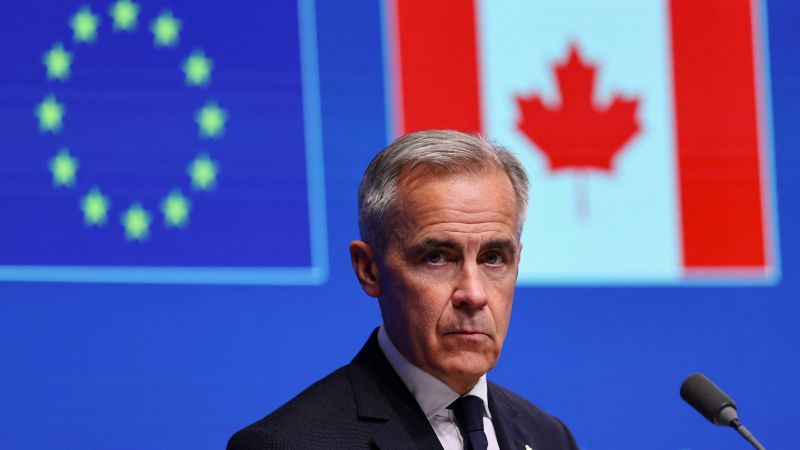
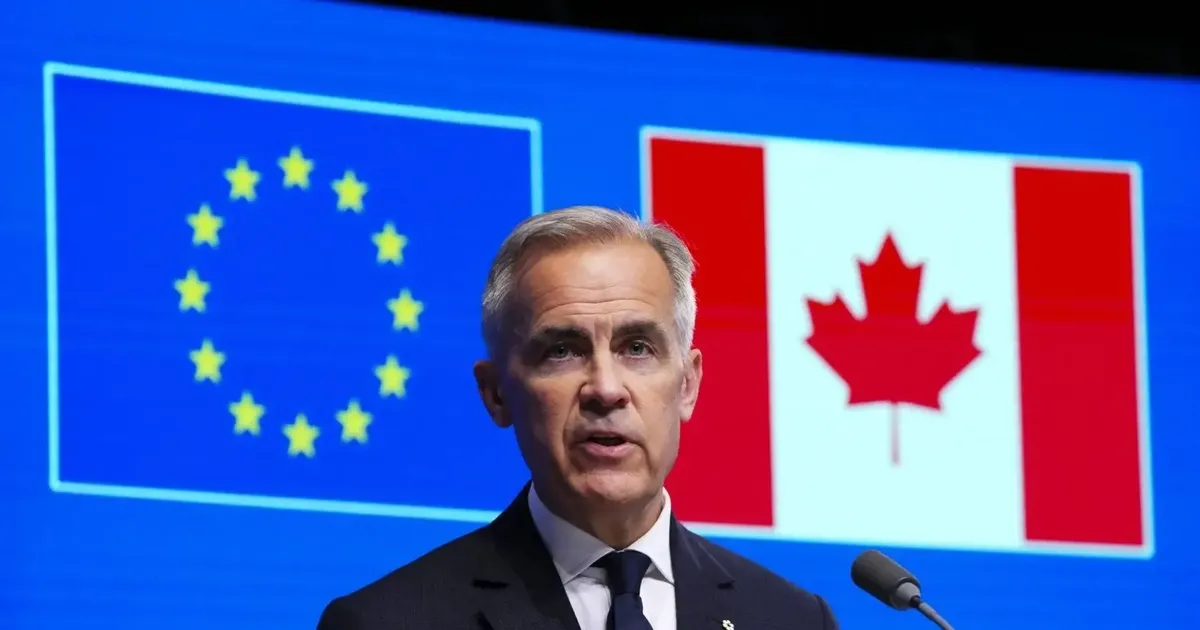
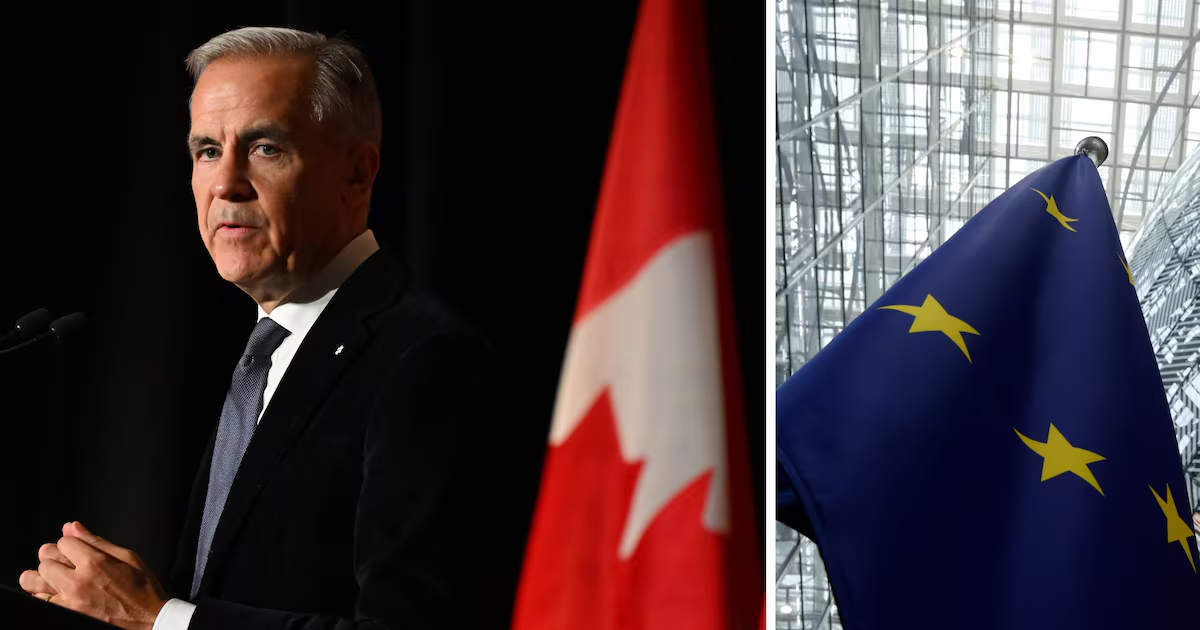
Prime Minister Mark Carney said Canada is pursuing a “unique alliance” with the European Union, a further signal of Ottawa’s efforts to pivot away from the Washington amid a deepening trade war.
The notion of Canada joining the 27-member bloc — or at least pursuing closer ties with it — has gained traction within the country in the past two years as Canada has sought to reduce its economic dependence on the US.
A Wall Street Journal report published Saturday detailed how, in the wake of Trump’s tariffs, Carney pushed to bolster ties with the trading bloc, instructing a special envoy to Europe to scope out possibilities “short of full membership in the EU or its common market,” citing people familiar with the matter.
Speaking to reporters Sunday, Carney said Canada is not “looking to become a member of the European Union,” but rather beginning discussions on forming a “unique alliance” with the bloc, with which it already has a far-reaching trade agreement.
“We share the same values, we have the same priorities, and we have very complementary strengths,” said Carney, who is set to deliver a speech to the European Parliament this week.
Here’s what we know about Canada and the EU’s growing ties.
Could Canada feasibly join the EU?
The short answer is no, at least not as a full member.
Canada, a former British colony, shares deep cultural and historical ties to Europe and resembles European models when it comes to its parliamentary democracy, universal health care and social welfare, among other things.
Canada even shares a small land border with Europe, through Denmark on Hans Island, a small landmass off northwest Greenland.
But while Canada would likely satisfy the political, economic and legal standards for joining the bloc, there is one obvious barrier: it is not geographically in Europe.
To get into the EU, a country must follow a strict, multi-stage process called accession, and its candidacy must be unanimously approved by all 27 member states.
There is a lineup of countries waiting to get in, with nine countries currently recognized as candidates for EU membership.
Other European countries, such as Norway and Switzerland, are not formal EU members but partner with the bloc on trade and open borders.
What would a ‘unique alliance’ look like?
According to the Journal, Carney has suggested to European leaders that Canada take on a tailored, highly integrated role as a so-called “associate member” — an idea that at least some leaders in the bloc seem open to, according to officials from both sides.
Among the things European and Canadian officials have discussed, according to the Journal: reducing trade barriers; laying underwater cables linking Europe and Canada; redirecting pipelines to grant Europe access to Canadian gas; building new AI and tech infrastructure; and even granting Canadians the right to live and work in Europe visa-free.
Under these terms, Canada would have a relationship with the EU that is unprecedented for a country outside of Europe. The EU’s ambassador to Canada told the Canadian Press last week the partnership would be unlike anything that currently exists, without giving specifics.
Details about what a potential alliance could look like have yet to be announced publicly. But there are signs that Canada and the EU are growing closer.
Ahead of Carney’s speech Thursday in Strasbourg, France, the European Parliament announced it will open a new antenna office in Ottawa, underlining its commitment to “deepening political dialogue and cooperation with Canada,” according to a news release.
The allies already share a sizable trading relationship, which has grown steadily since large parts of the EU-Canada Comprehensive Economic and Trade Agreement came into force in 2017.
Bilateral trade in goods and services reached €130.8 billion ($151 billion) last year, according to the European Commission, up more than 80% over the past decade. Major EU exports to Canada include cars, machinery and pharmaceuticals. Canadian exports to Europe include crude oil, fertilizer, critical minerals and base metals.
What have European leaders said?
Carney, a former governor of the Bank of England, has strong ties in Europe from his banking days, and has cultivated his relationships with like-minded European leaders since becoming prime minister in March 2025.
In Paris last year, during his first official foreign trip as leader — which was notably not to the US in a break from modern tradition — Carney described Canada as “the most European of non-European countries.”
Since then, several European Union countries have floated the idea of Canada joining the bloc, including Finland’s President Alexander Stubb, who once called the possibility “a marriage made in heaven.”
Stubb and Carney reportedly text each other daily and are known for squeezing in a jog or a game of ice hockey between meetings on official trips.
In an April interview with CNN newsgathering partner CBC News, Stubb said he can “envisage a much larger EU, whether Canada is a part of it or not is up to Canada to decide,” and said with the two countries’ close values they could “forge a really close strategic partnership.”
“Wouldn’t it be lovely if Canada was the 28th state of the European Union rather than the 51st state of the United States?” asked Stubb, according to the Journal.
Carney has also leaned into Canada’s long-standing relationship with France, traveling to the country several times during his tenure, to warm reception from French President Emmanuel Macron. The two leaders are set to meet Sunday in Saint-Pierre-et-Miquelon — a tiny French island just 25 kilometers (15 miles) off the coast of Newfoundland.
In March, French Foreign Minister Jean-Noel Barrot raised the idea of Ottawa joining the EU, telling a conference that “maybe Canada at some point” will sign up, according to the Canadian Press.
That’s not to say all EU leaders would support Canada’s bid. Ten member states have yet to ratify the trade agreement Canada and the EU signed in 2016, eliminating nearly all preexisting tariffs.
What’s the reception been in Canada?
Canadians are largely in favor of strengthening relations with the EU, though support for full membership remains split, according to recent data.
A survey conducted earlier this month by Canadian polling firm Abacus Data found about 80% of Canadians said Canada should deepen cooperation with the EU on foreign policy, defense, and economic priorities — a 6-point increase from when the question was last asked in February.
A further 56% of those surveyed said Canada has more in common with EU countries than with the US, according to the survey. Nearly half (49%) said they would support Canada joining the EU, with support higher among center and left-leaning voters.
However, some in Canada are skeptical of cozying up to the EU, fearing it could further isolate Canada from its southern neighbor and largest trading partner, while others are concerned about a loss of sovereignty.
Pierre Poilievre, the leader of Canada’s opposition Conservative Party, called Carney’s effort to deepen ties with the EU “out of touch,” in a post to X following the report.
“We will NEVER be the 51st U.S. state. And we will NEVER be the 28th EU state.”
CNN’s Hanna Ziady contributed to this report.
Related Stories
 Canada
NDP's Avi Lewis says Carney is selling Canadian assets to 'the captains of Wall Street'
9 minutes ago
 Canada
Sally Field shouts out ‘our neighbours, our friends’ in Canada during Emmy Awards
9 minutes ago
 Canada
Canada seeks ‘private investment’ in airports but feds to keep land, assets
9 minutes ago
 Canada
Althia Raj: Mark Carney is squandering the Liberals’ advantage on climate change
9 minutes ago
 Canada
Mark Carney’s closer ties to Europe will come at a cost to Canada
9 minutes ago
 Canada
Canada Investment Summit live: Banks commit billions
1 hour ago
 Canada
Carney expected to discuss private money in Canada's airports in address to investment summit: source
1 hour ago
 Canada
New tariffs hit Canada as Carney courts EU partnership. Live updates here.
1 hour ago