
Canada millionaires not a wealthy as you think

The average Canadian household’s net worth topped $1 million in 2025, a 37 per cent gain from 2019, but some are still living on the edge despite being technically richer.
“Household balance sheets often look reassuring in the aggregate, and in 2025, Canada’s headline numbers delivered,” Maria Solovieva, an economist at TD Economics, said in a report on June 9. “However, important regional differences reveal nuances in the level of financial resilience.”
Household net worth in British Columbia, Ontario and Alberta came in at $1.34 million, $1.27 million and $1.02 million, respectively, but “from a vulnerability perspective, Ontario stands out as the most leveraged province in the country,” Solovieva said, given the province has the highest household-debt-to-disposable-income ratio.
Debt ratios in B.C. and Alberta have significantly fallen from before the pandemic and have declined in all other provinces except Prince Edward Island.
“Higher (debt-to-income) ratios signal greater sensitivity to interest rates and less capacity to absorb shocks,” Solovieva said.
She said Ontario households’ financial vulnerability is due to weak income growth last year that impaired people’s ability to reduce their debt even as the leverage rate of growth slowed due to higher interest rates and a slumping housing market.
The trend has continued. Ontario wages grew 0.8 per cent in the first quarter of 2026 from the final quarter of 2025, the second-lowest level after Quebec and well off B.C.’s two per cent increase, according to Statistics Canada data.
Prior to the pandemic, B.C. had the highest household-debt-to-income ratio among the provinces, but borrowing there has slowed in recent years, thereby easing debt levels, Solovieva said.
In the West, she said lower home prices are helping to keep a lid on debt growth as they grew at the slowest pace in Saskatchewan, and while they grew in Alberta and Manitoba, it was at a rate “well below” the national average.
Red-hot financial markets drove most of the gains in household wealth in 2025 as real estate — the previous driver — slumped.
Solovieva estimated that average stock market gains landed in the range of 8.8 per cent to 10.3 per cent last year and it looks like some households are tapping those windfalls to “bridge the income gap” — at least they did in 2025.
That appeared to be the case in Ontario. Despite household disposable income gains trailing those in other provinces, spending stuck around the national average as the stock market windfall for Ontarians came in close to the national average.
P.E.I. and Alberta households recorded decent gains in wages, but less-than-stellar financial asset gains in 2025, which could explain why they spent less of their disposable income last year than the national average.
Related Stories
 Canada
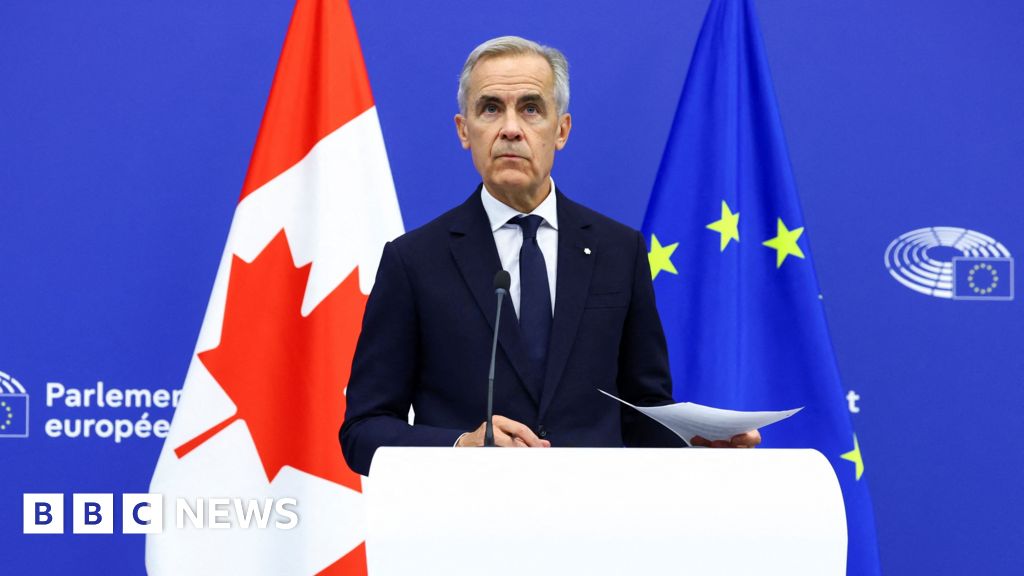
How Canadians feel about EU's associate membership proposal
15 minutes ago
 Canada
More than 500,000 Albertans have applied to vote by mail in referendum: Elections Alberta
15 minutes ago
 Canada
The benefits and challenges of closer Canada
16 minutes ago
 Canada
Frank Stronach will not face jail time for indecent assault conviction, judge says
1 hour ago
 Canada
Watchdog agency investigating shooting between police, youth in downtown Moncton
1 hour ago
 Canada
Canada’s oldest living person celebrates her 111th birthday
1 hour ago
 Canada
The driver who slammed into an L.A. bus before a news helicopter crash is charged with murder
1 hour ago
 Canada
Is Canada about to join the EU?
1 hour ago