
Carney says Trudeau
Carney says Trudeau-era climate plan was 'too expensive' and 'divisive'
Prime minister lays out benefits of his plan to boost oil and gas exports, double electricity grid
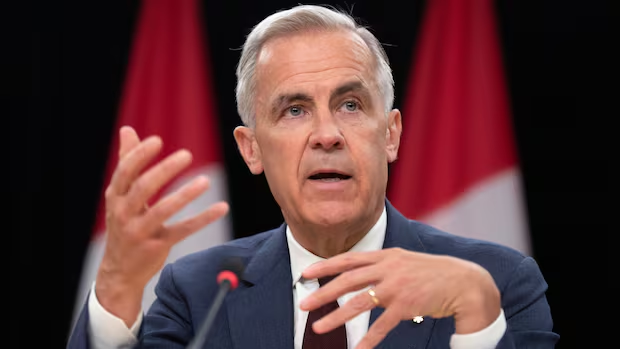
Prime Minister Mark Carney echoed critics of the previous Liberal government's climate plan in a video posted on Tuesday, saying the plan he inherited was too expensive and divisive.
"In my judgment, that plan was not sustainable over the long term," Carney said in his second "Forward Guidance" video. "It would have been too expensive for Canadians. Canadians who are already struggling with affordability."
He later says the plan "would have been too divisive for our country" and was "an open opportunity for those people who wish to pull Canada apart both at home and abroad."
As Carney departs from Trudeau's climate plan, he acknowledged the country's emissions would be higher in the next few years than they would have otherwise been.
"I promised you I wouldn't sugar coat tough messages," he said.
Conservatives and others supportive of expanding Canadian oil and gas exports have long argued that the climate plan developed under Prime Minister Justin Trudeau would cost Canadian families too much and harm economic growth.
The Trudeau government argued that measures like the consumer carbon tax returned more money to most Canadians through federal rebates than they paid, increasing affordability. More broadly the then government often repeated that it was possible to protect the environment while growing the economy.
Ex-member of top climate body says Alberta pipeline deal is not compatible with net-zero
Will the Alberta-Canada carbon pricing deal work? A new analysis is skeptical
Carney was careful to say the Trudeau government's climate plan that it "inherited" was "well intentioned and suited for the times it was made."
But the prime minister said the world has changed.
"The certainties of the world of 2015 are long gone," said Carney, referring to the first year of the decade-long Trudeau government. "Our neighbourhood hasn't been this hostile since Canada was founded.
"The world hasn't been this unstable geopolitically since the end of the Second World War."
In a statement, Conservative natural resources critic Carol Anstey said that after a year in government, Carney has only videos to show Canadians and little in tangible results.
"Canadians don't need Mark Carney's forward guidance, they need the Liberals to get out of the way so Canadians can have an affordable life again," Anstey said.
Carney says emissions will rise
He repeated what the government's climate emissions modelling already shows — Canada is moving further away from achieving its climate targets and emissions would likely be higher than initially forecasted.
"The changes we have made will mean that our emissions will be higher in the next few years than they were projected to be under the previous government's plan," Carney said.
That's largely because the Carney government has scrapped key planks of the country's climate policy: the consumer carbon price and a cap on pollution from the oil and gas sector.
The Carney government is also expanding exports of liquefied natural gas (LNG) and supporting another pipeline from Alberta to the West Coast.
Carney’s taken a ‘wrecking ball’ to Canada’s climate progress plan: Environmental Defence
"We can't afford to restrain the growth of an important part of our energy mix, oil and gas, to meet a short-term goal," he said.
The Carney government has not introduced a detailed climate plan that maps out its new climate policies and the resulting emissions. Youth and advocates are suing the government, urging the courts to order Ottawa to release a climate plan that aligns with Canada's legally binding climate targets.
Canada lags behind other G7 countries when it comes to emissions reductions. Even the United States is outperforming Canada, according to a former member of Ottawa's net-zero advisory body.
World faces energy, security and climate crises
In an attempt to chart his government's own approach to tackling Canada's high emissions, Carney acknowledged that "the climate crisis is still with us and our commitment to fighting it is still absolute."
But, the prime minister said, Canada needs to navigate both the security crisis and energy crisis in the wake of the U.S. and Israel's war with Iran. The conflict has interrupted the flow of oil and gas through the Strait of Hormuz, a major global energy supply point.
"The consequences of the oil crisis caused by the Iran war will be with us for a long time. It will be much easier to restart oil and gas flows through the Strait of Hormuz than it will be to re-establish trust among global trading partners."
Canadians themselves, Carney notes, are not isolated from the war's economic shocks. The prime minister's government is attempting to shelter the country from those persistent threats by pursuing its goal of doubling the country's electricity grid by 2050.
"The path to competitiveness is electrification. The path to sustainability is electrification," he said.
World still needs Canada's energy
Much of the 17-minute YouTube video speaks about Carney's plan to produce more clean power and better connect the country's isolated provincial grids.
He notes Canada doesn't control the price of gas. On the other hand, provinces mostly control the prices that ratepayers are charged for electricity.
He says as Canadians use more electricity to heat their homes, power their vehicles and run machines in factories, producing more clean, affordable power will be necessary to both strengthen the economy and lower emissions.
Natural gas to play key role in strategy to double Canada’s electricity grid by 2050
Proponent, route and Pathways all still unclear ahead of Alberta's pipeline announcement
Carney also made the case for expanding Canadian oil and gas exports since the world still needs a reliable source of fuel.
"Addressing energy security means we are going to produce our conventional oil and gas in the most environmentally sustainable ways and export them to where they will make the biggest difference," he said.
"The truth is nobody knows how long the global economy will rely on conventional energy. But while it does, as much of that energy as possible should come from Canada. Produced responsibly and with a clear focus of lowering emissions over time."
The prime minister noted that energy has historically been a source of both nation building and division, citing the federal government's rollout of the National Energy Program in the 1980s. That program is viewed by some in Alberta as an attempt by Pierre Trudeau's government to seize control over the province's resources.
At the time the federal government viewed the program as an effort to redistribute some of Alberta's oil wealth, while keeping prices low for Canadians across the country through a series of taxes and price controls.
Carney waiting for Alberta's pipeline proposal
Carney said he is attempting to reverse that sentiment as work to advance a potential pipeline from Alberta to Canada's West Coast continues.
"I've acted as prime minister to the best of my abilities to help put those divisions in the past by focusing on what we can build together for the future," Carney said. "From my perspective there's no more important goal than a strong, united country working together in our common interest."
Climate groups were supportive of the prime minister's push to electrify the economy but critical of his plans to expand fossil fuel exports.
"Continuing to build infrastructure to export more Canadian oil in a moment of demand destruction in Asia only risks further destabilizing our economy, communities and the planet," said Caroline Brouillette, the executive director of the Climate Action Network.
The Canadian Climate Institute, an arm's-length organization that researches climate policy, also welcomed the video's emphasis on electrification but said it doesn't replace the need for an updated climate plan.
"I actually buy the fact that we need to think differently about climate policy approaches. But the key thing is we need a plan. We can't just blue sky it," said Rick Smith, the institute's president, on CBC's Power and Politics.
Senior reporter, Parliamentary Correspondent
David Thurton is a senior reporter in CBC's Parliamentary Bureau. He covers daily politics in the nation’s capital and specializes in environment and energy policy. Born in Canada but raised in Trinidad and Tobago, he’s moved around more times than he can count. He’s worked for CBC in several provinces and territories, including Alberta and the Northwest Territories. He can be reached at david.thurton@cbc.ca
Related Stories
 Canada
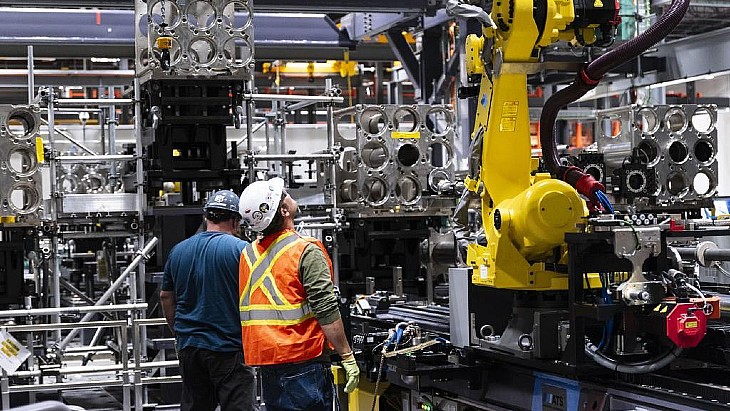
Milestone for Bruce 4 refurbishment
22 minutes ago
 Canada
Prediction markets are taking big bets on Ontario municipal races. Here's what the rules say
22 minutes ago
 Canada
This is the most common day for birthdays in Canada
23 minutes ago
 Canada
New Sense and Sensibility movie delves deep into the sisterly bond at the heart of Austen's classic
23 minutes ago
 Canada
Brookman: You cannot put a dollar value on patriotism
1 hour ago
 Canada
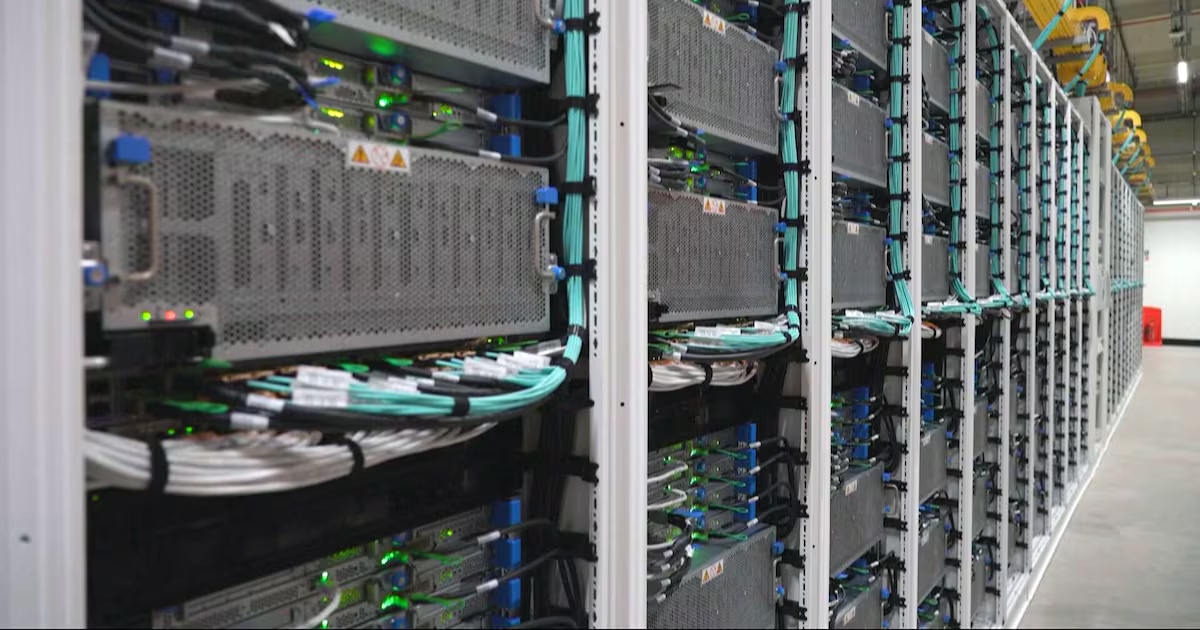
Data centre for Canada’s cyber spy agency to be built in Ottawa area
1 hour ago
 Canada
Campaigns enter homestretch ahead of Alberta referendum Monday
1 hour ago
 Canada
On the Road: Snow geese in the shimmer
1 hour ago