
Celebrations and bottle
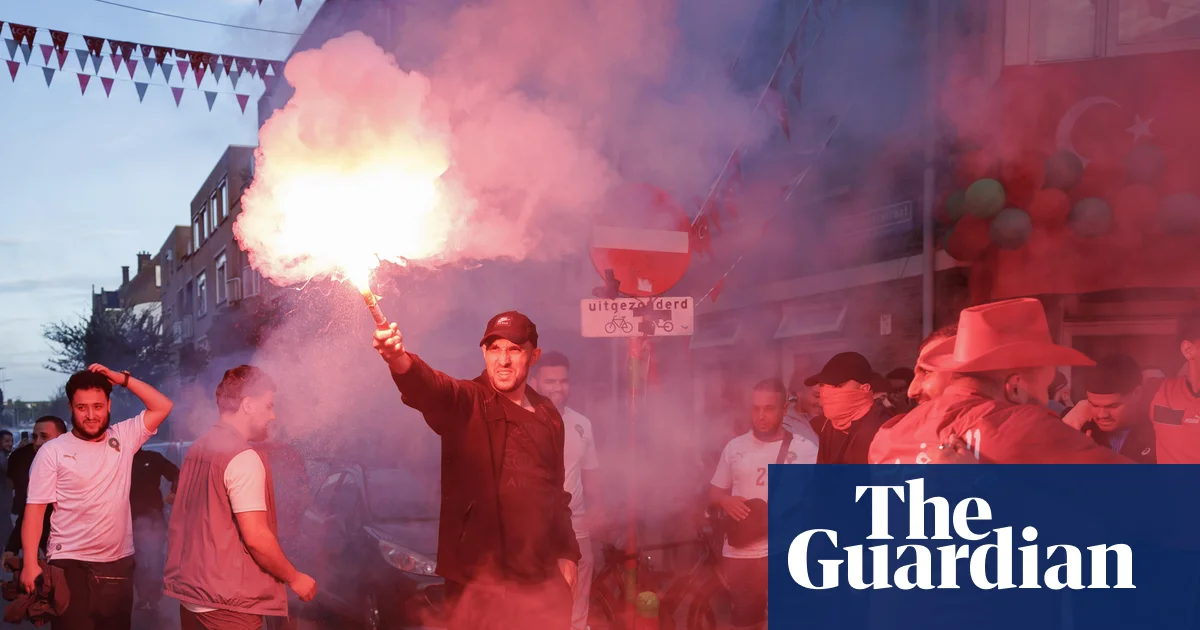
In the Netherlands the country’s World Cup last-32 tie against Morocco was always going to be about more than football. When the Atlas Lions dumped Ronald Koeman’s team out of the tournament in a penalty shooutout after an epic contest, joyous 6am celebrations were sparked among the Moroccan community in Amsterdam. In The Hague, on the other hand, the atmosphere turned grim.
Approximately 440,000 people of Moroccan descent live in the Netherlands, and approximately 440,000 of them were asked the same question before this game: “So who will you support, then?” It was mostly good-natured, and the former manager Ron Jans displayed genuine interest when putting the dilemma to his fellow pundit Ibrahim Afellay on Dutch national television. Afellay, capped 53 times for the Netherlands, expressed and explained his support for Morocco. In the real world, the most common reaction has been one of understanding, if not sympathy, regardless of which side someone picked.
Things are different online, stirred up by the far-right politician Geert Wilders, who has spent the past 20 years launching verbal and social media attacks on Muslims, and on the Moroccan community in the Netherlands in particular. In 2014, he promised to reduce the number of Moroccans in the country and two weeks ago he tweeted an anti-Islam insult in response to a picture showing Morocco players praying on the pitch. Before this game, he posted an AI picture on X showing himself as a referee giving a red card to a Morocco player.
The rise of Wilders and other right-wing populist parties has been mentioned by Dutch-Moroccan players as a reason why they increasingly side with Morocco. Afellay chose to represent the Netherlands but his successors haven’t. Koeman’s squad has a high level of multiculturalism, but it has been more than a decade since anyone of Moroccan heritage wore the orange kit. Three of Morocco’s squad members were born in the Netherlands. Each had a different degree of doubt about their choice but Noussair Mazraoui, Sofyan Amrabat and Anass Salah-Eddine decided to play for Morocco. Politicians and commentators on the right wasted no time decrying a perceived lack of loyalty to their country of birth.
An hour after Morocco had beaten the Netherlands, the Dutch public broadcaster NOS reported that police had been pelted with bottles and fireworks in The Hague. Omroep West, a regional news station, said at least 10 people believed to be Morocco fans had been arrested there after attacks on the police. Elsewhere, the newspaper Algemeen Dagblad said four Morocco fans were arrested in Rotterdam, without stating why.
Wilders used X to congratulate Morocco on their triumph. The debate on social cohesion will no doubt continue, but the camaraderie on display in Amsterdam between the fans served as a reminder that the real world is often a lot more pleasant than the digital universe.
In the west end of the capital, an area with a sizeable Moroccan population, things stayed peaceful. A Dutch-Moroccan-owned cafe is decorated with orange flags. Some bars stayed open but some decided not to bother with this 3am kick-off time. Roughly a quarter of about 200 spectators at the events venue Het Sieraad back the Atlas Lions, which causes no problems with those willing on the Netherlands. Women wearing headscarves belt out the Dutch anthem. Lads in orange shirts clap Morocco’s. When the game gets under way, you soon see another reason why players want to represent the north African nation: they have become a great side. Morocco are sixth in Fifa’s rankings, one place above their opponents. They were semi-finalists at the previous World Cup, and were superior to the Netherlands in this match.
Their wastefulness almost cost them. When Cody Gakpo put the Netherlands ahead on the break the emotions burned through the screen. Gakpo’s unborn son died last week, and nobody could possibly begrudge him this moment, but Issa Diop’s thundering header levelled things up in stoppage time. Elated Morocco supporters headed outside for a cigarette before extra time. Although their team remained a class above the Dutch they could not land the decisive blow before the shootout, in which Ismael Saibari, by far the best player in the Dutch league last season with PSV, converted the decisive spot-kick and sent the Morocco fans crazy.
Pubs and other venues start emptying. A new day has announced itself in broad sunshine and some people head straight to work. Dozens of Moroccans get into their cars. Within minutes, choruses of car horns form the soundtrack in Amsterdam. Fans wave flags through the windows. Dutch fans are graceful in defeat. They congratulate their opponents on their well-deserved victory, exchange forceful hugs and pledge to support Morocco for the remainder of the tournament. A few police officers are deployed on Mercatorplein square, site of some violent outbursts after a few previous Morocco games. But there is none of that this morning: in Amsterdam at least, it is pure, unbridled joy after a feast of football.
Related Stories
 World
World
Mory Kromah: From one world champion to another | News | Official Site
21 minutes ago
 World
World
U.S. ramps up Cuba sanctions, detentions of Americans returning from island
21 minutes ago
 World
World
3 injured after donkey jumps into a van, kicking and biting, in northern Germany
1 hour ago
 World
World
Jolly/Pullela Live a Dream
1 hour ago
 World
World
Charter plane crash kills 8 near remote radar site in western Alaska
1 hour ago
 World
World
After GERD, can Egypt shape Ethiopia’s next Nile dams?
3 hours ago
 World
World
US, South Korean militaries wrap up drill early, a day after North Korea's missile barrage
3 hours ago
 World
World
Weather tracker: Extreme rain deluges Japan and South Korea
4 hours ago