
Charles St
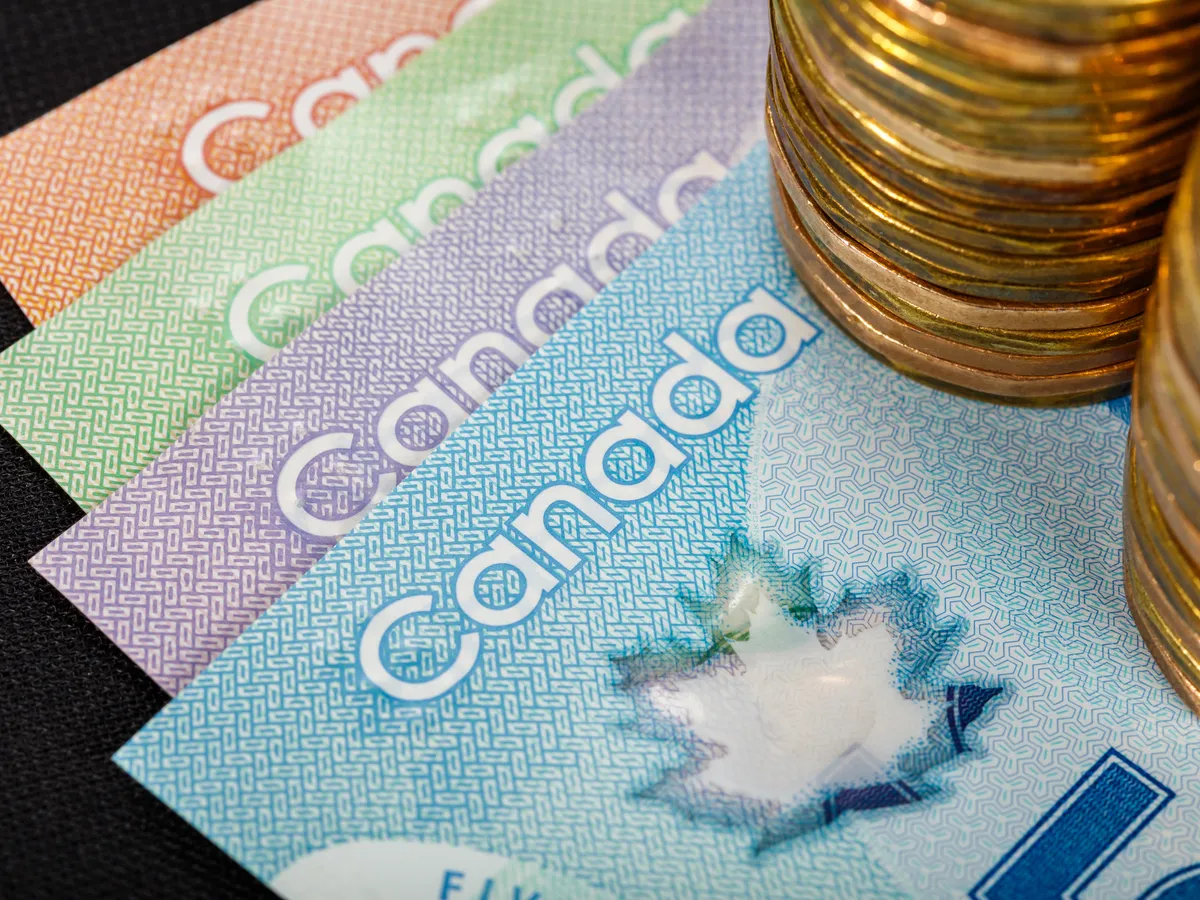
Canada’s gross domestic product data for the first quarter of 2026 set off a predictable wave of alarm bells as the economy contracted for the second consecutive quarter. Many are asking whether Canada has officially entered a recession. It’s a reasonable question, but the wrong one. Before we can answer it, we need to define and agree on what a recession actually is.
Most people have heard the simple rule: two consecutive quarters of negative GDP growth equals a recession. It’s clean, simple and widely cited. It is also incomplete and overly simplistic.
Economists view this as the technical definition precisely because it relies on a mechanical rule rather than any substantive analysis of what is actually happening in the economy. It has correctly identified every official Canadian recession since 1960, but it has also thrown up two false positives in 1980 and 2015 and could also lead to a false positive in 2026.
The reason the rule misfires is that context matters enormously. Is an economic contraction caused by a surge in imports — driven by strong domestic demand — as alarming as one caused by consumers pulling back their spending? Of course not. The headline number can look identical while the underlying reality is completely different.
Similarly, if only one narrow sector of the economy is responsible for the contraction, can it reliably be considered a recession?
In the current case, the contraction in the final quarter of 2025 was primarily driven by a reduction in inventories, mainly due to a rise in exports. The contraction in early 2026 is largely attributable to a spike in imports, particularly gold. Neither story is especially alarming. Moreover, the size of the latest contraction, 0.1 per cent, is quite marginal.
The C.D. Howe Business Cycle Council, the de facto authority on recession in Canada, applies a much more rigorous standard. It defines a recession as a “pronounced, persistent and pervasive decline in real economic activity” lasting at least two consecutive quarters and, crucially, one that is broad in nature, affecting more than a small number of industries.
By that measure, the current episode falls somewhat short. Economic activity is only about 0.3 per cent below its recent peak in the second quarter of 2025. By comparison, there was a decline of 4.4 per cent during the 2008–2009 recession. Hence, we are far from a pronounced decline in activity.
What we are experiencing today looks far more like stalled growth than an outright contraction. The weakness is also concentrated in trade-exposed sectors rather than spread across the broader economy, which is precisely what you’d expect given the ongoing disruptions to international trade and supply chains.
So, no, Canada is likely not technically in a recession, but that doesn’t mean the Canadian economy isn’t going through a rough patch.
Related Stories
 Economy
Over 1,500 stores estimated damaged, looted in France
4 days ago
 Economy
Trump stumps for Republicans ahead of midterms
5 days ago
 Economy
Fed's Warsh surprised by world economy's 'resilience'
1 week ago
 Economy
Bad news for Trump ahead of the midterms: it’s still the economy, stupid
1 week ago
 Economy
The global economy is muddling through against the odds. But a storm is coming | Larry Elliott
1 week ago
 Economy
How high inflation is hurting Trump's Republicans in U.S. midterm campaign
1 week ago
 Economy
‘Clear and present danger’: fuel prices could rise by 30c a litre across Australia under IMF scenario
1 week ago
 Economy
IMF warns global economy ‘could soon test the limits of resilience’
1 week ago