
China's AI surge is pushing US firms to move faster, and the race is getting harder to call
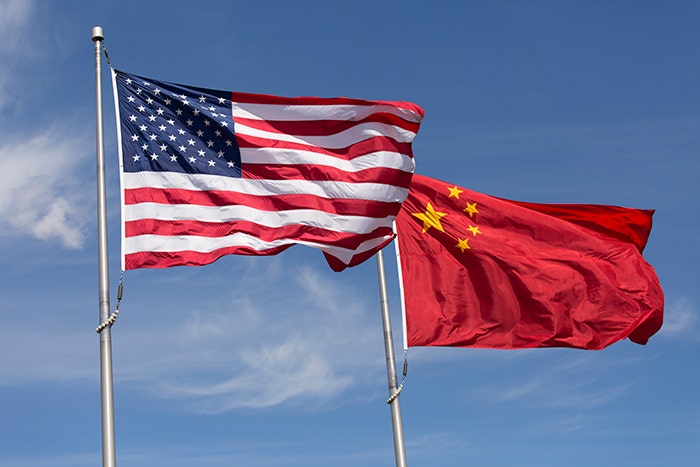
China's AI surge is pushing US firms to move faster, and the race is getting harder to call
Benchmarks, polls and chip data show the US-China AI race is closer, and more complicated, than the headline narratives suggest.
The clearest sign of how the US-China AI race now works arrived in two short bursts this year.
In late April, OpenAI shipped GPT-5.5; within about a day, the Hangzhou lab DeepSeek released a preview of its open-source V4 model, which CNN reported was built to reduce reliance on Nvidia hardware. Six weeks later, on June 13, Beijing-based Zhipu AI put out GLM-5.2 under a permissive MIT licence and priced its associated coding plan at roughly a tenth of Anthropic's premium tiers.
That release came two days after Washington ordered Anthropic to cut foreign access to its most advanced models on national-security grounds. Each Chinese launch now lands as a competitive prompt rather than a footnote, and US firms are increasingly timing their own moves around it. That dynamic, more than any single model, is what makes the current phase of the contest worth watching.
The pattern was set in January 2025, when DeepSeek's R1 reasoning model matched leading US systems on several benchmarks at a small fraction of the training cost. The market reaction was severe: a roughly one-trillion-dollar sell-off in US tech stocks on January 27, 2025, with Nvidia accounting for about US$600 billion of that drop.
President Donald Trump called the moment a "wakeup call" for American AI companies, an AI infrastructure executive told TechCrunch he expected many labs to be running internal 'war rooms’ in response. The competitive answer has shown up in product cadence and, increasingly, in strategy. Pricing across the industry has fallen sharply as Chinese open-weight models undercut closed US systems.
American firms have also begun hedging on the open-source question they once largely ceded to China: Nvidia released an open-weight model, Nemotron 3, in March 2026, a notable shift for a company whose advantage has rested on closed, premium hardware and software. The throughline is that Chinese releases keep resetting expectations on cost and accessibility, and US incumbents keep having to meet them.
The pressure is real, but the gap that matters most has not closed. The United States retains a commanding lead in advanced compute. The Council on Foreign Relations estimated late last year that the best US AI chips are about five times more powerful than China's best by total processing performance, and projected that lead widening substantially through 2027. RAND estimated last year that the US has roughly ten times more compute capacity than China, around 77% of the global total against China's 12%.
Writing in the Georgetown Journal of International Affairs, former US intelligence officer Christian Chung argued that the US and allies including the Netherlands, Taiwan, Japan and South Korea control nearly every critical node in the advanced-chip supply chain.
Frontier quality still tilts American, too. On the Code Arena leaderboard cited by South China Morning Post, the only two non-Anthropic models in the top ten as of mid-June were Alibaba's Qwen3.7-Max and Zhipu's GLM-5.1, ranked eighth and ninth. Huawei is scaling fast, with Bloomberg reporting plans to produce about 600,000 Ascend 910C chips this year, roughly double last year's output, and the Reuters reporting a targeted 60% jump in AI-chip revenue to around US$12 billion.
But volume is not the same as parity at the high end, where China remains behind.
Trust is the other US advantage. A Public First survey of more than 18,000 people across 15 countries, reported by the South China Morning Post this week, found that respondents rated US models as more trustworthy than Chinese ones even as many judged China to be ahead on capability. On a net-trust measure, the US scored plus 16 and China minus 8.
China's case rests less on frontier chips and more on the rest of the stack. Li Cheng, founding director of the Centre on Contemporary China and the World at the University of Hong Kong, argued in a co-authored paper this week that Beijing could erode America's AI "moat" over the next 10 to 20 years.
Using Nvidia chief Jensen Huang's framing of the sector as layers spanning energy, chips, infrastructure, models and applications, the authors held that US leadership in chips is offset by Chinese strength in power generation and in pushing AI into industry, and warned that the American lead faces long-term "structural challenges."
A US congressional advisory body reached a similar conclusion from the other direction. The US-China Economic and Security Review Commission described China's open-model strategy and its manufacturing base as "mutually reinforcing," a digital loop and a physical loop that compound each other and, in the Commission's view, pose the most serious long-term challenge to US leadership.
Cheap, open, widely adopted models feed an industrial economy that then deploys them at scale, which in turn justifies more model development. Huang himself has noted that close to half of the world's AI researchers are based in China, a talent base that is difficult to sanction away.
The contest is no longer being judged only in Washington and Beijing. In the Public First poll, respondents in 11 of 15 countries believed China was outpacing the US, including more than 40% in Canada, Britain and France. In Germany, only 23% thought the US was ahead. That perception is feeding a wider hedging instinct.
Chatham House has argued that middle powers are turning to "sovereign AI" strategies, drawing on capabilities from both superpowers rather than committing to one, while parts of Europe explore deeper ties with Chinese suppliers to power their own AI ambitions.
The picture that emerges is of two systems running on different clocks. The US is optimising for frontier capability and the compute that underpins it, where its lead is widest. China is optimising for cost, openness and deployment, where its gains are spreading fastest and proving hardest to contain.
The next set of proof points will sharpen the comparison: independent benchmarks for GLM-5.2, which Zhipu has yet to publish; whether Huawei meets its 2026 volume targets; and whether tightening US export and access controls slow China down or, as several analysts now suspect, push more of the world toward the open Chinese alternatives.
Related Stories
 AI News
Synchrony Says AI Has Put Every Checkout in Play
30 minutes ago
 AI News
OpenAI says it detected malign activity months before Hugging Face attack
30 minutes ago
 AI News
AI drives 3 in 10 business tasks, widening the productivity gap
30 minutes ago
 AI News
Kazakhstan Makes 50 Government Services Available Through eGov GPT
1 hour ago
 AI News
Artificial intelligence: key updates and developments (13
1 hour ago
 AI News
Thailand ranks 26th for AI traffic as ChatGPT dominates
2 hours ago
 AI News
Amazon factual lawsuit: Twitch streams used for AI training
2 hours ago
 AI News
Some assembly required, with machine learning
3 hours ago