
Colombia faces an invisible crisis of displacement
Colombia faces an invisible crisis of displacement
The displacement crisis in Colombia is today one of the world's most serious, yet least visible, humanitarian emergencies.
Despite its scale, the South American nation ranks third in the Norwegian Refugee Council's (NRC) annual list of neglected displacement crises, which highlights situations in which millions of displaced people receive little media attention, inadequate funding and limited international political engagement.
More than six decades of armed conflict
Colombia has endured more than six decades of internal armed conflict, one of the longest-running wars in Latin America.
Even after the 2016 peace agreement with the Revolutionary Armed Forces of Colombia (FARC), violence has not disappeared.
Remaining armed groups, criminal organizations and dissident guerrilla factions continue to compete for control of vast rural areas.
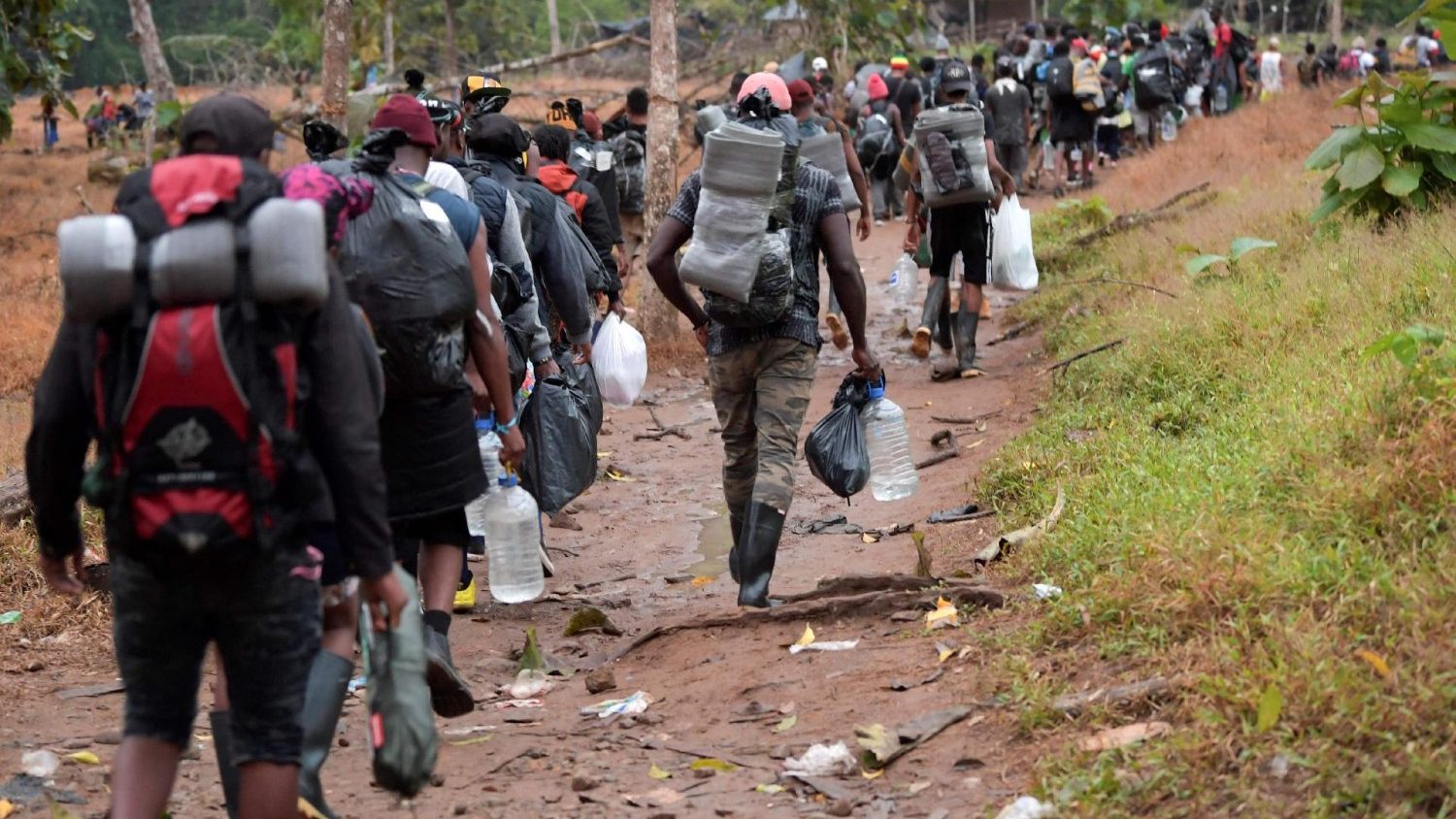
This has created chronic instability, particularly affecting remote regions where the State's presence remains limited and often fragile. According to the NRC, millions of people have been forced to flee their homes, and many continue to live in situations of internal displacement with no prospect of a safe return.
The crisis extends beyond internally displaced people. Colombia is also a major transit and host country for a very large number of Venezuelan migrants and refugees, adding to an already vulnerable population.
This places enormous pressure on public services, local communities and humanitarian assistance systems.
One of the most dramatic aspects of the situation is the phenomenon known as "forced confinement." In many rural areas, entire communities are unable to leave their villages because armed groups control roads, access routes and resources.
This means that people are not only displaced but, in some cases, also become "trapped" in their own territories, deprived of freedom of movement and access to food, healthcare and education.
Indigenous and Afro-Colombian communities are among those most severely affected, often because they live in strategically important areas rich in natural resources or along illegal trafficking routes.
The NRC report stresses that Colombia's crisis is particularly complex because it combines armed conflict, organized crime, longstanding inequalities and the weak presence of State institutions in peripheral regions. It is therefore not a single, linear crisis but a mosaic of overlapping local crises that reinforce one another.
Efforts to strengthen peace continue to face obstacles, as the fragmentation of armed groups makes a stable and lasting negotiating process difficult.
From a humanitarian perspective, needs are immense and multidimensional. Displaced people require safe shelter, access to clean water, healthcare and psychological support, as well as legal protection against eviction and further violence.
The Norwegian Refugee Council operates in several parts of the country through programmes that include education for displaced children, livelihood support, the distribution of emergency assistance and legal aid. However, the scale of the needs far exceeds the resources available.
Lack of international attention
A key reason why the crisis is described as "forgotten" is the lack of international attention. More visible global emergencies tend to draw resources and political focus away from protracted crises such as Colombia's, leaving them chronically underfunded.
As a result, the humanitarian response falls far short of the actual needs of the affected population. The report notes that the combination of limited media coverage, insufficient financial support and weak diplomatic engagement contributes to keeping millions of people in conditions of invisibility.
Another determining factor is the geography of the conflict. Many of the hardest-hit areas are remote regions in the Amazon and along Colombia's Pacific coast that are difficult to access and often controlled by armed groups.
This complicates data collection, humanitarian access and the protection of civilians. In such contexts, even registering cases of displacement becomes difficult, further contributing to the crisis remaining largely invisible.
From an invisible crisis to a global priority
In recent years, periods of hope have alternated with new waves of violence. Temporary reductions in displacement, linked to local ceasefires or dialogue processes between the State and certain illegal armed groups, have not resulted in lasting stability.
On the contrary, new dynamics of territorial control by these groups have triggered further population displacement, highlighting the fragility of the overall situation.
Colombia's displacement crisis is therefore the result of a prolonged conflict that has evolved over time while continuing to inflict profound consequences on the civilian population.
The country's ranking as the third most neglected displacement crisis in the NRC's list is not merely a statistic. It reflects a reality in which millions of people live in conditions of extreme vulnerability without receiving the attention they need from the international community.
The principal challenge remains transforming this "invisible" crisis into a global priority, both in humanitarian terms and at the political level.
Related Stories
 World
World
Weather tracker: Warm Yellow Sea strengthens storms in South Korea
54 minutes ago
 World
World
Argentina soccer legend Lionel Messi, 39, retiring from international play
54 minutes ago
 World
World
Venice Film Festival 2026: Dates, venue, films, stars and key highlights
54 minutes ago
 World
World
Lionel Messi announces retirement from Argentina national soccer team
1 hour ago
 World
World
Monday briefing: Nepal and Tibet’s floods are a warning for the future
1 hour ago
 World
World
Video. Latest news bulletin | August 31st, 2026
2 hours ago
 World
World
The World of Motorcycling- News detail
3 hours ago
 World
World
Swiss police arrest suspect after deadly rave shooting
3 hours ago