
Danger Tree is ‘the whole story of World War One,’ says N.L. historian
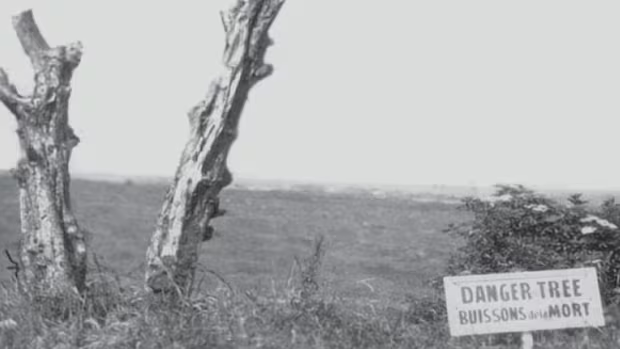
Danger Tree is ‘the whole story of World War One,’ says N.L. historian
A replica to be installed in June 30 ceremony at Beaumont Hamel Newfoundland Memorial
For soldiers fighting in northern France more than a century ago, a lone tree on the battlefield was the last thing they saw. Now, a ceremony is set to install a replica of what is now known as the Danger Tree.
On the morning of July 1, 1916, the Royal Newfoundland Regiment was almost wiped out by German fire on the opening day of the Battle of the Somme. Only 68 of some 800 who went into battle answered roll call the next day — the rest were dead, injured or missing.
“Our boys didn't have a chance. As soon as they got out of the trenches, they started to get mowed down and a goodly number of them got as far as the Danger Tree,” military historian and author Gary Browne told CBC News.
Danger Tree monument to be unveiled in France
For Browne, the Danger Tree — as well as the caribou emblem of the regiment — have become lasting and tragic symbols of the conflict.
“It's the whole story of World War One, where we lost over 1,700 Newfoundlanders and Labradorians and over 800 have no known graves,” he said.
“When I think of whether it be Beaumont Hamel Park or the Danger Tree, it reminds me of that whole catastrophic World War One.”
With time, the tree disintegrated and in ensuing years, stand-ins have been dug into French soil at the Beaumont Hamel Newfoundland Memorial. A replica designed in collaboration with Memorial University and Veterans Affairs Canada is set to be installed at a June 30 ceremony.
“Not only do we need to remember July 1 and November 11, we need to remember all the time,” said Browne.
Browne added it’s important to remember the bravery of those who fought and died, many of whom were young. Of those who died during the Battle of Beaumont Hamel, he said 39 were teenagers.
When people hear “Danger Tree” people should remember the dead, as well as their families who were back on the home front, he said.
“It would be etched in our Newfoundland and Labrador psyche. And so it should be, because we need to remember this was our DNA. These were our boys,” he said, adding people from N.L. served in other capacities, like with the Royal Naval Reserve, the merchant marine, the forestry companies, and as nurses.
Remains of four N.L. soldiers discovered overseas, says anthropologist
Under grey skies and rain, N.L. entombs its Unknown Soldier in solemn ceremony at war memorial
Browne said this remembrance is something that needs to be continuously passed down, adding he’s pleased the Shalloway Youth Choir is participating during a July 1 ceremony at the memorial park.
“They will remember and come back home and for the rest of their lives, and they can pass it on to their children. So it's an important day, I think, in the history of Newfoundland and Labrador.”
Download our free CBC News app to sign up for push alerts for CBC Newfoundland and Labrador. Sign up for our daily headlines newsletter here. Click here to visit our landing page.
Elizabeth Whitten is a journalist with CBC News, based in St. John's.
Related Stories
 World
World
Mory Kromah: From one world champion to another | News | Official Site
27 seconds ago
 World
World
U.S. ramps up Cuba sanctions, detentions of Americans returning from island
33 seconds ago
 World
World
3 injured after donkey jumps into a van, kicking and biting, in northern Germany
59 minutes ago
 World
World
Jolly/Pullela Live a Dream
59 minutes ago
 World
World
Charter plane crash kills 8 near remote radar site in western Alaska
59 minutes ago
 World
World
After GERD, can Egypt shape Ethiopia’s next Nile dams?
2 hours ago
 World
World
US, South Korean militaries wrap up drill early, a day after North Korea's missile barrage
2 hours ago
 World
World
Weather tracker: Extreme rain deluges Japan and South Korea
4 hours ago