
Disruption by Opposition, Eagerness for a Functioning Parliament in Power: The Double Standards of Indian Politics
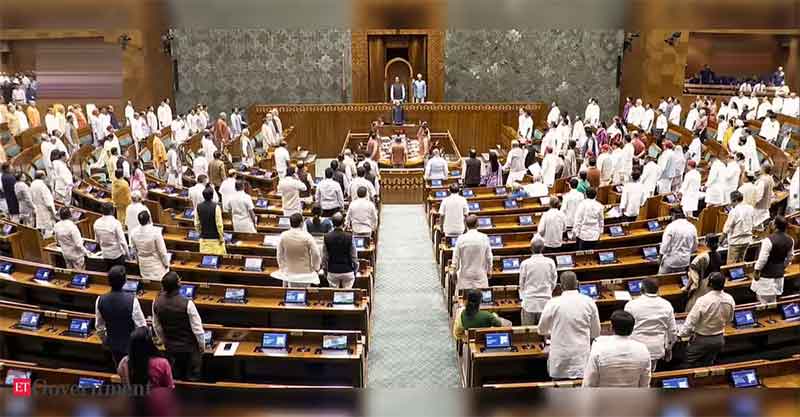
Inside the Parliament building, it was the exact same scene that day as well. On one side, slogans, protests, banners, and demands for accountability from opposition MPs; on the other side, calls from the treasury benches to let Parliament function. The Lok Sabha and Rajya Sabha were repeatedly adjourned. Question Hour was stalled. In the Parliament where the problems of hundreds of millions of people of the country ought to be discussed, political confrontation became the primary spectacle day after day. Right at the beginning of the 2026 Monsoon Session, the proceedings of both Houses were repeatedly disrupted by intense opposition protests. The opposition grew vocal, demanding the resignation of Education Minister Dharmendra Pradhan over allegations of NEET exam paper leaks. The government stated it was ready to discuss the matter; however, the opposition insisted that unless the Education Minister resigned or at least accepted political responsibility, such a discussion would be meaningless. As a result, almost the entire first week passed without substantive dialogue. The Lok Sabha was able to function for only 5 percent of its scheduled time, and the Rajya Sabha for just 6 percent. The effective working time was merely 1.6 hours in the Lok Sabha and 1.7 hours in the Rajya Sabha. Only two bills were introduced during this period.
This scene in Parliament appears to be a symbolic snapshot of Indian democracy over the past two decades. The government says—let Parliament function, we will answer all questions. The opposition says—answer our questions first, then Parliament will function. The government says—the people have given us a majority, so the responsibility to legislate and govern rests with us. The opposition says—the people gave you the right to govern, not the right to remain above questioning. Caught in the middle of this confrontation is the most vital function of parliamentary democracy: deliberation, accountability, scrutiny, and debate prior to enacting legislation.
This scene is not new. Over the last two decades, shifts of power in India’s Parliament have changed not just governments, but also the language of parliamentary behavior. The party sitting in opposition typically holds up protest, accountability, and raising tough questions against the government as the very lifeblood of parliamentary democracy. Yet, when that same party comes to power, it prioritizes keeping Parliament running, implementing executive programs, and passing legislation swiftly. The party that frames stalling Parliament as a tool of democratic protest while in opposition characterizes the exact same tactic as disrespect toward parliamentary work once in power. Conversely, when the ruling party transitions to the opposition benches, its political rhetoric shifts as well. Consequently, the history of the Indian Parliament over the past two decades is essentially a history of deep political contradiction—protest when in opposition, demands for a functioning Parliament when in power.
The most significant example of this duality is the veteran BJP leader Arun Jaitley. During the UPA-2 government, he served as the Leader of the Opposition in the Rajya Sabha. At that time, he did not view the BJP’s strategy of disrupting Parliament as mere chaos. His argument was that while Parliament’s job is to debate, if the government uses Parliament to evade crucial questions, then obstructing Parliament can also serve the cause of democracy. In his words: “Obstruction in Parliament can be in favor of democracy; hence, creating parliamentary obstruction is not anti-democratic.” In 2012, during the BJP’s agitation against the UPA government over coal block allocations, Jaitley stated even more clearly: “Sometimes, obstruction in Parliament can be productive for the larger interest of the country.” However, he also issued a vital caveat—that creating obstruction in Parliament should generally be avoided and used only in “extremely rare situations.” This second caveat is crucial, as it contains both the strongest argument in favor of stalling Parliament and its boundaries. The logic is that parliamentary obstruction is not in itself a democratic ideal; it is a political weapon. And using a weapon is justified only when standard parliamentary procedures fail to extract accountability from the government. That is, if the government refuses to answer opposition questions, shies away from debating critical issues, refuses to refer matters to parliamentary committees, or uses its numerical majority to control debate so heavily that opposition viewpoints become virtually meaningless—then disrupting Parliament to build political pressure becomes the opposition’s last resort.
It is easy to reject this argument outright, but doing so ignores another practical reality of parliamentary democracy. The government commands a majority in Parliament. In matters of passing legislation, votes are ultimately decisive. Therefore, if the government believes it can push bills through using its majority despite opposition objections, the question inevitably arises: how effective are parliamentary tools in allowing the opposition to pressure the government? Parliamentary questions, short-duration discussions, adjournment motions, calling-attention notices, parliamentary committees, and no-confidence motions can only be effective if the government keeps those avenues genuinely functional. If the government rejects opposition notices on all major issues and curtails debate, the opposition’s avenues for political leverage shrink. Sushma Swaraj offered a similar argument during the UPA tenure. In 2012, she stated, “Not allowing Parliament to function is also a form of democracy.” At the heart of her argument was the issue of majority rule. A government’s majority does not grant it license to do whatever it pleases; a majority provides a mandate to govern, not immunity from accountability to the people.
A fundamental distinction must be drawn here. A majority guarantees the government’s right to make decisions, but it does not guarantee the right to refrain from answering questions. Winning a majority in an election means the government can pass laws, present budgets, and make administrative decisions. But the very meaning of parliamentary democracy is that the opposition will question those decisions, and the government must explain its reasoning. If a majority turns into a license for unquestioned governance, Parliament risks gradually transforming from a deliberative institution representing the people into a mere voting machine for the majority.
Yet, it is equally essential to define the boundaries of the argument for disruption. It is only natural that the government will not concede to every opposition demand. No parliamentary system exists where the government must surrender every time the opposition deems an issue critical, lest Parliament be stalled. The opposition also bears responsibility. They must first exhaust all effective mechanisms available within Parliament. Question Hour, adjournment motions, short-duration discussions, calling-attention notices, parliamentary committees, and no-confidence motions—if, after using all these, the government still refuses to face vital questions, only then does the political rationale for disruption gain strength. In other words, stalling Parliament is not a standard democratic procedure; it can only be the ultimate weapon of democratic pressure. However, if that ultimate weapon is turned into the first resort, its moral and political legitimacy rapidly erodes.
Arun Jaitley himself spoke of this boundary. He advocated avoiding parliamentary obstruction and viewed it solely as a tool for “extremely rare situations.” Thus, his true meaning was not that the opposition could shut down Parliament whenever it pleased; rather, his argument was that if standard mechanisms of parliamentary accountability fail, the opposition requires a political tool capable of forcing the government to face scrutiny.
It is precisely on this point that Somnath Chatterjee’s stance stands at the polar opposite. He was a fierce critic of the tendency to disrupt Parliament. The core of his argument was that political parties have increasingly embraced the notion that any issue can be proven important by halting parliamentary proceedings. He warned that this trend ultimately undermines both the dignity and the effectiveness of Parliament. Later, he was quoted as observing that a party only truly appreciates the importance of a functioning Parliament when it sits in opposition.
Somnath Chatterjee’s observation aligns strikingly with the history of the past two decades. From 2004 to 2014, the UPA government repeatedly faced opposition-led gridlock. The 2010 Winter Session was virtually washed out over the 2G spectrum scandal, with the opposition demanding a Joint Parliamentary Committee (JPC). Their argument was that the government was attempting to brush the issue aside with a routine debate. The stalemate finally ended after the decision to form a JPC. This event established a key precedent in favor of opposition disruption—that gridlock could yield political results. Yet, the same event can be viewed differently. A serious corruption allegation like 2G warranted a thorough investigation in a parliamentary democracy. However, the shutdown of Parliament meant that Question Hour, debates on other bills, and routine executive accountability came to a halt. Consequently, the tool used to pressure the government on one specific issue simultaneously harmed all other parliamentary work. This duality is the central flaw of disruption politics. A protest on a specific issue may succeed, but it comes at the expense of all other legislative functions. From the 2010 Winter Session to the 2012 coal block controversy, the same problem recurred. Over the five years of the 15th Lok Sabha, nearly 37 percent of scheduled time in the Lok Sabha and about 32 percent in the Rajya Sabha was lost to disruptions. By comparison, during the 14th Lok Sabha, only about 13 percent of time was lost in the Lok Sabha.
In 2014, power shifted. The BJP came to power, and the Congress became the principal opposition. Instantly, the political rhetoric inverted. The party that had previously applied pressure by obstructing Parliament began advocating for a functioning House. Meanwhile, the Congress, which had managed opposition protests while in power, adopted the exact same tactics of disruption from the opposition benches. The 2015 Monsoon Session stands as a notable example of this shift. Driven by various political controversies and sustained opposition protests, the Rajya Sabha managed to function for only 9 percent of its scheduled time. While the Lok Sabha’s productivity eventually reached 48 percent, the first two weeks were virtually lost. In the Rajya Sabha, oral answers were provided for only 2 percent of the scheduled Question Hour time. The issue here is not merely lost time. Question Hour is one of the primary constitutional-political mechanisms for holding the government accountable. An MP asks a question, a minister answers, followed by supplementary questions. When this rhythm breaks, one of the most effective platforms for directly questioning the government is disabled. In effect, in attempting to hold the government accountable, the opposition can create conditions that shut down the primary mechanism of accountability itself. A similar conflict emerged during the 2016 demonetization debate. The opposition demanded that the Prime Minister explain such a massive economic decision in Parliament and discuss the hardships faced by the public. The government countered that debate should take place in Parliament. The opposition alleged that the government was structuring the debate to evade genuine accountability. The result—a prolonged stalemate. The second half of the 2018 Budget Session saw a repeat of this scenario. Centered around demands for special status for Andhra Pradesh, various corruption allegations, and no-confidence motions, Parliament was nearly paralyzed. The Lok Sabha functioned for only 21 percent and the Rajya Sabha for 27 percent of scheduled time throughout the session. From UPA to NDA, the government changed and the opposition changed, but the political culture of stalling Parliament remained unchanged. Instead, the arguments simply flipped depending on who held power.
This contradiction became even more pronounced during the 2021 Monsoon Session. Now with the BJP in power, the Congress and other opposition parties mounted fierce protests over Pegasus surveillance, farm laws, and other issues. The Lok Sabha worked for only 21 percent and the Rajya Sabha for 29 percent of scheduled time. But here, a new anomaly surfaced. Even with Parliament stalled, legislation passed. In other words, gridlock does not always stop executive lawmaking. The government often uses the remaining time to rush bills through. Consequently, the opposition loses debate time, while the government gains the political narrative to claim, “It is the opposition that refuses to let Parliament function.” Thus, disruption ultimately becomes a tool for political campaigning for both sides. During the 2023 Monsoon Session, the Lok Sabha worked for only 43 percent and the Rajya Sabha for 55 percent of scheduled time, yet 23 bills were passed. Evidently, productivity statistics and legislative output do not always paint the same picture.
This raises the question—does keeping Parliament running simply mean passing more bills? Certainly not. A functioning Parliament implies detailed debate on laws, space for opposition views, Question Hour, committee scrutiny, and thorough discussion on government policy. A bill passed in haste does not mean Parliament was effective. In this regard, another concerning trend has emerged in recent years—the decline in referring bills to parliamentary committees. In the 14th Lok Sabha, nearly 60 percent of bills were sent to committees, increasing to about 71 percent in the 15th Lok Sabha. However, this figure dropped sharply in the 16th Lok Sabha and fell further to around 16 percent in the 17th Lok Sabha. Thus, while the opposition stalled proceedings, the government frequently bypassed detailed parliamentary scrutiny to pass legislation rapidly. Together, these two trends have eroded the core deliberative character of Parliament.
The recent 2026 Monsoon Session brought this longstanding conflict back to the fore. The session commenced on July 20, with 19 scheduled sittings. Prior to the session, Prime Minister Narendra Modi expressed hope that like the monsoon, the session would be active and productive. Yet on the very first day, opposition protests over the NEET exam paper leak led to five adjournments in the Lok Sabha, while the Rajya Sabha was adjourned for the day. By the fourth day, the stalemate persisted. The opposition demanded the immediate resignation of Education Minister Dharmendra Pradhan and an immediate discussion on the NEET leak. The government stated it was open to debate. However, the opposition maintained that debating without accepting the demand for resignation would fail to establish political accountability. With no middle ground reached, the Houses were repeatedly adjourned. This incident underscores the core question of the past two decades: Is it enough for the government to simply say, “We are ready to discuss”? Is it enough for the opposition to insist, “Resignation first, debate later”? Or is the true function of parliamentary democracy to forge a middle path between these two positions?
If there are serious allegations against the government, it must respond to them. But for those answers to be given, Parliament must function. Conversely, if Parliament runs but the government refuses to answer questions, what is the value of running Parliament purely as a formal routine? There is no simple answer to this dilemma. This is where the theory of viewing disruption as a “last resort” becomes crucial. If the opposition uses every standard procedure available in Parliament and still receives no answers from the government, what options remain? They can hold press conferences, address public rallies, or take to the streets. But inside Parliament, the most visible method of exerting direct pressure on the government is disrupting the session. Especially when a government uses its numerical majority to reject opposition demands, temporary disruption can serve as a political equalizer. However, the keyword here is crucial—temporary. If a disruption lasts a few hours or a day or two to force the government to the negotiating table, it acts as a political tactic. But if an entire session is rendered non-functional, it ceases to be a weapon of last resort; it becomes a strategy that paralyzes the parliamentary institution itself.
The 2025 Monsoon Session serves as a recent example of the danger of crossing this line. More than two-thirds of scheduled time was lost to disruptions. The Lok Sabha functioned for only 29 percent and the Rajya Sabha for 34 percent of scheduled time. Question Hour was hit particularly hard—running for only 23 percent of its scheduled time in the Lok Sabha and a meager 6 percent in the Rajya Sabha. Clearly, the 5 and 6 percent productivity figures in the first week of 2026 are not an isolated anomaly; they are the continuation of a long-standing political culture. In 2015, 2021, 2022, 2023, and 2025, every time consensus broke down between the government and the opposition over a major political issue, Parliament quickly ground to a halt. Yet, the government’s accountability cannot be denied either. If the opposition repeatedly raises the same issue, the primary responsibility of the government is to recognize the political significance of that query. Merely alleging that “the opposition is not letting Parliament run” is insufficient. The government must ask itself—why is the opposition so persistent? Is any specific demand reasonable? Is an inquiry warranted? Can the matter be referred to a parliamentary committee? Can the Prime Minister or the relevant minister issue a detailed statement? Can dedicated time be allocated for opposition debate? If the government fails to consider any of these avenues, the opposition’s political justification for disruption grows stronger. For the fundamental principle of parliamentary democracy is this: a majority can decide, but a majority cannot erase questions.
Equally, the opposition must ask tough questions of its own behavior. If the government agrees to a debate, should that debate be stalled solely on the demand for a minister’s resignation? If the government agrees to schedule a discussion on a specific day, will the opposition capitalize on that opportunity? If a proposal to send a bill to a parliamentary committee is accepted, will the opposition participate in that process? The strength of parliamentary politics lies in compromise and consensus built through dialogue. If the answer to every question is “no debate without resignation,” the space for parliamentary process contracts. For this reason, arguments both for and against disruption contain partial truths. The opposition’s claim that a government cannot use its majority to evade vital questions is entirely correct. Likewise, the government’s claim that opposition disruptions strip elected representatives of their right to work is not without merit. The problem is that both sides typically present only their half of the truth. The government says—let Parliament run, but often fails to specify how much time will be allocated to answer opposition questions. The opposition says—answer us first, but often fails to explain how it will help keep Parliament functioning once the government agrees to debate. This political distrust is the root cause of parliamentary deadlock.
The experience of the last two decades highlights another uncomfortable truth. The party that today attacks the opposition for stalling Parliament may well sit on the opposition benches tomorrow and employ the exact same tactics. The party currently preaching the importance of a functioning Parliament may alter its political language the moment it loses power. Somnath Chatterjee’s observation—that the party on the “receiving end of power” understands the value of a functioning Parliament best—succinctly captured this political reality of the Indian Parliament. Thus, the issue is not Congress versus BJP, nor is it UPA versus NDA. The problem is far deeper. It is a systemic defect in India’s parliamentary political culture.
The duty of the opposition is to highlight government failures, question authority, give voice to the public, and, when necessary, put the government on the spot. But the most effective way to create that discomfort is not always to shut down Parliament. Rather, cornering the government with facts, logic, documentation, and persistent questioning inside the House can prove far more impactful. On the other hand, the government’s responsibility is to answer questions rather than using its numerical majority to render opposition voices irrelevant, and to accept reasonable opposition amendments to its legislative agenda when appropriate.
Without this balance, two distinct hazards arise. The first is “paralyzed-democracy Parliament”—where opposition exists, but deliberation does not. The second is “majoritarian Parliament”—where Parliament functions, bills pass, and budgets are approved, but opportunities for substantive opposition accountability are curtailed. The second hazard is often subtler than the first, because from the outside, Parliament appears fully operational. The bells ring, sessions convene, bills pass, votes are cast. But if major bills pass without adequate debate, if parliamentary committees fail to examine them, if Question Hour is routinely disrupted, and if opposition notices are repeatedly rejected, then even a functioning Parliament loses its democratic vitality.
Statistics from the 2026 Budget Session also illustrate the need for caution. Although the Lok Sabha worked for 86 percent and the Rajya Sabha for 92 percent of scheduled time, 77 percent of the budget expenditure was passed without any discussion. Thus, high numerical productivity alone does not guarantee genuine parliamentary deliberation. Therefore, the true crisis of Indian parliamentary democracy is not merely disruption; it is the coexistence of two opposing trends—disruption and inadequate deliberation. On one hand, the opposition can stall Parliament to the point that questioning, debate, and lawmaking grind to a halt; on the other hand, the government can run Parliament in a manner that, even while operational, detailed scrutiny of bills or sufficient time for the opposition is denied.
Resolving this conflict cannot be achieved by declaring one party morally victorious. It requires institutional reforms and a transformation of political culture. The opposition’s right to debate major national issues must be strengthened. Simultaneously, effective provisions are needed to ensure no party can stall Parliament indefinitely. Question Hour must be granted special protection. The tradition of sending major bills to parliamentary committees must be reinforced. All-party consultations between the government and the opposition must be made more robust and meaningful. Most importantly, political confidence in the neutrality of the Speaker and the Chairman must be restored.
For ultimately, Parliament is not the property of any government, nor is it merely a stage for opposition protest. Parliament belongs to the people. The government is there to govern; the opposition is there to question that governance. If the government refuses to answer questions, the opposition has a right to protest. But the goal of protest must be to bring the government back to the negotiating table, not to lock the doors of Parliament indefinitely. And if the government genuinely wishes to keep Parliament running, demanding an end to opposition clamor is not enough; it must demonstrate a genuine willingness to provide political answers to opposition questions. This is why one part of Arun Jaitley’s classic argument remains relevant today—parliamentary obstruction can sometimes serve democracy, but it must remain a “tool for extremely rare situations.” At the same time, Somnath Chatterjee’s warning remains equally pertinent—the culture of halting parliamentary proceedings to prove the importance of an issue ultimately weakens the institution of Parliament itself.
The history of the Indian Parliament over the past two decades thus serves as a stark political mirror. When the BJP was in opposition, it championed the cause of protest and accountability; upon coming to power, it championed the cause of keeping Parliament running. When the Congress was in power, it emphasized the importance of parliamentary productivity; in opposition, it took the path of parliamentary disruption. Whichever party takes power in the future will share the responsibility of breaking this cycle, as will the opposition. For in a democracy, a majority is necessary, but a majority is not the sum total of democracy. Opposition is necessary, but opposition does not mean shutting down Parliament. Protest is necessary, but the ultimate objective of protest must be to restore deliberation. Questioning the government is necessary, but Parliament must remain functional for those questions to be answered. Therefore, the scene witnessed at the start of the 2026 Monsoon Session—slogans from the opposition on one side, appeals from the government to run Parliament on the other, with both Houses repeatedly adjourned in between—is not merely the political drama of a single session. It is a reflection of a deeper crisis in Indian parliamentary politics over the past two decades.
At the core of that crisis lies a hard question: If the government refuses to answer critical questions raised by the opposition, what should the opposition do? The answer might be—ask questions, present facts, approach parliamentary committees, bring no-confidence motions, challenge the government in votes, and build public opinion. But if those avenues are effectively blocked, disrupting Parliament may indeed serve as a last resort. Yet even that weapon comes with a condition—disruption must be used to open the door to dialogue, not to lock it shut. The same truth applies to the ruling party: keeping Parliament running does not mean merely holding sittings; it means granting the opposition space to speak, answering tough questions, and refusing to treat a numerical majority as a substitute for accountability. This balance will define the future of Indian parliamentary democracy. For beyond who shouted louder, who stalled the session longer, or who passed more bills, the far greater question is: who spoke for the people, how accountability was provided by the government, and how the country’s laws and policies were enriched through that exchange.
Get the latest CounterCurrents updates delivered straight to your inbox.
Asish Gupta, senior journalist and Chief of News Bureau,Delhi, Asomiya Pratidin
Related Stories
 India
India
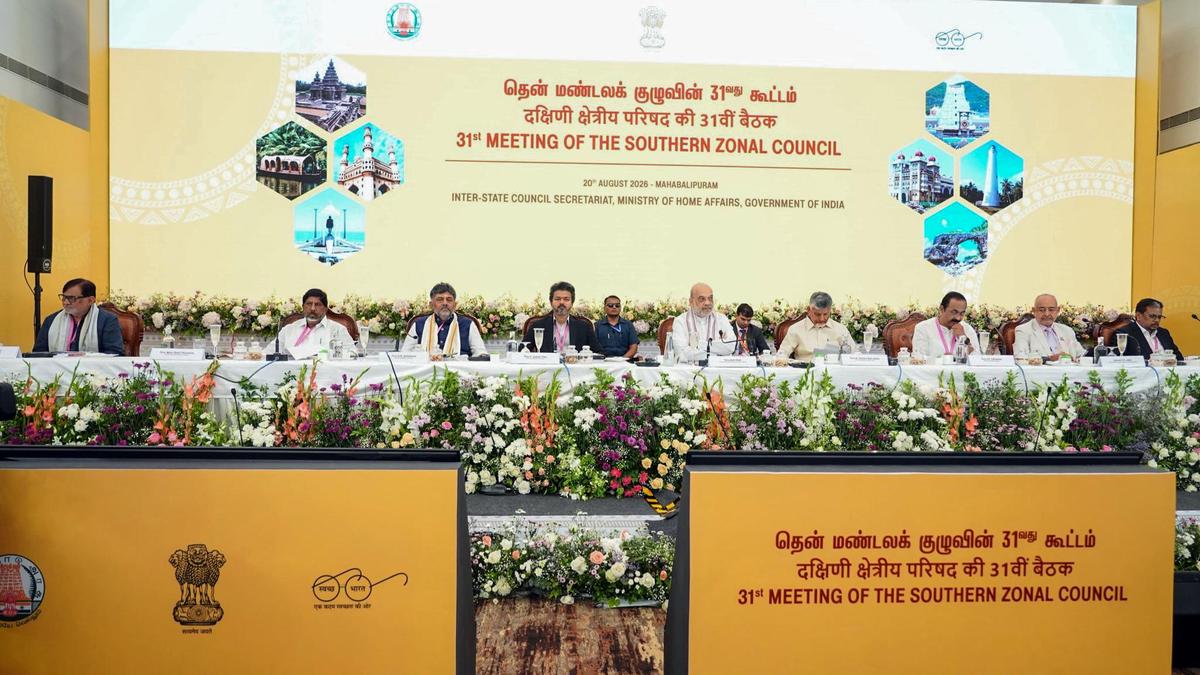
The south’s muted voice as political power shifts north
1 hour ago
 India
India
India’s diaspora deposit flows surpass $100 billion: Reports
4 hours ago
 India
India
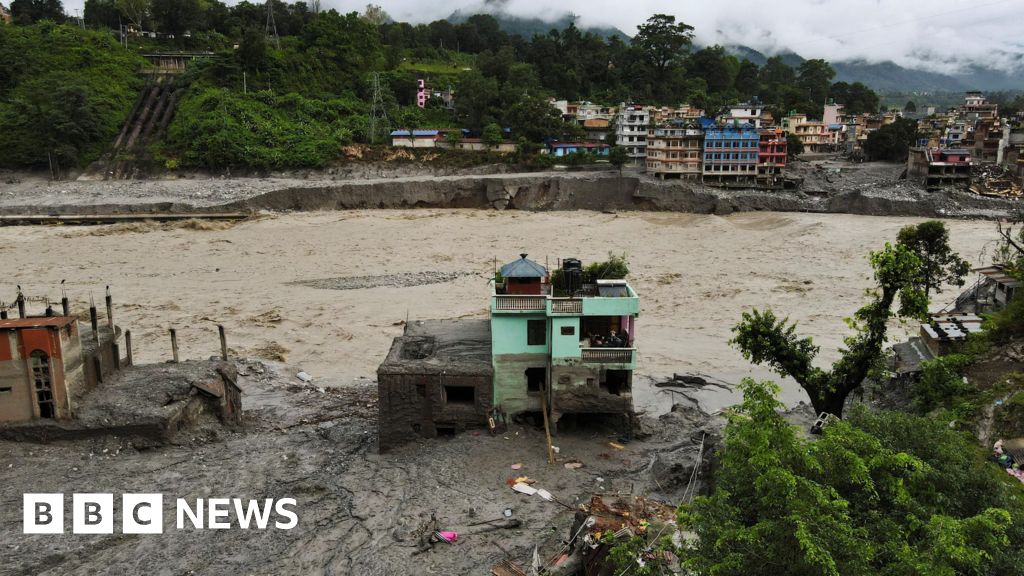
More than 110 rescued a week after Nepal deadly floods, army says
7 hours ago
 India
India
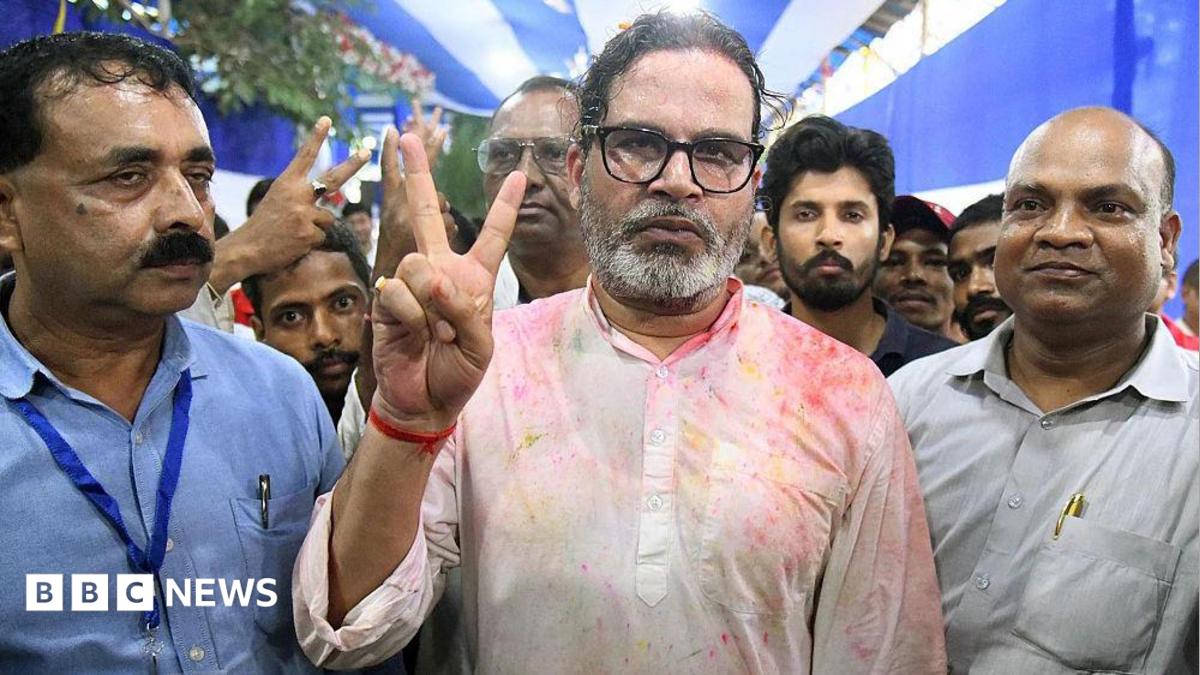
Prashant Kishor: How India's best
7 hours ago
 India
India
'Speaking about poor, Dalits, minorities is not Dimagi Naxal': Sam Pitroda says, 'Ask Muslims, Christians, ...
9 hours ago
 India
India
Nepal
17 hours ago
 India
India
Modi, Aliyev meet for first time as India, Azerbaijan seek to reset ties
17 hours ago
 India
India
India’s Unacademy sells to rival upGrad for $206M, about 94% less than its peak valuation
19 hours ago