
EU Inc: Will Europe blow its biggest chance to get startups right?
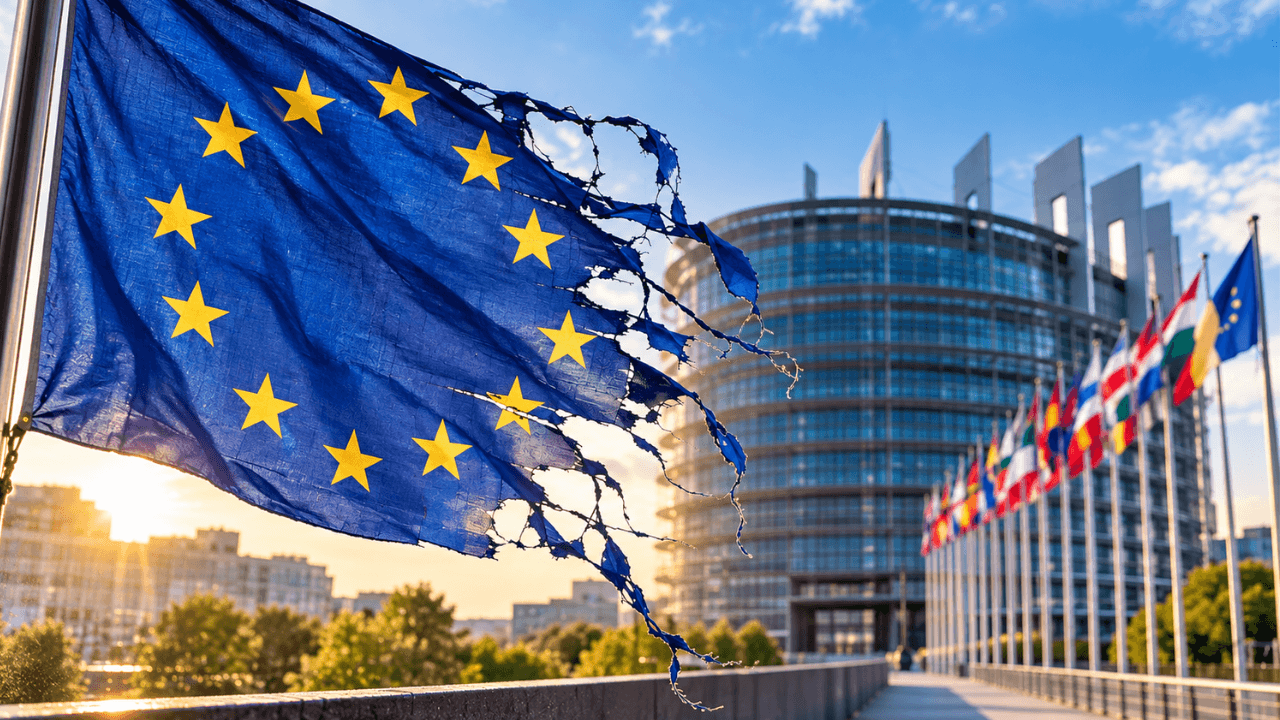
Yesterday, the founders of EU–INC issued an urgent public appeal to Europe's Heads of State and Government, warning that months of negotiations are stripping away the very provisions that would make the proposed pan-European company framework worthwhile. Their message was blunt:
"Dear Europe, why are you killing EU Inc?"
In their statement, the campaigners warn:
"The EU Inc you championed – one that will enable Europe to compete at scale – no longer exists."
I've been covering EU Inc since the movement launched in October 2024, interviewing its founders, speaking to investors, and writing repeatedly about the obstacles European startups face when trying to scale across borders.
And I have to say, I'm getting increasingly frustrated. Europe has spent years commissioning reports, hosting summits, and discussing its competitiveness problem.
We know the issues. We have heard from the founders and investors affected by them. And finally, there was a proposal with the potential to make a meaningful difference.
So why is it so difficult to deliver?
From grassroots campaign to European promise
When EU Inc first emerged in October 2024, its proposition was straightforward: Europe needed a single, optional company structure that would allow businesses to operate across the Single Market without navigating 27 different corporate legal systems.
In January this year, European Commission President Ursula von der Leyen announced EU Inc at Davos, describing plans for a genuinely European company structure.
The Commission followed with its legislative proposal in March, including fully digital incorporation within 48 hours, simplified company rules, and provisions for employee stock options. It was a significant milestone for a grassroots campaign that had spent more than a year pushing European policymakers to take startup competitiveness seriously.
When I spoke to EU–INC co-initiator Andreas Klinger about the initiative's potential, he was unequivocal about its significance:
"If we as the European startup scene get this right, and implement EU-Inc cleanly – as something that startups can actually use – we will create the biggest leapfrog improvement for startups and tech-innovation in Europe in our lifetime."
That early optimism makes the latest developments all the more frustrating.
We've been warned about this before.
In July 2025, I wrote about concerns that an early parliamentary report risked moving away from the needs of high-growth startups and scaleups.
At the time, I questioned why discussions about a framework designed for Europe's future businesses appeared so heavily influenced by traditional institutions, including banks, notarial chambers, and established legal organisations.
When I first interviewed EU–INC co-initiator Simon Schaefer in October 2024, he warned:
"It's important that this is not the 28th regime designed somewhere in the back roads of Brussels, rather, it's something designed with and for the startup community."
Nearly two years later, that warning feels particularly relevant.
When I spoke to Goedele "G" Mangelaars, founder of Pink Notebook, in September last year, she offered one of the most memorable descriptions I've heard of Europe's startup ecosystem:
"European startups are often asked to run a marathon with their shoelaces tied."
In September this year, I reported on another warning from Europe's founders and investors, who identified five provisions they considered essential to making EU Inc work.
The latest appeal suggests those concerns remain unresolved.
The campaigners say five elements are critical to ensuring EU Inc becomes a genuinely useful European standard.
Free choice of registration: Founders should be able to incorporate in the Member State of their choice, regardless of where they operate, employ people, or pay taxes.
A common stock option framework: Startups need competitive employee equity schemes to attract talent, particularly when competing with larger corporations and US technology companies.
A central digital registry: Rather than another interface connecting different national systems, the campaign wants a genuinely European registry with standardised company information, ownership records, and certificates recognised across borders.
Local worker protections: EU Inc should not weaken employment rights or enable businesses to avoid local tax obligations. Employees would remain covered by the labour laws of the countries where they work.
Access for all companies: The framework should not be limited to particular industries, company sizes, or narrowly defined categories of innovative businesses.
However, EU Inc has also faced strong opposition from trade unions concerned that a pan-European company framework could undermine workers' rights.
The European Trade Union Confederation (ETUC), argues that companies could register in EU countries with weaker labour protections while operating elsewhere, potentially circumventing collective bargaining agreements, employee representation, and national employment standards. Unions also warn that the framework could enable companies to replace wages with stock options and weaken protections during insolvency.
ETUC General Secretary Esther Lynch has called for the legislation to be strengthened or abandoned, warning that without binding safeguards, it risks triggering a race to the bottom in pay and working conditions across Europe.
But protecting employees and making it easier to build companies across Europe should not be mutually exclusive. The answer is to design a framework that delivers both, not negotiate away the very reforms that made EU Inc worth pursuing.
The cost of fragmentation is very real
When EU Inc first launched in October 2024, I spoke to its co-creators about the practical consequences of Europe's fragmented company structures.
One example involved an international angel investor who pulled out of a German startup's funding round after discovering the company was incorporated as a GmbH.
Another involved an investor who decided that the legal complexity of backing a Slovenian startup simply wasn't worth it for a $20,000 investment.
These aren't theoretical barriers. They are investments that never happen. And the frustration extends well beyond founders. Last year, Carmen Alfonso Rico, founder of Cocoa Ventures, described the consequences of Europe's inconsistent employee equity schemes:
"Some make little sense — you get taxed on money you haven't got."
Stock options are one of the very provisions EU Inc campaigners now fear will be weakened.
For startups competing with US technology companies for talent, this matters enormously. Employee equity can be the difference between attracting an exceptional early hire and losing them to a larger employer with deeper pockets.
Founders should be building, not sitting in notaries' offices
Last September, I also interviewed Estonia's e-Residency leadership about what Europe could learn from the country's digital-first approach to business. Liina Vahtras shared the extraordinary example of an Estonian founder travelling to Germany so a notary could read aloud, in German, a contract the founder had written himself.
This is not an isolated incident, and as she shared at the time, "Founders should be building their technology, not wasting time like this."
She also warned that governments needed to think more ambitiously because otherwise the private sector would simply move on.
Europe is exporting its future unicorns
One of the most revealing pieces I wrote about EU Inc came from conversations with angel investors across Europe. These are the people writing the earliest cheques, often when a company is little more than an idea and a founding team. Investors described deals delayed for months by legal paperwork, cross-border investments rendered uneconomical by administrative costs, and founders choosing to incorporate in the US simply because the process was easier.
Simon Leicht, General Partner at SDAC Ventures, put the consequences particularly starkly:
"We are literally exporting our future unicorns because of our own bureaucracy."
It's a line that has stayed with me.
And it's difficult to reconcile with Europe's repeated declarations about technological sovereignty, economic resilience, and global competitiveness.
A test of Europe's commitment to competitiveness
I'm not suggesting that EU Inc will solve every problem facing Europe's startup ecosystem. It won't suddenly create deeper capital markets, close the growth funding gap, or make Europe's 27 national tax systems disappear.
And there are legitimate questions about how a common company framework should interact with national employment laws, taxation, corporate governance, and safeguards against regulatory arbitrage. Those questions deserve careful answers.
But careful regulation and meaningful reform should not be mutually exclusive. The danger is that, in trying to accommodate every national concern, Europe produces a framework that looks ambitious on paper but changes very little in practice. The irony is hard to ignore. In September 2025, one year after the Draghi report, I wrote about Europe's persistent underinvestment, talent drain, and regulatory fragmentation.
More than a year later, those challenges haven't disappeared.
The EU–INC campaign's latest appeal ends with a warning that goes beyond the fate of a single legislative proposal:
"Europe's founders will have a future. Whether that future is European is in your hands."
The EU–INC campaign is calling on founders, investors, operators, and supporters to help bring its concerns directly to Europe's political leaders.
Related Stories
 Startups
A Smarter Way to Discover Innovative Startups and Emerging Digital Products
14 hours ago
 Startups
Investing in Israel's immigrants: New VC firm offers olim up to $500k. in funding for startups
17 hours ago
LinkedIn Top Startups 2026: The 50 U.S. Companies on the Rise
1 day ago
 Startups
Glovo alumni found 35 startups worth EUR €461 million
2 days ago
 Startups
K-38 Consulting Publishes Guide Helping Startups Choose Between Bookkeeping-First and CFO
2 days ago
 Startups
UK launches refugee
2 days ago
 Startups
Meet the Australian VC firm with two homegrown unicorns
2 days ago
 Startups
Entertainment Week Africa launches grant pool for creative businesses after Deal Room helps startups become investment
2 days ago