
FIFA World Cup: Refereeing chief denies bias claims in Argentina
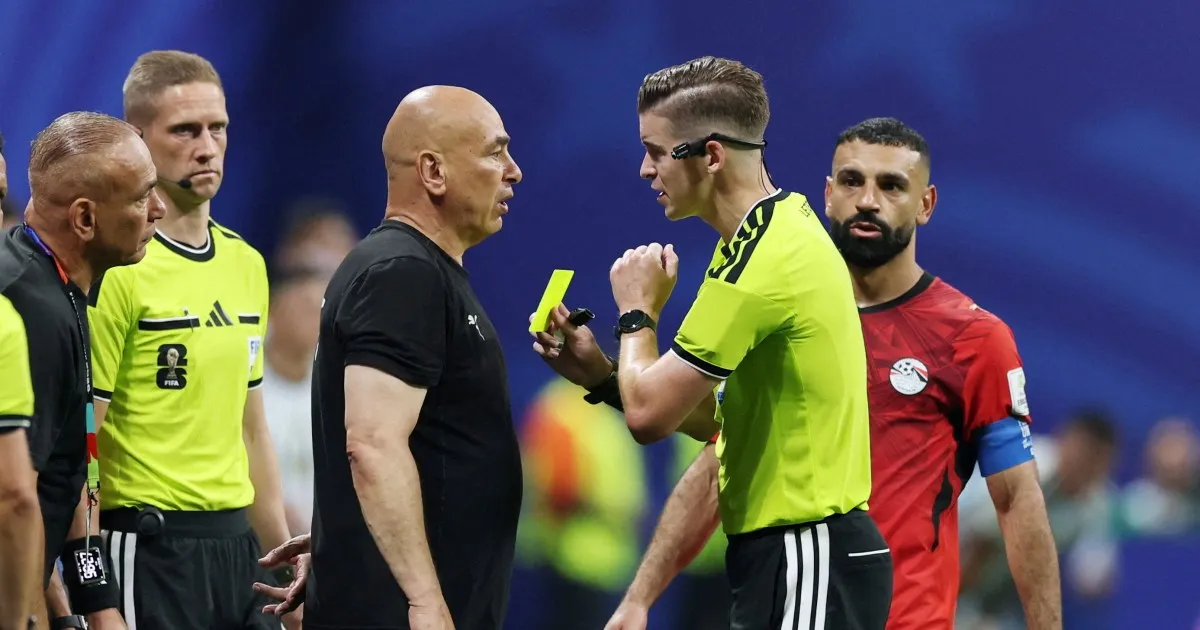
FIFA refereeing chief Pierluigi Collina has defended the officiating in Argentina’s dramatic 3-2 victory over Egypt in the World Cup round of 16, dismissing allegations of bias and saying match officials operated with complete independence.
In an interview published on FIFA’s website on Thursday, Collina said criticism of referees was part of football, but he condemned the questioning of the officials’ integrity after Egypt complained about the officiating following the defeat.
“With such a high number of matches played in a relatively short period of time, it is normal that some things do not go as expected,” Collina said. “When that happens, they [referees] are ready to work even harder to ensure they are fully prepared for the next match.
“Of course, constructive discussion about decisions will always be part of football, but unfounded allegations have no place in our sport.”
Collina said that such allegations could provoke threats against referees and their families.
“Nobody can question the integrity of the FIFA World Cup match officials … Equally, nobody can claim that FIFA refereeing can be influenced by anyone, not even by the FIFA president [Gianni Infantino],” he added.
“Match officials make honest decisions and, just like players and coaches, they always try to do their best.”
Egypt exited the tournament but claimed they had been treated unfairly, after Argentina overturned a 2-0 deficit with 11 minutes remaining to snatch victory with a stoppage-time winner from Enzo Fernandez.
Coach Hossam Hassan alleged after the match that there may have been pressure on the referee to keep Argentina in the tournament, and that Egypt were “cheated” out of a place in the quarterfinals.
The Egyptian Football Association also criticised the refereeing decisions, saying it would not remain silent over what it described as the improper use of the Video Assistant Referee (VAR) system.
Egypt argued that Mostafa Zico’s second-half strike was incorrectly ruled out for what it described as a non-existent foul in the build-up. Egypt were also incensed that a challenge on Mohamed Salah was not penalised moments before Argentina launched the move that produced the winning goal.
FIFA’s Collina said VAR had correctly recommended overturning Zico’s goal, after identifying a foul by Marwan Attia on Argentina defender Lisandro Martinez during the attacking possession phase.
“We believe that a foul is a foul,” Collina said. “Regardless of whether the foul appears ‘obvious’, if the referee did not see it on the field of play, the VAR can intervene.”
Collina also defended the decision not to award Egypt a penalty before Argentina’s winner, saying both the referee and VAR judged the contact between Salah and Julian Alvarez to be “normal football contact”.
“Stepping on an opponent’s foot is a foul, whereas a defender who touches the ball first and then makes normal football contact has not committed a foul,” he said.
While acknowledging that some decisions would always involve an element of subjectivity, Collina said FIFA was satisfied with how VAR principles had been applied throughout the tournament.
Related Stories
 World
World
Nepal on high alert for fresh flooding after river levels rise as death toll soars past 800
18 minutes ago
 World
World
Death toll rises to 38 from Russia's deadliest attack on Ukraine this year
19 minutes ago
 World
World
Welsh bushcraft expert competes on Alone: World Championship
1 hour ago
 World
World
Ferry carrying nearly 270 people capsizes off northern Cyprus, killing at least 7
1 hour ago
 World
World
Iceland set to reject talks to rejoin EU, national broadcaster says
2 hours ago
 World
World
Iran's leader calls for Muslim unity, NBC crew attacked in West Bank and other Mideast news
3 hours ago
 World
World
Trump the renamer-in-chief keen to leave his mark – or his stain
3 hours ago
 World
World
Documents leaked by Trump official to bolster a conspiracy show ‘absolutely nothing’
3 hours ago