
From maker to breaker: Decoding Mamata Banerjee’s journey of TMC, losing its symbol and political future
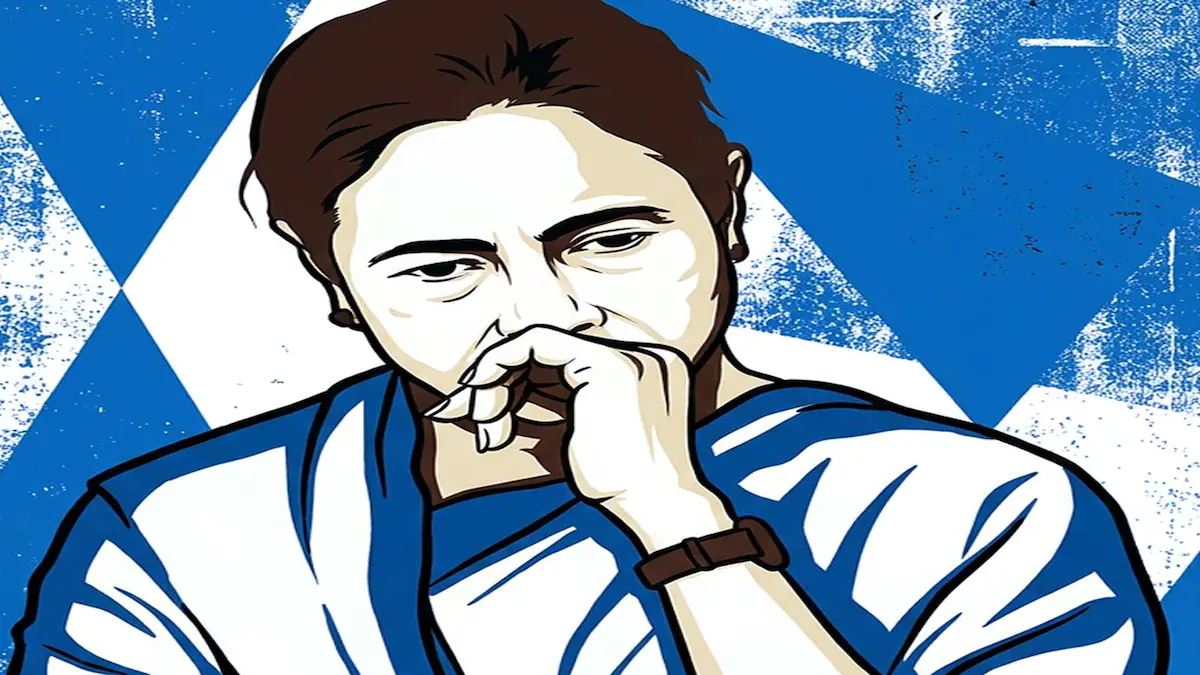
There are political lives that rise by a single idea and fall when that idea is neglected. Mamata Banerjee’s idea was stubborn and local. Bengal, she believed, needed a party that would fight the Communist Party of India (Marxist) without the softness she saw inside the Indian National Congress, a party she accused of treating the Left as a national crutch and a state companion.Sitaram Kesri and Somen Mitra isolated Mamata Banerjee, and she was expelled from Congress in the winter of 1997. On January 1, 1998, she registered the All India Trinamool Congress (TMC). She sketched two flowers on a clump of grass because she wanted a mark that looked like the people who would carry it. That sketch became a government in 2011, after Singur and Nandigram taught a generation that the street could unmake a thirty four-year Left Front. For fifteen years she ruled the state that she had taken from that Front. Then the party she had made began to break her.The election verdict on May 4 was not a rumour from a closed room. The Bharatiya Janata Party crossed two hundred seats. TMC was cut to eighty. BJP's Suvendu Adhikari defeated her in Bhabanipur constituency by a little over fifteen thousand votes and became Chief Minister. Within weeks, Ritabrata Banerjee’s rebels claimed the legislature party; twenty Lok Sabha members walked toward the Nationalist Citizens Party of India; bank accounts holding hundreds of crores were frozen; the Election Commission locked the name and the flowers; and her own Nandigram bye-election nominee Sanchita Pradhan Dey met Adhikari and withdrew.Today, Banerjee apparently reaches for the Congress she once left, and even glances at the Left she once buried, because the organisation that once filled maidans can barely hold a nomination. This is the story of a maker who became, for a season, a breaker of her own inheritance.She did not leave the Congress in a fit. Through the early nineties she had already become the loudest anti Left voice in the state unit, the woman who led the 1993 march toward Writers’ Buildings when police fire killed thirteen Youth Congress workers. She wanted a frontal fight against Jyoti Basu’s machine. Delhi did not. The Congress needed Left numbers in Parliament.Softliners in the West Bengal Pradesh Congress, she argued, were the CPI(M)’s B team. Organisational elections in 1997 confirmed the insult. Her people were boxed out. Kesri backed Mitra. Sonia Gandhi’s mediation arrived too late. Mamata filed for a new party, took the expulsion, and walked into 1998 with a name that meant grassroots and a symbol she had drawn herself. That journey mattered because Bengal’s politics had been frozen.The Left Front had ruled the State since 1977. Land, unions, schools, and the police had settled into one colour. Congress could win pockets. It could not break the structure. Trinamool could, because it was built as a quarrel with that structure. The quarrel became a government after two villages of West Bengal entered the national vocabulary.In Singur in 2006 she stood with farmers against the Tata Nano factory and the land that Buddhadeb Bhattacharjee’s government had taken for it. In Nandigram in 2007 the same argument turned bloody. On March 14, police firing left a stain the CPI(M) never washed off. Suvendu Adhikari was then her lieutenant in that belt. The 2011 election completed the work. The Left’s thirtyfour years' rule ended. She had done from the pavement what the Congress had not done from Delhi.Those years in opposition were her true craft. She slept in party offices, walked into lathi charges, and treated every local humiliation as fuel. Power, when it came, asked for a different muscle. The first term still carried the language of parivartan. Schools, roads, and welfare schemes gave her a new constituency among women and the rural poor. Then the second and third terms thickened.The scamsThe financial scams such as Saradha and Narada stained the upper tier. The school recruitment scandal ate into the dream of honest government jobs. Local committees slipped into the hands of strongmen. Police stations began to look like party annexes. Leaders stopped hearing the booth. The party that had been a protest became a permit.The rise of her nephew Abhishek Banerjee turned that decay into a family argument. Veterans who had taken beatings in the Left years watched a nephew become the organisational centre. Mukul Roy, once the second man who built district units the way a contractor builds floors, left in 2017, accusing the party of becoming a one-person shop and of sliding into dynasty. He joined the BJP, returned after 2021 when Suvendu outshone him there, and faded.Suvendu’s exit in December 2020 was sharper. He took Purba Medinipur with him and gave the BJP a Bengali face who knew every booth of the old revolt. Today Suvendu Adhikari is the CM of West Bengal. Mamata knows that she could have stopped Suvendu but she didn’t as again she chose her nephew over anything else.After 2019’s Lok Sabha scare, Abhishek brought in I-PAC, the consultant mapped seats, shaped candidate lists, and spoke in the language of data. It worked in 2021. By 2026 the same method had hollowed the old house. District leaders said they were taking orders from people who had never stood in a procession. Kalyan Banerjee and others later said the consultancy had wrecked the organisation. The charge may be convenient. The distance from the ground was real.On May 4, that distance was counted. The BJP’s vote share rose toward 46%. Trinamool fell toward 41%. Antiincumbency had ripened across three terms. The Special Intensive Revision of electoral rolls, begun in late 2025, struck names in tens of lakhs, many in districts that had long been Trinamool’s Muslim belt. Analysts still argue how much the revision moved the seat map. What is not in dispute is the BJP’s campaign around infiltration, lawlessness, and a government accused of privileging one community. Mamata lost Bhabanipur, the seat that was supposed to be a TMC fortress. Control of the campaign had sat with Abhishek and the consultants. Her own people, when the numbers came in, did not stay to share the wreckage.The wreckage moved fast. Ritabrata Banerjee, a former CPI(M) man who had entered Trinamool in 2020 and won Uluberia Purba, was expelled on June 1 with Sandipan Saha after they blamed Abhishek in public. By June 3, 58 of 80 MLAs had made Ritabrata the Leader of the Opposition in the Assembly, brushing aside Sovandeb Chattopadhyay. Arup Roy was later named chair of the rebel organisational claim. Firhad Hakim and other old names appeared on that side of the room. By mid-June, about 20 of 28 Lok Sabha members wrote that they had merged with the Nationalist Citizens Party of India and were prepared to sit with the NDA.Three party accounts holding around ₹440 crore in total were placed under a debit freeze after rebel complaints. The Calcutta High Court later let the Mamata camp operate them through a special officer, pending the larger fight. On September 17, the Election Commission froze the All India Trinamool Congress name and its symbol — flowers and grass. The next day her group was named as Mamata All India Trinamool Congress. The other group became Democratic Trinamool Congress. The Supreme Court has now given the Commission four months to decide who owns the original house. Mamata Banerjee called the freeze a black day and spoke of a mother losing a child.Nandigram, the soil of her greatest revolt, delivered the smallest cruelty. Suvendu, having kept Bhabanipur, vacated the assembly seat. Her camp fielded Sanchita Pradhan Dey. After a meeting with the Chief Minister at Nabanna, the candidate withdrew. Mamata then offered the Congress’s Milan Pradhan her support and spoke of a sister party. The woman who had broken the Congress to fight the Left was asking both to hold her up, because her own unit could not keep a nominee in the constituency that made her.Mamata Banerjee's future now sits on three questions that cannot be outsourced to a consultant. Will enough of Bengal still trust the person more than the symbol? Will the rebel majority in the House and in Parliament hold, or will fear and patronage pull some of them back? How will the Congress and the Left treat her, nationally and in the state, now that she needs them more than they need her legend?She has come back from smaller rooms before. This room is different. The party's name is in a file. The grass and twin flowers are in another. The street that once belonged to her is being walked by men she trained, and by a government she used to mock from the pavement. Survival, for her, is no longer a slogan. It is the only work left. —The author, Sayantan Ghosh is a political observer and author of Battleground Bengal and The Aam Aadmi Party. The views are personal. Continue Reading(Edited by : Unnikrishnan)
Related Stories
 India
India
World Juniors: UAE Stun India
9 minutes ago
 India
India
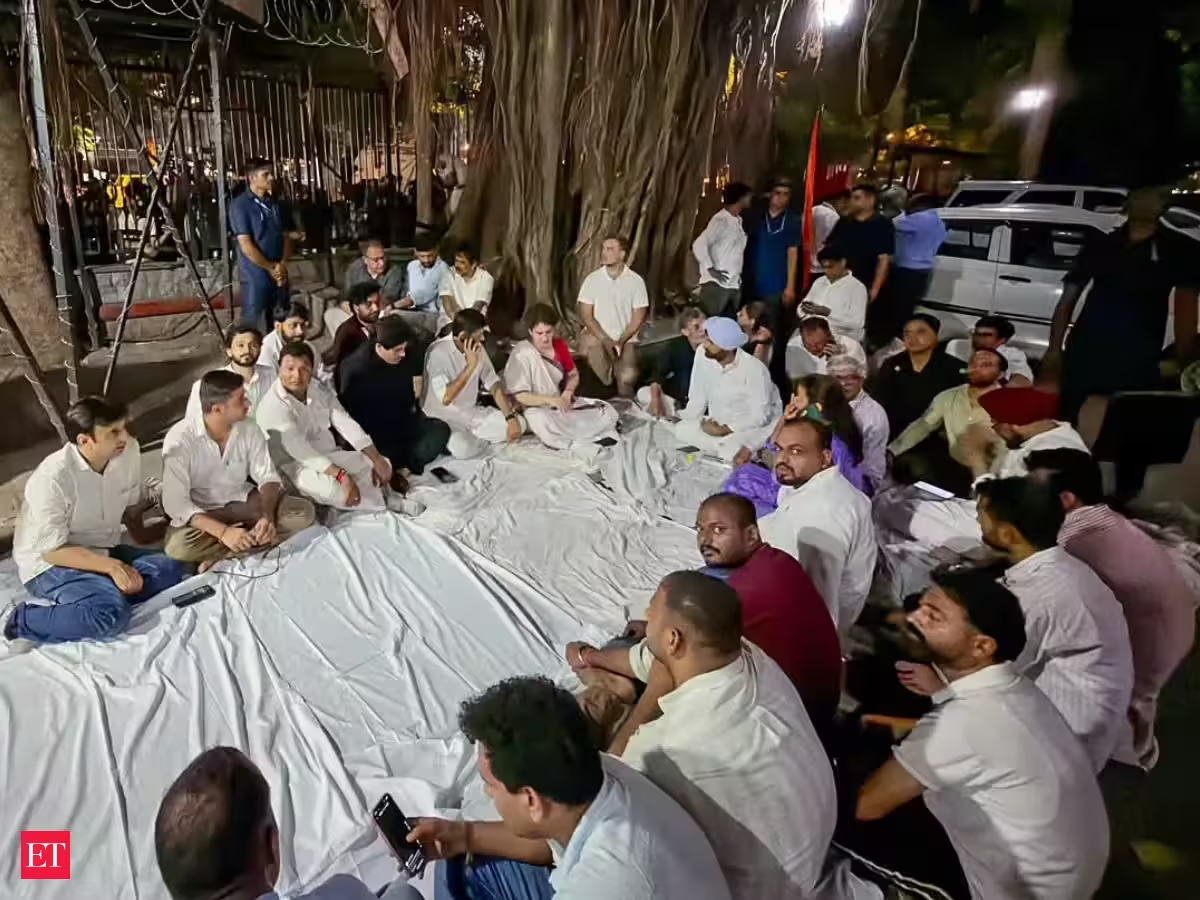
INDIA bloc march: EC says no party requested meeting till 4 pm
8 hours ago
 India
India
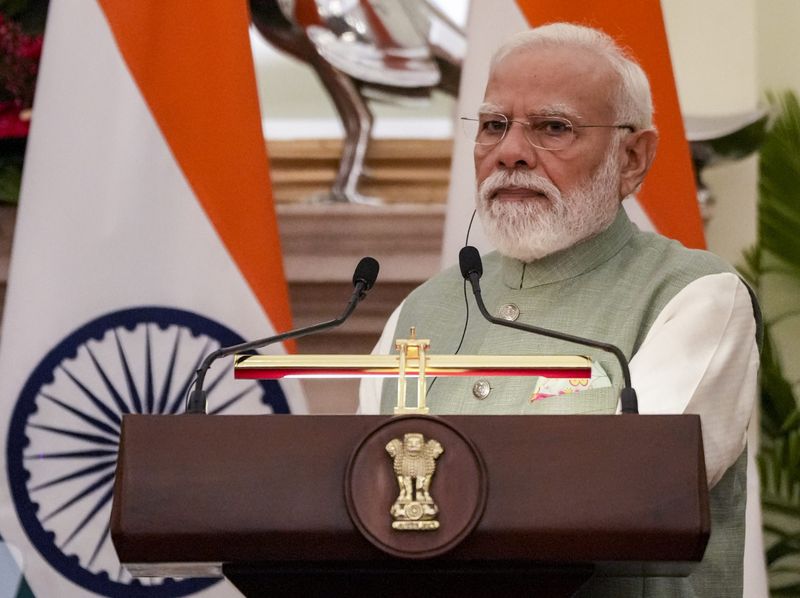
Cabinet passes resolution hailing PM Modi for nation first over family first politics
12 hours ago
 India
India
India’s Gen
12 hours ago
 India
India
Bypolls 2026: Voting begins in 6 seats across Tamil Nadu, West Bengal, Assam, Puducherry
13 hours ago
 India
India
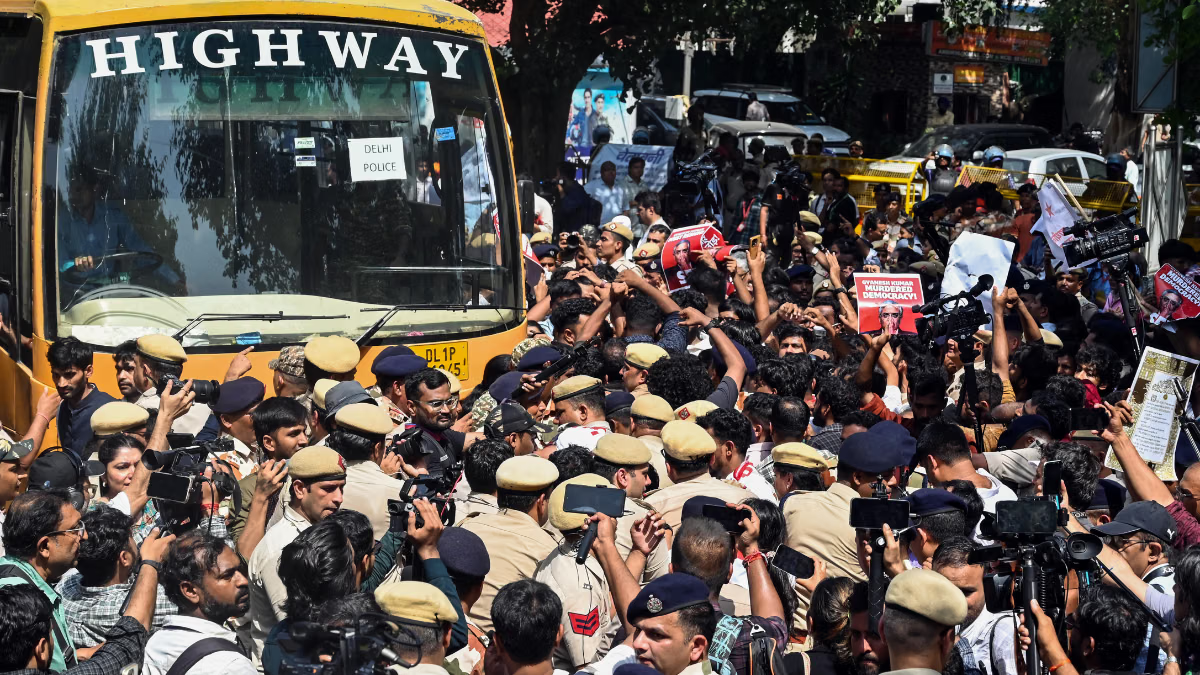
Security heightened around ECI headquarters ahead of INDIA bloc’s planned march against SIR
13 hours ago
 India
India
Why India is getting serious about ending the Ukraine war
13 hours ago
 India
India
INDIA Bloc March in Delhi | BJD Changes Strategy | Students Election | 12 Noon Headlines
15 hours ago