
Geoff Russ: Canadian voters are aging out of mainstream conservatism

The Conservative Party faces the problem of a changing country, not a change in ethnic diversity or gender identity, but a change in age brackets. In fact, the electorate is aging out of their preferred conservatism, and they are not getting any younger.
In this changed country, appeals to tax cuts and smaller government simply do not have the attraction they once did. Dependence on the state has grown. Part of that dependence stems from the outsized expansion of the public service since 2015, but that is not the main culprit. The real culprit is the growing share of the population made up of retirees and pensioners.
Compounding this is the failure of the Liberal government since 2015 to foster a dynamic private-sector economy that actually makes voters open to risk, entrepreneurship, and "powerful paycheques," a phrase Pierre Poilievre began using in 2024.
As fewer people participate meaningfully in the economy and more people retire from the workforce, that combination only reinforces the party's central problem. The Conservative Party of Canada's problem is not only one of messaging. The country to which tax-cuts and smaller- government conservatism once spoke has aged, slowed, and become more dependent on the state.
The Liberals have not created the conditions for an environment that makes voters decisively eager for risk, investment, entrepreneurship, and lower taxes, even if they like the idea of those items. They have presided over weak productivity and then expanded the public-sector state that cushions the failure. That combination has narrowed the space for Conservative outreach, to say nothing of the redrawn electoral map, especially in Ottawa.
Born between 1946 and 1965, Canada's baby boomers made up about one-third of the population in 2000, with many in their prime earning years. By 2020, they had aged into the 55-to-74 age bracket and made up less than a quarter of the population. By 2025, there were nearly 8,108,467 people aged 65 and over living in Canada, or almost one-fifth of the population.
As the saying goes, people vote with their wallets. The same voters who once loved the idea of tax cuts in their mid-40s are probably far more defensive about the public pension system, health care, and getting mail delivered to their front doors. None of this is irrational, because the state has gone from being their tax collector to their protector and shield against risks to their health and income.
Take Old Age Security (OAS), for example. In 2012, Stephen Harper planned to raise the eligibility age for OAS and the Guaranteed Income Supplement (GIS) from 65 to 67, a two-year increase. The plan was to gradually phase in the shift starting in 2023 and fully implement it by 2029. At the time, the baby boomers were one of the strongest and most reliable cohort in the Conservative base.
In 2016, after the Conservatives lost power in large part because of a surge in the Liberal youth vote, Justin Trudeau cancelled Harper's OAS and GIS reforms, leaving eligibility at 65. Politically, it was part of a shift that has proven to be quietly devastating for the Conservatives.
By refusing to delay seniors' benefits, the Liberals had a window to add baby boomers and other older voters to their coalition. The fiscal consequences are severe, with the Parliamentary Budget Officer estimating that Elderly Benefits will cost $89.3 billion in 2026-27 and $108.5 billion by 2030-31.
In the 2025 federal election, turnout among voters aged 65 to 74 rose to almost 78 per cent, far surpassing the 56 per cent of voters aged 18 to 24 who cast ballots. Elections Canada says the same age pattern has been present in every federal contest since 2004, with political apathy among youth being endemic.
Those voters most attached to stability are the most likely to head to the polling booth, and this is a quandary for the Conservatives, who have made great efforts at youth outreach in recent years.
In addition to the fiscal and political side effects, there is an economic one, too. According to the OECD, Canadian labour productivity was US$74.70 per hour worked in 2023, compared with US$97.00 in the United States, and productivity growth averaged only 0.8 per cent from 2000 to 2023. The Liberals have not created an environment in which businesses can thrive; after more than a decade in power, they bear their fair share of responsibility for failing to remedy it.
The latest data from Statistics Canada shows that business labour productivity fell 0.5 per cent in the first quarter of 2026 after falling 0.3 per cent the previous quarter. In such a stagnant environment, appeals to liberalize the economy and pursue growth have less appeal than in a booming one. Meanwhile, the Liberals have partially compensated for lacklustre private-sector job growth by expanding the size of the public service from 257,034 employees in 2015 to a peak of 367,772 in 2024. Even after some cuts, there are still 345,282 public servants.
In the National Capital Region alone, the federal public service rose from 107,288 in 2015 to 155,505 in 2024, and settling at 146,149 in 2026. This has hardened the Liberal electoral machine by creating families and neighbourhoods that depend on federal dollars and fear the Conservative promise of shrinking the size of government.
In Ottawa, the Conservatives could once win seats in suburban ridings such as Ottawa West—Nepean, formerly held by Harper cabinet minister John Baird. Pierre Poilievre famously held Carleton until 2025, when boundary changes contributed to his loss to Liberal challenger Bruce Fanjoy. Kanata—Carleton, won by the Conservatives by double digits in 2011, is now deep Liberal red, as is Baird's old fortress.
In suburban ridings across Canada, from Metro Vancouver's Tri-Cities and Richmond to Peel Region in the Greater Toronto Area, pensioners are producing the same outcome.
As perverse as this realignment may be, it is effective. Expanding the state amid a struggling economy and creating a dependent electorate has produced a resilient political advantage for the Liberals.
The Conservatives will keep running into this wall if they stick to a platform of smaller government and lower taxes without expanding their arsenal. That playbook worked when Canada was younger, more confident, and more ambitious, and when the country was driven by taxpayers. Canada, in its current form, is older, more dependent, and skeptical of those who want to change the system.
Until Conservatives solve that puzzle, the Liberal regime will keep protecting itself on election day.
Margareta Dovgal: Canada's tumbling dollar is a symptom of Liberal mismanagement
Geoff Russ: Poilievre should lead the war against woke history vandals
Related Stories
 Canada
Alberta candle company halts U.S. sales as tariffs add complexity for small businesses
1 hour ago
 Canada
Canada has leverage in this trade fight, but economists warn it comes with a cost
1 hour ago
 Canada
Stressed out about politics? It could be impacting your health
1 hour ago
 Canada
Nepal issues alerts after reports of renewed flooding
2 hours ago
 Canada
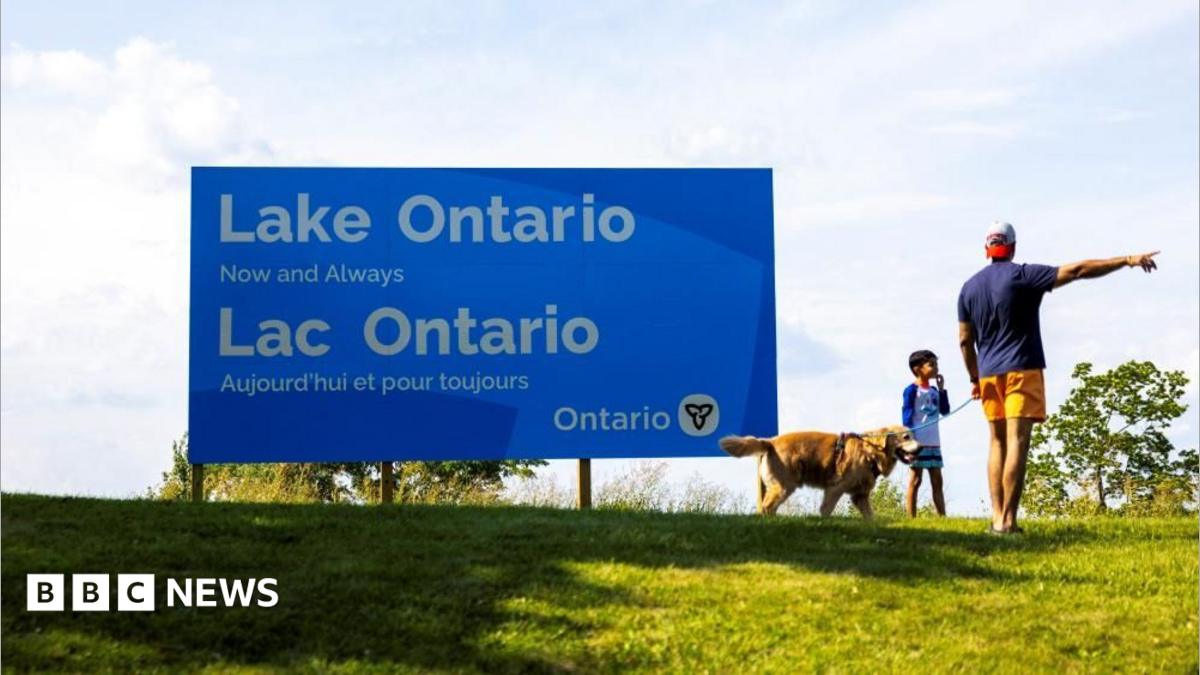
Large Lake Ontario sign installed in Canada in latest jab at US
2 hours ago
 Canada
Escape of Charles II to be recreated by riders
3 hours ago
 Canada
'Favourable winds' result in fewer Asian hornets
4 hours ago
 Canada
Weekly round
4 hours ago