
Good and Evil in the Age of Simulation Confronts Artificial Intelligence, Moral Power and Fight to Preserve Human Choice

Good and Evil in the Age of Simulation: Artificial Intelligence, Megatrends and the Struggle for Human Agency by JG Christman
From ancient moral traditions to AI, JG Christman examines humanity's struggle to define the good—and when powerful systems begin making those judgments for us.
NEW YORK CITY, NY, UNITED STATES, September 10, 2026 /EINPresswire.com/ -- Author JG Christman takes on a question older than technology itself: who decides what is good? In Good and Evil in the Age of Simulation: Artificial Intelligence, Megatrends and the Struggle for Human Agency, Christman brings that question into an era of artificial intelligence, adaptive algorithms, synthetic media, and increasingly automated decision systems.
The book is not primarily about what AI can do. It is about how people, institutions, and technologies decide what counts as better—and what can happen when goals such as efficiency, safety, access, stability, or reduced suffering are separated from truth, proportion, responsibility, dignity, and the freedom to choose.
Christman begins with humanity's long argument over the good. He moves through Plato, Aristotle, Stoicism, Confucianism, Taoism, Buddhism, Hindu thought, the Abrahamic traditions, secular humanism, and Enlightenment philosophy—not to collapse their differences, but to ask why certain moral disciplines repeatedly reappear across cultures and centuries.
From that foundation, the inquiry turns to evil not simply as cruelty or catastrophe, but as corruption: deception, appetite without restraint, power without conscience, institutional capture, and the moral inversion that can occur when a partial good is treated as an absolute one.
The discussion then moves into the age of simulation, where algorithms can shape attention, synthetic media can blur the boundary between event and representation, and automated systems can influence the choices people believe are available to them.
“The central question is not whether technology becomes more intelligent. It is whether human beings remain capable of judgment, responsibility, and refusal when intelligent systems become increasingly persuasive, useful, and powerful.”
That approach places the book between two familiar extremes. It does not treat AI as salvation, and it does not assume technological catastrophe is inevitable. Instead, Christman asks how powerful systems should be judged, who remains accountable for their objectives and outcomes, and whether assistance can expand human capability without quietly replacing human judgment.
The project grew out of years of writing on Flight Plan and Christman's move into speculative fiction through the Singularity Drift series. Fiction provided a way to explore AI, governance, control, resistance, and emerging forms of intelligence through characters and consequences. The nonfiction work demanded a different discipline: extensive research, comparison across traditions, citations, notes, and repeated testing of the book's central thesis from different angles.
For readers approaching these questions through faith, philosophy, secular thought, technology, or public life, the book is intended as an inquiry rather than a prescribed conclusion. Its focus is moral discrimination: how to recognize when a good objective becomes distorted, when a system begins to substitute optimization for judgment, and when individual responsibility is being transferred to institutions or machines.
The argument ultimately returns to the individual. Human agency, in Christman's framing, is not simply the presence of options. It is the capacity to judge, to accept responsibility, to dissent, and to refuse—even when a system is efficient, popular, or confident that it knows what is best.
JG Christman is a former career naval aviator and leadership consultant turned writer whose work spans blogging, speculative fiction, technology, and researched nonfiction. His writing examines the intersection of emerging technology, institutions, moral reasoning, and individual agency. Good and Evil in the Age of Simulation: Artificial Intelligence, Megatrends and the Struggle for Human Agency brings those interests together in a single inquiry into how humanity defines the good—and who may increasingly gain the power to define it for us.
The book is available at:https://a.co/d/08CKmKGQ
For review copies, interview requests, or additional information, please contact:
JG Christman BrightKey PR jchristman@dhrglobal.com
EIN Presswire provides this news content "as is" without warranty of any kind. We do not accept any responsibility or liability for the accuracy, content, images, videos, licenses, completeness, legality, or reliability of the information contained in this article. If you have any complaints or copyright issues related to this article, kindly contact the author above.
Good and Evil in the Age of Simulation Confronts Artificial Intelligence, Moral Power and Fight to Preserve Human Choice
EIN Presswire's priority is author transparency. We do our best to weed out false and misleading content. The content above is the sole responsibility of the author who makes it available. If you have any complaints, kindly contact the author above.
Related Stories
 AI News
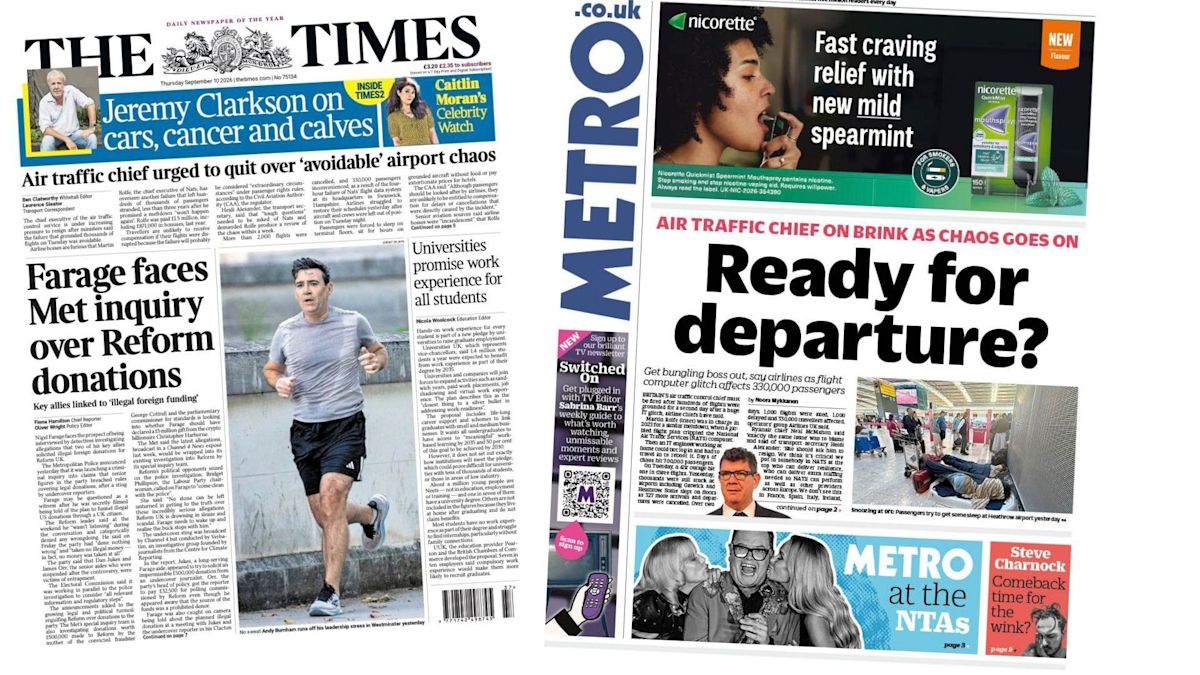
'Farage faces Met inquiry' and 'Ready for departure?'
14 minutes ago
 AI News
AI researchers 'earnestly believe' it could kill all humans within the next decade, Anthropic researcher says
1 hour ago
 AI News
AI is becoming harder to control
2 hours ago
 AI News
Marvell Technology (MRVL) To Present AI Data Center Connectivity Solutions At AI Infra Summit 2026
2 hours ago
 AI News
Medicine Needs to Get Serious About AI
2 hours ago
 AI News
Local LLMs Can Work Better Than Claude, At Least For Some
2 hours ago
 AI News
AI pioneer warns against race for superintelligence
2 hours ago
 AI News
How could AI ‘kill all humans’ or ‘cause human extinction’? Here’s what experts say
3 hours ago