
Google launches AI into space in world first
Become an Independent member to bookmark this article
Want to bookmark your favourite articles and stories to read or reference later? Start your Independent Membership today.
Google has launched its first satellite as part of an ambitious plan to place artificial intelligence in space.
The prototype satellite of the US tech giant’s Project Suncatcher effort lifted off from the Vandenberg Space Force Base in California on Thursday aboard SpaceX's Transporter-18 rideshare mission.
Previous launches, like the European Space Agency’s (ESA’s) PhiSat-1 mission, have placed AI chips in space to perform tasks like environmental monitoring, but this will be the first to test whether data centre-grade AI compute can be moved into space
“Project Suncatcher is a simple idea: How can we efficiently scale AI infrastructure, through orbital data centres by leveraging the abundant energy that we can get from the Sun,” said Maria Biggs, director of engineering at Google.
“Google has a long history of tackling moonshots. One of the really exciting things about Project Suncatcher is it’s a new way to support what AI can bring to humanity.”
If successful it could mark new era of AI satellite megaconstellations orbiting the planet.
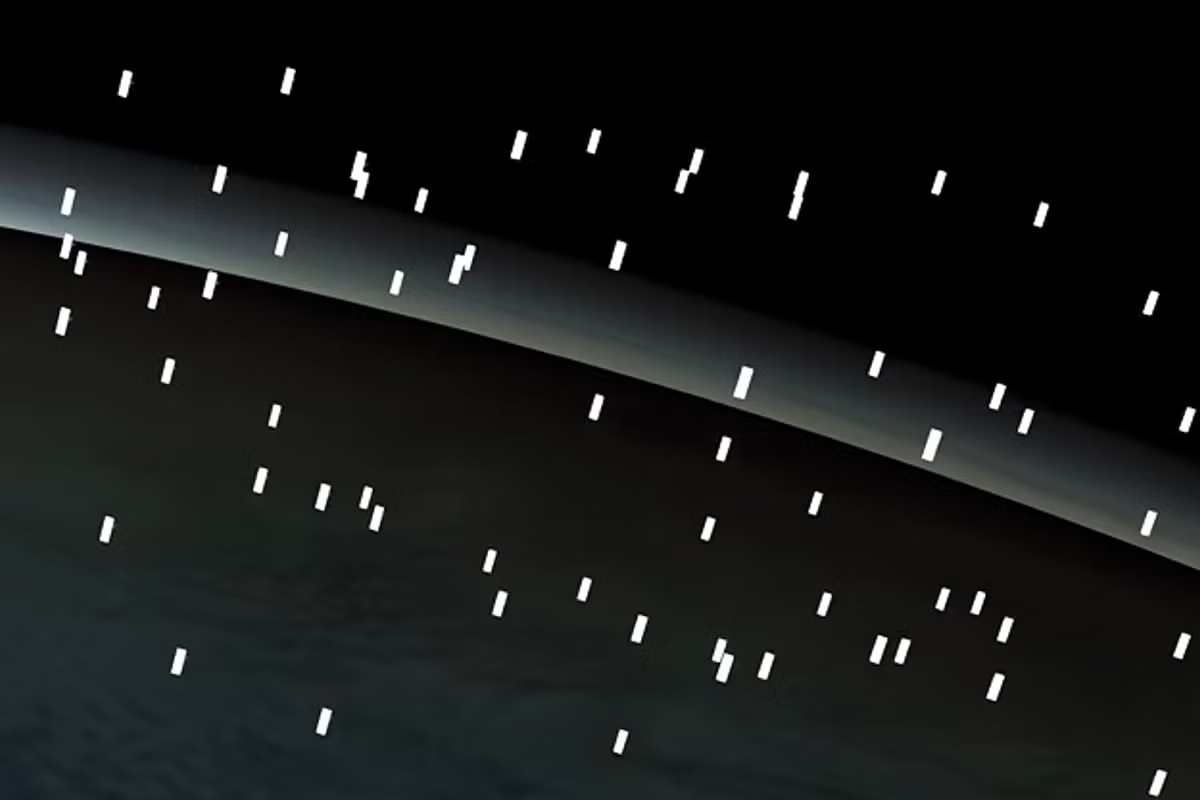
SpaceX boss Elon Musk outlined his ambition of launching up to 1 million satellites to serve as orbital data centres for AI in an application with the US Federal Communications Commission (FCC) earlier this year.
The plans have sparked backlash from critics who warn that such vast numbers of satellites heightens the risk of collisions and space debris, while also causing massive amounts of light pollution for astronomers.
Rival companies have also urged the FCC to reject SpaceX’s proposal for a million-strong constellation due to concerns that Musk is attempting to monopolise low-Earth orbit.
SpaceX already controls more than 11,000 of the roughly 16,000 operational satellites around Earth through its Starlink internet network.
Google said its initial Project Suncatcher mission is designed to gather in-orbit data on how its AI hardware handles the physical stresses of spaceflight and the radiation extremes of space.
Engineers will also be monitoring whether the chips suffer from overheating in the vacuum of space with no airflow to help cool them down.
“Exploring space as a viable location for scalable AI compute won’t happen all at once,” Google said in the build up to the launch.
“It takes methodical engineering, starting with proving our hardware can handle the physical and unpredictable realities of operating in orbit. This first launch is about seeing what works, identifying points of failure, and applying those findings to future missions.”
Related Stories
 AI News
Trump says SEC chairman will soon make ‘Super Intelligence’ vocabulary mandatory
1 hour ago
 AI News
Juicebox's David Paffenholz: After a $30M Series A, the Recruiting AI Startup Is Reckoning With What "Message
2 hours ago
 AI News
Beyond the software stage of artificial intelligence (AI) analyzing data in monitors, the era of "Ph..
3 hours ago
 AI News
Trump erupts at Fox host for not using ‘SI’ when talking about artificial intelligence
3 hours ago
 AI News
India's AI ambitions rest on Jensen Huang's continuity
3 hours ago
 AI News
I taught them one by one to artificial intelligence (AI) as if I was raising a clerk at the custome..
4 hours ago
 AI News
Canadians are turning to AI for holiday shopping but plenty aren’t sold
4 hours ago
 AI News
Israel built the Iron Dome - now, it needs to build its own AI
5 hours ago