
Gyanesh Kumar and the ECI Rift Over SIR
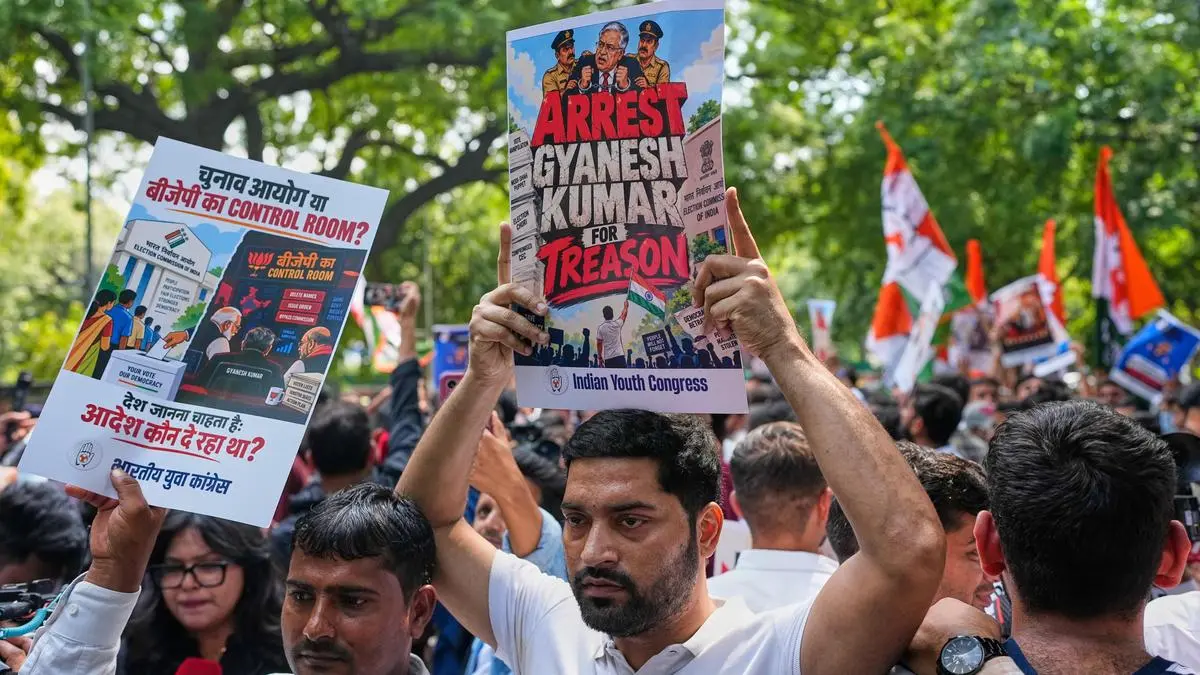
Chief Election Commissioner (CEC) Gyanesh Kumar finds himself at the centre of a raging political storm and perhaps the biggest controversy so far to envelop the Election Commission of India (ECI). It follows revelations that the two Election Commissioners, Sukhbir Singh Sandhu and Vivek Joshi, raised red flags over certain decisions of the poll body, especially those pertaining to the Special Intensive Revision (SIR) of the electoral rolls.
The focus of the opposition parties, on the issues they had been raising about the ECI’s functioning and its decisions in recent times, is now entirely on Kumar. The CEC, according to them, has run the poll body in a biased manner so as to favour the BJP, and done so by allegedly disregarding the views of his own colleagues in the commission.
The opposition chorus is for Kumar’s resignation. Some parties have even demanded his arrest and called for elections held in the last few years to be cancelled and held afresh. The opposition parties have also demanded a Supreme Court-monitored probe into the decisions taken by the commission during his tenure, as well as a pause in the SIR.
A breakdown of trust between the commission and the opposition parties has been evident for some time. The unrest over the manner in which the poll body has been functioning in recent months, and the decisions it took, has now become a full-blown controversy, with responsibility for the allegedly partisan functioning of the ECI being pinned on Kumar.
The latest controversy has erupted over The Indian Express’ investigative report on Sandhu and Joshi having recorded their objections in writing on at least 14 occasions in the last 10 months. The issues include changes in Form 6, which is meant to be filled up by new voters, centralisation of the management of electoral rolls, and the appeals filed on behalf of the ECI against reinstatement of deleted voters in West Bengal.
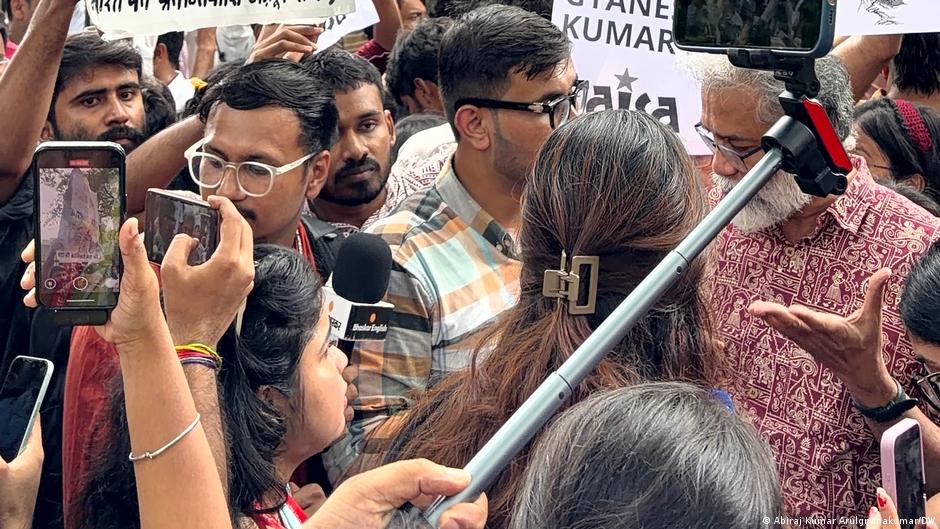
The opposition parties have already hit the streets over the alleged manipulation of the ECI by the ruling dispensation. The Cockroach Janta Party, which had helmed a youth protest at Jantar Mantar in New Delhi in June and July 2026 that resulted in the resignation of Dharmendra Pradhan as Education Minister, has threatened to launch countrywide protests if Kumar does not resign.
Kumar is being projected by the opposition as failing in his duties as the main custodian of the ECI’s constitutional obligation to ensure free and fair elections. The main accountability for the perceived loss in the credibility of the commission, according to his critics, is his.
CEC Gyanesh Kumar has had a troubled relationship with the opposition from the beginning of his tenure. | Photo Credit: SHIV KUMAR PUSHPAKAR
The CEC has now turned into a symbol of the ruling BJP’s alleged manipulation of constitutional institutions, including the ECI. “Mr Gyanesh Kumar must resign immediately...The two Election Commissioners have done a wise thing, and they have come clean. Mr Gyanesh Kumar should think seriously about the position he is in, and he should turn approver; that is my advice to him, that would be an act of nationalism. We know what has happened, and we are going to reveal it. By the way, he also knows that we know,” Leader of the Opposition Rahul Gandhi said at a press conference at the Congress headquarters on September 24.
Gandhi further said: “The Prime Minister and Amit Shah are both going to be investigated for what has been done. Without any doubt, both the Prime Minister and Amit Shah are at the top of this conspiracy, and they are going to be investigated for what they have done to this country. This is an act against the Indian state.” Displaying a slide containing pictures of Prime Minister Narendra Modi, Union Home Minister Amit Shah, and Kumar, among other political leaders and businessmen, he said they are deshdrohis (traitors to the country) as they have attacked people’s right to vote.
On the other hand, the ruling BJP has come out in strong defence of the ECI and the SIR and countered the charges levelled by the opposition parties. BJP spokesperson Sudhanshu Trivedi emphasised that the decisions taken by the commission with regard to the SIR were unanimous. He said the process itself was legal and the Supreme Court had upheld the powers of the commission with regard to the exercise.
Addressing a press conference on September 24, Trivedi also countered Gandhi’s allegation that the BJP has been rigging elections. He said, “Over the past 70 years, the BJP has witnessed continuous growth while the Congress has experienced a decline. The BJP has progressed through continuous hard work. Narendra Modi ji is a leader connected to the ground. In contrast, Rahul Gandhi is a leader who has flown away from the ground repeatedly, who repeatedly travels abroad and returns with baseless facts.”
Kumar has had a troubled relationship with the opposition parties from the very start of his tenure as CEC and has come under attack for being responsible for the breakdown of trust between the ECI and the anti-BJP bloc. There have been numerous confrontations between the poll body and the parties opposed to the BJP in recent months, and Kumar in particular has been accused by these parties of having an adversarial attitude towards them. He is charged with taking decisions that reveal a bias in favour of the ruling BJP, bringing the poll body’s credibility to an all-time low and, most importantly, foisting upon the country the SIR, which has resulted in the removal of 13 crore voters from the electoral rolls so far.
He is already the first CEC in India’s history against whom an impeachment notice was moved. The opposition parties submitted a notice against him in both Houses of Parliament on March 12, 2026. The charges mentioned in the notice included partisan and discriminatory conduct, mass disenfranchisement through the SIR, proven misbehaviour, undermining public confidence in the poll body, partisan exercise of constitutional functions in favour of one party, and deliberate obstruction of investigations into complaints of electoral fraud.
The presiding officers of both Houses rejected this notice. On April 24, 2026, the opposition again moved an impeachment notice against Kumar, submitting it to the Rajya Sabha Secretary General. This notice is still pending. The nine charges in it included a partisan approach in enforcing the Model Code of Conduct, proven misbehaviour, public denunciation of a recognised political party on the official social media handle of the ECI, and disenfranchisement of voters through the SIR.
The opposition is now planning to move another impeachment notice against Kumar containing fresh allegations of wrongdoing during the SIR.
Kumar came in for immense criticism for the unprecedented press conference he held on August 17, 2025, against the backdrop of the allegations of “vote theft”, or large-scale manipulation of voter lists, made by Gandhi. The CEC had reacted to Gandhi’s accusations by demanding that he either apologise or submit a signed affidavit supporting the claims.
Another instance cited by the opposition is Kumar’s alleged misbehaviour with a delegation of the Trinamool Congress on April 8, 2026, in the run-up to the Assembly elections in West Bengal.
The commission also posted a “straight talk to Trinamool Congress” message on the social media platform X after the meeting, which was perceived as political in tone and not befitting the poll body. The ECI’s post read: “ECI’s Straight-talk to Trinamool Congress. This time, the Elections in West Bengal would surely be: Fear-free, Violence-free, Intimidation-free, Inducement-free and without any Chappa, Booth Jamming and Source Jamming.”
The latest controversy comes as the third phase of the SIR is underway, and more than 13 crore names have been removed from voter lists and draft rolls so far. The SIR has drawn intense criticism for being exclusionary and hitting at citizens’ right to vote. It has been criticised for placing the onus on voters to prove they are eligible. Concerns have been raised about its ramifications, especially on the citizenship question.
An IAS officer of the 1988 batch belonging to the Kerala cadre, Kumar was appointed Election Commissioner on March 14, 2024, and took charge on March 15. He was appointed CEC on February 17, 2025, and his tenure runs until January 26, 2029.
His appointment as CEC was the first under the Chief Election Commissioner and Other Election Commissioners (Appointment, Conditions of Service and Term of Office) Act, 2023. A three-member committee comprising Modi, Shah, and Gandhi, constituted as per the Act, met on February 17, 2025, to finalise the new CEC.
Leader of the Opposition Rahul Gandhi at a press conference on CEC Gyanesh Kumar at the Congress Headquarters in New Delhi on September 24, 2026. | Photo Credit: SUSHIL KUMAR VERMA
Gandhi submitted a dissent note at that meeting, pointing out that the 2023 Act was under challenge in the Supreme Court because the committee’s composition weighed in favour of the Government, with serious consequences for the commission’s independence.
The Leader of the Opposition questioned why Kumar’s appointment was rushed through two days before the Supreme Court was scheduled to hear petitions challenging the law.
The 2023 Act was enacted following the judgment of a five-judge Constitution Bench of the Supreme Court in Anoop Baranwal v. Union of India on March 2, 2023. The court had directed the setting up of a three-member committee comprising the Prime Minister, the Leader of the Opposition, and the Chief Justice of India to finalise appointments of the CEC and Election Commissioners. The court had said the committee would be in place until Parliament enacted a law.
On September 23, even as revelations about the differences within the commission came to the fore and a discussion ensued about the mechanism for appointing the CEC and Election Commissioners, a two-judge bench of the Supreme Court delivered a split verdict on whether the legal challenge to the 2023 Act should be referred to a larger bench and placed the matter before the Chief Justice of India.
Justice Dipankar Datta, one of the judges on the bench, was of the view that the petitions could be heard by the two-judge bench, while Justice Satish Chandra Sharma was of the opinion that the case should go to a Constitution Bench.
Justice Datta expressed concerns about the committee formed under the 2023 Act, saying a minister cannot be expected to defy his own nominator, the Prime Minister. This, he said, rendered the presence of the Leader of the Opposition in the committee “largely ornamental”.
“Justice Datta in clear terms said the selection committee cannot have executive dominance. Under the 2023 Act, the committee has a majority voice of the ruling dispensation, which is contrary to the constitutional scheme of free and fair elections,” said senior advocate Vijay Hansaria, the arguing senior counsel for the petitioner in the matter.
Hansaria also said the Supreme Court should have decided the case on merits, particularly in view of the present circumstances where the neutrality of the CEC is doubted not only by citizens but also by the Election Commissioners. “The issues raised have already been decided by the Constitution Bench of the Supreme Court in the Anoop Baranwal case and thus there was no need to refer again to a Constitution Bench which will only delay the decision,” he said.
As Kumar faces the heat, the larger question of the ECI’s independence is expected to be debated both politically and legally.
Also Read | Gyanesh Kumar’s art of deflection
Also Read | Form-7’s journey from a civic chore to a political weapon
Related Stories
 India
India
Indian
50 minutes ago
 India
India
India news: Protests against election chief escalate as Gandhi, Cockroach party allege 'rigged' vote
3 hours ago
 India
India
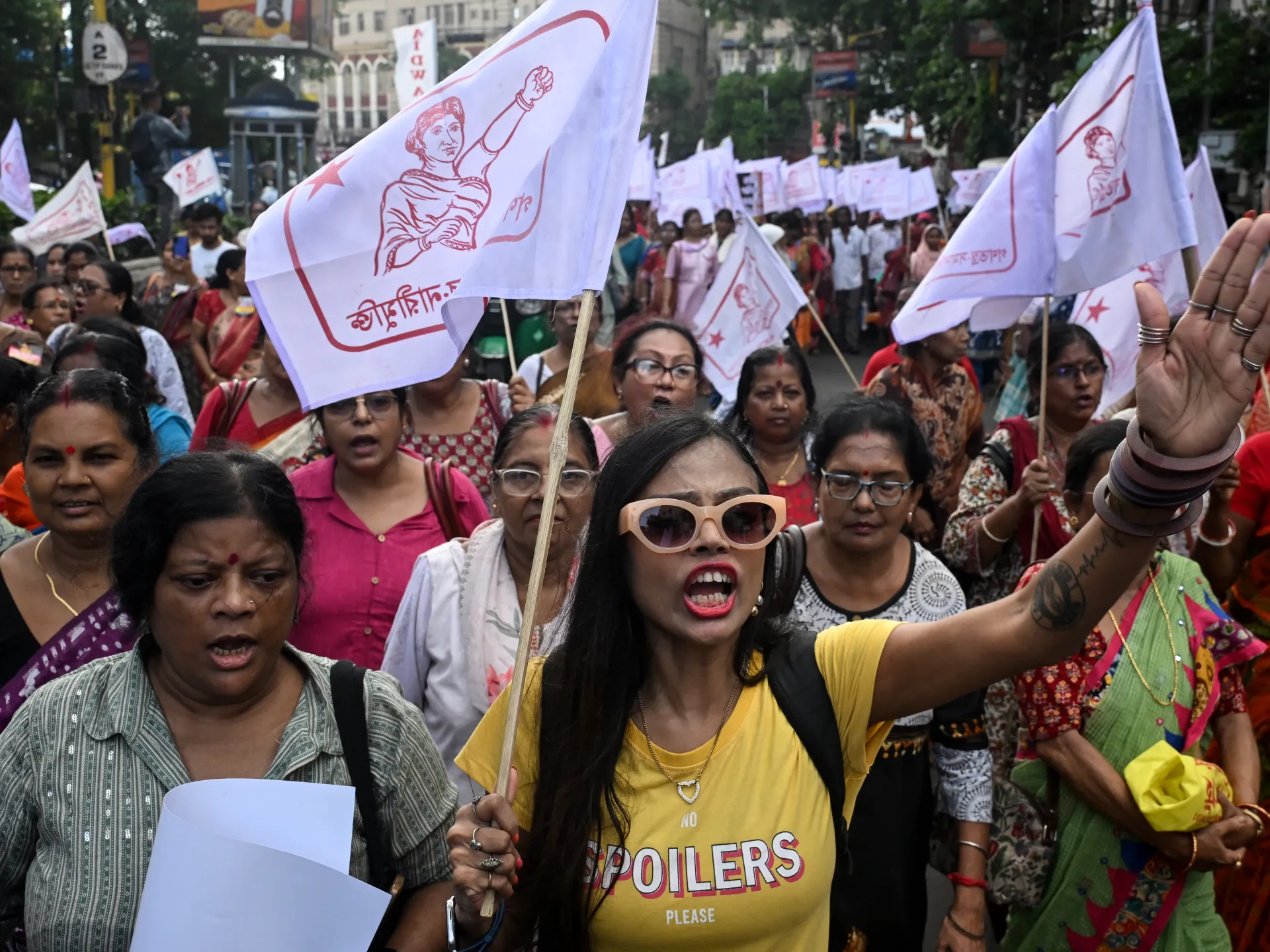
India’s ‘cockroach’ movement demands election chief’s resignation
5 hours ago
 India
India
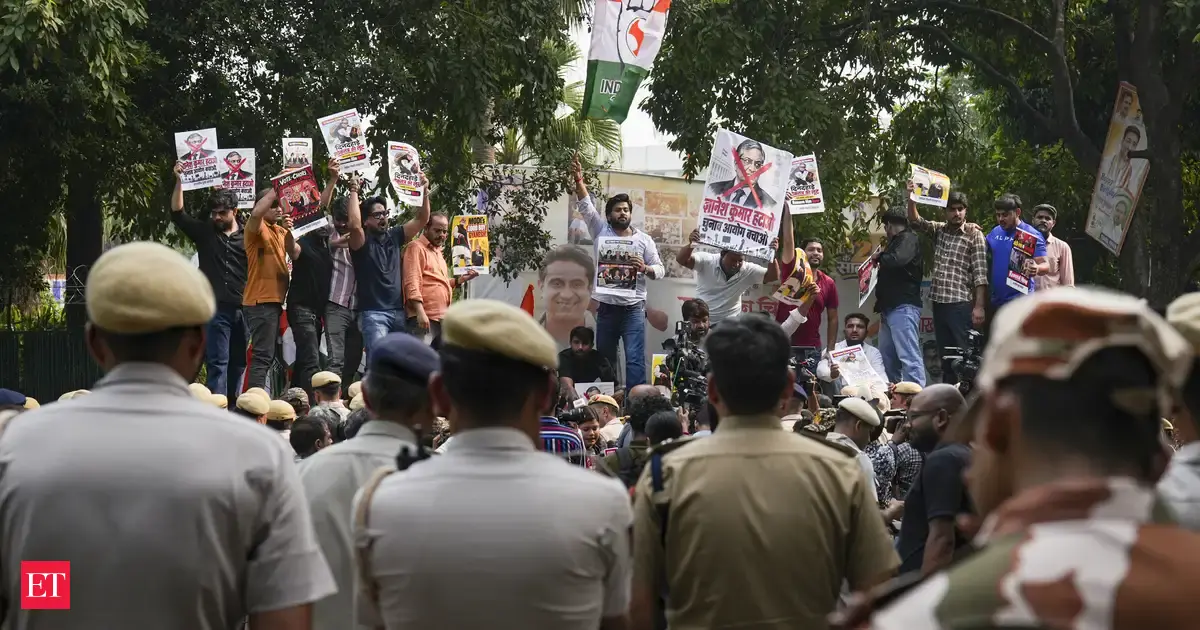
Congress protests against CEC Gyanesh Kumar spread across India; Gaurav Gogoi detained, tear gas fired in
7 hours ago
 India
India
India’s ‘cockroach’ movement targets election chief in political pivot
7 hours ago
 India
India
'Make in India' belied expectations; pvt investment boom didn't happen, job growth missing: Congress
11 hours ago
 India
India
Lightspeed targets $250M for new India fund, focusing on early
13 hours ago
 India
India
INDIA bloc to move fresh impeachment motion against CEC Gyanesh Kumar
16 hours ago