
Haifa — a century
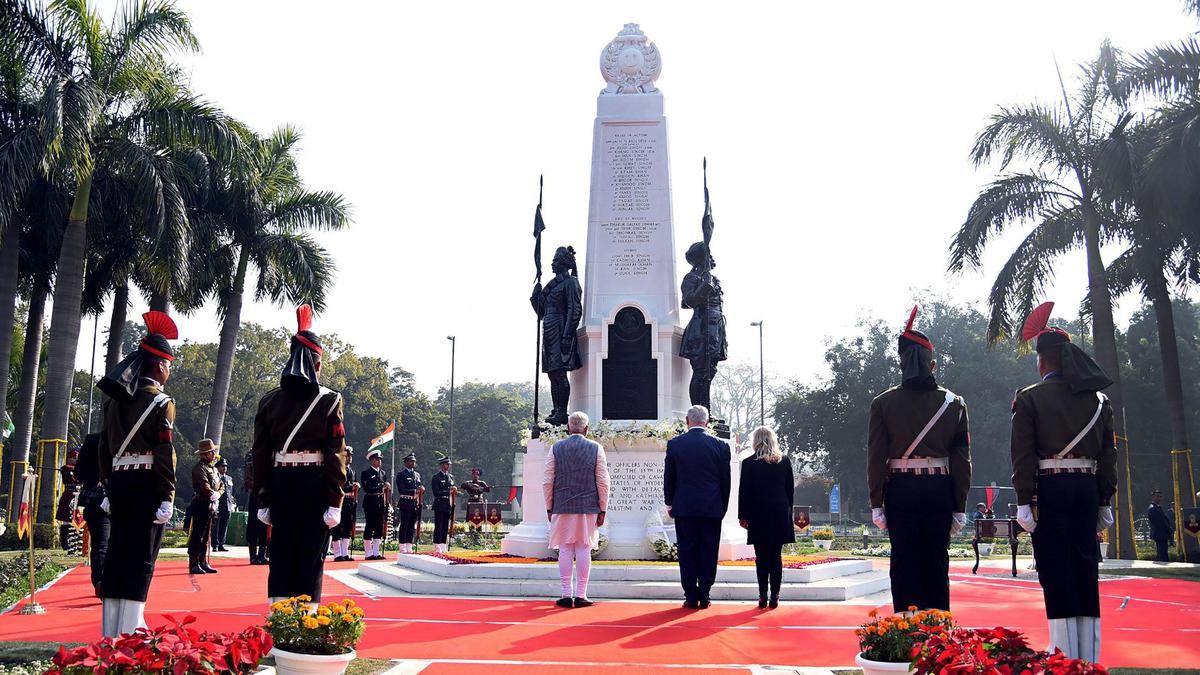
The September 23, 1918 Battle of Haifa occupies a curious place in the intertwined histories of India, Israel, and Palestine. What was, in military terms, a small but tactically significant cavalry action in the final phase of the First World War has, over the past century, become a site of layered remembrance, celebrated, contested, reclaimed, and reinterpreted by different communities for different purposes. Remembering Haifa today requires navigating not only the battlefield itself but also the shifting terrain of postcolonial identity, diplomatic symbolism, and the moral ambiguities of imperial history.
For India, Haifa is often invoked as a symbol of the extraordinary global footprint of Indian soldiers during the First World War. More than a million Indians served overseas, from Flanders to Mesopotamia, and over 74,000 died in a war not of their own making. The cavalry charge at Haifa, executed by the Jodhpur, Mysore, and Hyderabad Lancers, stands out as one of the most dramatic episodes of Indian valour abroad. Contemporary British war diaries describe the action as decisive in securing the port city and enabling the Allied advance northwards to Damascus. It was also, for military buffs, one of the last great cavalry charges, and featured the 15th Imperial Service Cavalry Brigade which overcame principally Ottoman forces. The complication is that the Indian forces were under British command — and many Palestinian Arabs were on the side of the Ottomans.
In the decades since Independence, Haifa has become part of a broader effort to reclaim India’s military history from the shadow of the empire. The soldiers who fought there were colonial subjects, but their courage and sacrifice belong to India’s national story. Commemorating Haifa thus becomes an act of historical recovery: an assertion that Indian agency existed even within the constraints of imperial command.
The Haifa narrative also illustrates how postcolonial nations reinterpret their pasts to assert dignity and continuity. For India, celebrating the battle (and renaming a First World War memorial as “Teen Murti Haifa Chowk”) is a way of acknowledging that its soldiers shaped world events long before the country became a sovereign republic. For Israel, the memory of Indian cavalry “liberating” Haifa has been woven into a narrative of gratitude and friendship, symbolised by memorials and annual ceremonies. These commemorations serve diplomatic purposes, but they also reflect a genuine historical connection.
Yet, this reclamation of agency is complicated by the fact that the soldiers themselves had no say in the political consequences of their actions. They fought bravely, but they fought under a flag not their own, in a war whose outcomes would reshape West Asia in ways that continue to reverberate.
This is where the moral ambiguity of Haifa becomes unavoidable. The Indian cavalry’s victory helped secure British control over Palestine, enabling the implementation of the Balfour Declaration and the subsequent political transformations that led to the creation of Israel. For many Palestinians, this is not a story of liberation but of dispossession. When Palestinian representatives say to Indians celebrating the Battle of Haifa, “We did not ask you to liberate us,” they are not questioning the bravery of Indian soldiers but the imperial project in which that bravery was embedded.
This tension highlights a broader challenge in remembering colonial-era military history. Acts of courage can coexist with outcomes that later generations view with discomfort or regret. The soldiers who charged up the slopes of Mount Carmel did not choose the geopolitical consequences of their victory. Yet, those consequences shape how different communities remember the battle today.
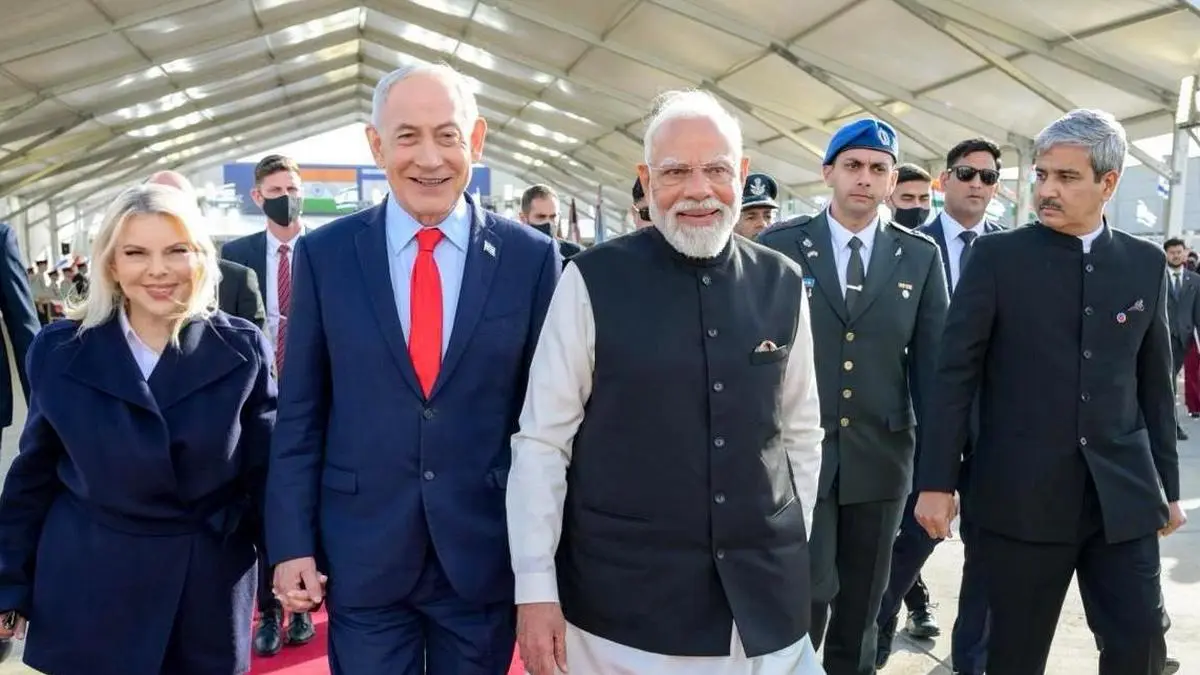
In recent decades, Haifa has acquired new significance as a symbol of India-Israel friendship. Indian leaders have visited the Haifa memorial; Israeli officials have spoken warmly of the Indian role in the city’s history. These gestures reflect the deepening strategic partnership between the two countries, but they also demonstrate how historical memory can be mobilised to strengthen contemporary ties.
At the same time, this diplomatic embrace has sparked debate among historians. Some Israeli scholars argue that the Indian role has been overstated, and that the real credit should go to the British and Australian soldiers, a view that partially reflects their discomfort at “owing” much to colonised brown-skinned cavalrymen. Meanwhile, Indian military historians point to British war records that clearly credit the Indian cavalry with the decisive breakthrough. These disagreements are not merely academic; they reflect the politics of national pride and the desire to shape historical narratives in ways that reinforce present-day identities.
The Palestinian critique of the Haifa narrative adds another layer of complexity. For Palestinians, the 1918 campaign is part of a longer story of foreign domination and displacement. From their perspective, the Indian cavalry’s victory facilitated British rule and the subsequent transformations that reshaped their homeland. This view does not diminish the bravery of Indian soldiers, but it challenges celebratory narratives that ignore the lived experience of those who were “liberated”. To many Palestinians, Indians should not be celebrating their role in a colonial project that eventually led to the “naqba” that displaced so many and uprooted them from their homeland.
“For Palestinians,” says their Ambassador to India, Abdullah Mohammed Abu Shawesh, “history is …a tool for affirming roots and shaping the future, particularly in the face of an ongoing campaign against the Palestinian narrative led by the Zionist movement. … It is therefore natural that we, as Palestinians, are highly sensitive to any attempt to manipulate history, as such attempts directly affect our right to exist and to determine our future.” In a letter to this writer, he sees “a clear Israeli effort to link contemporary India with the history of the establishment of Israel”, and questions India’s embrace of the “Israeli narrative”, arguing that the Indian soldiers were not heroes or valorous “martyrs” but “victims” of British colonial exploitation.
Indians, too, have their own ambivalence. Many feel pride in the courage of the soldiers but discomfort at the idea that Indian blood was shed in service of an imperial project that contributed to the dispossession of another people. This tension reflects a broader challenge in postcolonial memory: how to honour the sacrifices of those who served without endorsing the political aims of the empire they served under.
The challenge is that remembering Haifa today requires holding multiple truths at once. There is no denying that Indian soldiers fought with extraordinary courage. But they fought under colonial command, without agency over the political consequences, and their bravery had nothing to do with any Indian national ambitions. Their victory is celebrated in Israel and resented in parts of Palestine.
The battle of Haifa is a symbol of India’s global military legacy, but also a reminder of the moral ambiguities of the empire. It is a diplomatic bridge between India and Israel, but its role in India’s relations with the Palestinian people is morally ambiguous. Haifa, in other words, is many things, but it is above all a site of contested memory.
A mature historical consciousness does not demand choosing one narrative over another. It requires acknowledging the full complexity of the past: the bravery and the burden, the pride and the pain, the honour of the soldiers and the ambivalence of the outcomes. Haifa endures not because it offers a transcendent story, but because it forces us to confront the layered realities of history: that courage can serve causes not chosen by those who display it, that memory can unite and divide, and that the past can illuminate the present only when we are willing to face it in all its complexity.
Shashi Tharoor is the fourth-term Member of Parliament (Lok Sabha) for Thiruvananthapuram (Congress party), the Chairman of the Parliamentary Standing Committee on External Affairs and the Sahitya Akademi Award-winning author of 29 books, including An Era of Darkness: The British Empire in India
Related Stories
 India
India
The Politics of Hydraulic Deflection: The Myth of Upstream Deprivation in Pakistan's Indus Basin Crisis
1 hour ago
 India
India
Modi to visit Canada as Carney looks to finalize trade deal with India by end of year
8 hours ago
 India
India
Sri Lankan court to deliver verdict on deadly Easter bombings
22 hours ago
 India
India
Haifa 1918: India, Israel and the politics of memory
23 hours ago
 India
India
Sachin Tendulkar
1 day ago
 India
India
Families of Air India bombing victims 'utterly shocked' to learn investigation is inactive
1 day ago
 India
India
Instagrams Takedown of Digital Rights Groups Post Exposes Metas Politics of Censorship
1 day ago
 India
India
The CFO Code: Decoding How India’s Top CFOs Think, Build And Scale
1 day ago