
Helper or shortcut? Central New York families weigh where AI belongs in the classroom
Helper or shortcut? Central New York families weigh where AI belongs in the classroom
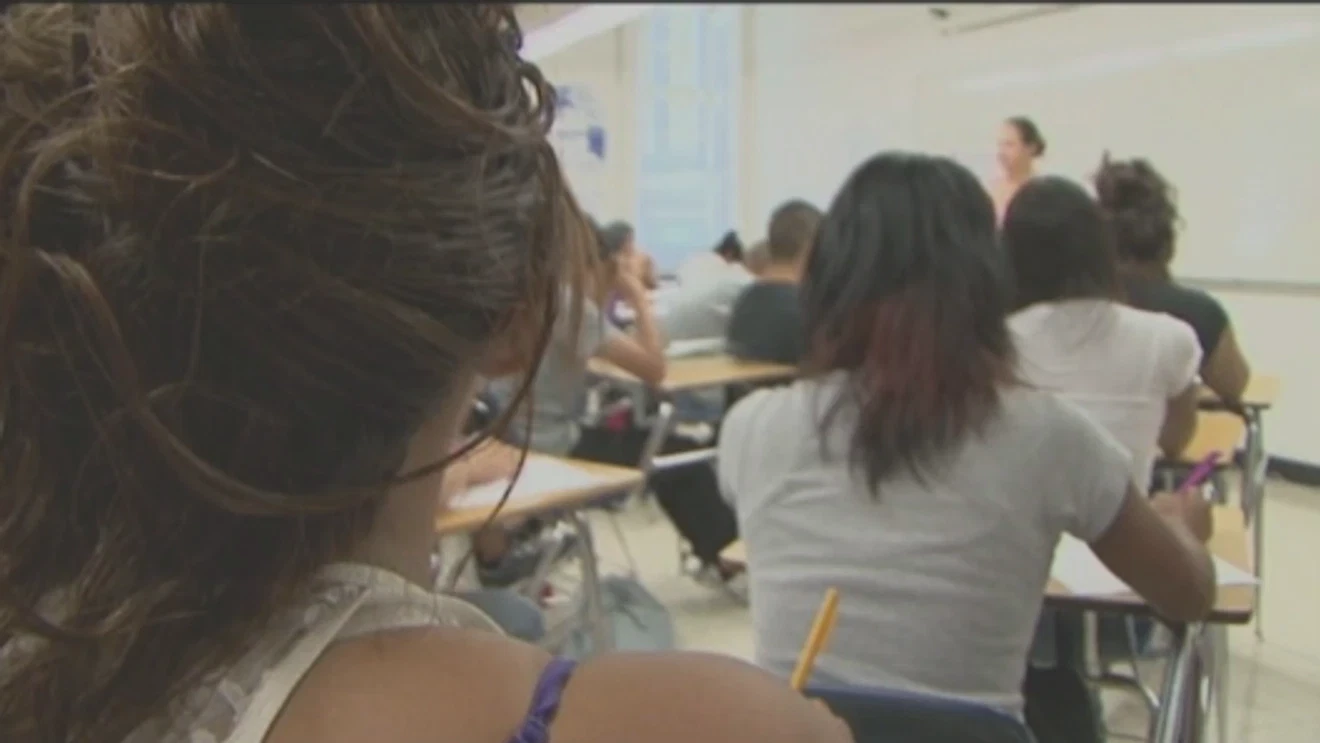
GEDDES, N.Y. — As students head back to school, families are facing a question that barely existed a few years ago: How much artificial intelligence is too much?
Generative AI can summarize a textbook chapter, help research a topic and answer a homework question in seconds. But parents and students who spoke with CNY Central at the New York State Fair said there is still a line between using the technology as a tool and letting it do the learning for you.
Simon Mammen, who is heading into eighth grade, said whether he would use AI depends on what he is trying to accomplish.
POLL | Does AI belong in classrooms?
“It depends on the assignment or what I’m using it for,” Simon said. “I’m not going to use it to do my math homework.”
That distinction is becoming increasingly important as schools across New York grapple with how and whether students should use generative AI in the classroom.
New York City is moving to prohibit student-facing generative AI for public school students through eighth grade for the upcoming school year. The restrictions are part of a broader effort to establish boundaries around AI, screen time and technology use among younger students.
This summer, New York State United Teachers called for stronger oversight of emerging AI technology in schools after a Western New York district paused plans for an AI-powered robot pilot program.
At the Great New York State Fair on Friday, the parents CNY Central spoke with were largely cautious about bringing AI into their children’s education.
Tommy Lincoln said children still need to develop the skills that come with finding answers themselves.
“Learning how to find information out, and going through books and research and doing those things is only going to enhance the final project,” Lincoln said.
Justine Hover said she worries technology could begin replacing parts of the traditional learning experience.
“I think kids still need to learn traditionally with a teacher in the room and hands-on and not just in front of a screen,” Hover said.
Taylor Jarvis, a mother of three young children, said she sees more room for AI, as long as students try solving the problem themselves first.
“I definitely think they should try to use their own mind first and try to look into AI as like a helper,” Jarvis said.
The students we spoke with were drawing some boundaries of their own.
Simon said allowing AI to simply complete an assignment could take away from skills students will need later.
“I think having these skills will be useful in life even if you can’t use them in the real world,” he said. “I think it’s good mind-building and problem-solving to figure it out by yourself.”
His older brother Eli, who is entering ninth grade, said there is something an AI chatbot still cannot replace for him: a teacher.
“I would rather have a teacher because they can break it down for you in specific ways,” Eli said. “AI just throws it at you.”
As artificial intelligence becomes harder for students to avoid, the debate may increasingly shift away from whether children will encounter AI at all, and toward who decides when and how they should use it.
Related Stories
 AI News
Bill Gross bets AI can help mass
2 days ago
 AI News
Nigeria records 93% rise in AI micro
2 days ago
 AI News
The Italian gelato maker using AI to invent new flavours
2 days ago
 AI News
Closing the Gap Between Agentic CX Pilots and Production
2 days ago
 AI News
New Brunswick data centre debate highlights cross
2 days ago
 AI News
How to Structure an AI Agent Referral Fee Agreement Between Startups
2 days ago
 AI News
No, AI didn’t delete a Swedish reality TV series
2 days ago
 AI News
There is no AI in Armageddon. Artificial intelligence is a tool, not an apocalypse
2 days ago