
Honoring the Innovators Driving AI’s Next Era in Life Sciences and Healthcare
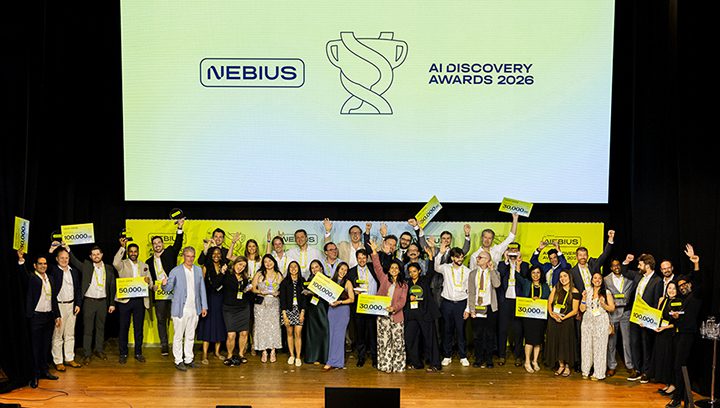
Nebius, an AI cloud company, sponsored its second “AI Discovery Awards” event and dinner earlier this month in London, where the winning companies were announced. The event highlighted leading startups in biopharma, genomics, medical devices, and digital health that are using AI to deliver advances in healthcare and life sciences.
During the evening awards ceremony, artificial intelligence demonstrated that it is rapidly reshaping biomedical research. However, practitioners agree that AI’s success depends on more than advanced algorithms. [Nebius]At a Nebius-hosted morning discussion before the awards dinner, several researchers highlighted the importance of powerful computing infrastructure, high-quality biological data, and laboratory validation.
Examples included AI models that predict osteoarthritis years before symptoms and an Alzheimer’s platform, which achieved 97% diagnostic accuracy when paired with protein biomarkers. A Stanford Medicine scientist described CRISPR-GPT, an AI assistant that helps design and troubleshoot gene editing.
The investigators also spotlighted AI-powered lab automation, multimodal datasets, and AlphaFold’s dramatic acceleration of protein structure prediction. Across every application, participants emphasized that collaboration among academia, healthcare, industry, and governments will be essential to advance preventive, personalized medicine and to translate AI discoveries into clinical practice.
Ilya Burkov, PhD, who has a background in clinical medicine, is now global head of healthcare and life science at Nebius. Burkov began his research career focusing on osteoarthritis, osteoporosis, hip and knee replacements, and trying to figure out how such diseases develop and progress.
“My goal was to work backward from the end stage of disease and determine whether we could predict who was at risk years before serious joint damage occurred,” he explained. “If we could identify those patients early enough, perhaps we could delay disease progression.”
Speaking with colleagues in a hospital, he was asked: “Have you looked at it from any machine learning perspective?” Burkov had no formal background in artificial intelligence, but he was intrigued by the idea of using emerging AI models and advanced algorithms to analyze long-term medical imaging data.
Ilya Burkov, PhD [Nebius]The concept was simple but powerful: if AI could identify patterns shared by patients who later developed osteoarthritis or osteoporosis, it might be able to detect subtle biomarkers long before the disease became clinically apparent.
“That idea became the focus of my PhD research. AI models were not a thing ten years ago when I was in the hospital. There were transformer models and algorithmic-based approaches.
“I developed techniques capable of predicting the early onset of osteoarthritis and osteoporosis with an accuracy of roughly 80% to 90%,” he pointed out. “The models identified imaging features that consistently appeared years before patients required joint replacement surgery.
“This made it possible to examine scans from otherwise healthy individuals and estimate their future risk. In some cases, we could tell patients that, without changes to certain lifestyle factors, they had a high probability of requiring a hip replacement within the next 10 to 15 years.”
For Burkov, that was transformative. AI made it possible to move beyond treating individual patients and instead create tools that could benefit entire healthcare systems. Rather than applying clinical expertise one patient at a time, scalable technologies could be created capable of helping clinicians identify high-risk patients earlier and intervening before irreversible damage occurred.
That realization ultimately convinced him to transition from clinical medicine into industry, where he saw the opportunity to build technologies that could have a much broader impact. Whether it’s a small academic lab with only a handful of researchers or a global pharmaceutical company operating at massive scale, every organization faces different computational challenges.
“At Nebius, our role is to provide the computing infrastructure and technology that enables researchers to train increasingly sophisticated AI models and accelerate scientific discovery to advance biomedical research and improve patient care,” he said.
Artificial intelligence is rapidly reshaping drug discovery, but many researchers believe the greatest challenge is not designing drugs—it’s knowing what biological targets to pursue.
Prima Mente, a previous AI Discovery Award winner, is tackling that problem by building foundation AI models designed to uncover the molecular mechanisms behind Alzheimer’s disease and other neurodegenerative disorders. By combining blood-based biomarkers, multimodal biological data, and transformer-based AI, the London startup hopes to identify the molecular drivers of neurodegenerative disease—and ultimately accelerate the development of new therapies.
“If we can diagnose disease earlier, better stratify patients, and understand what’s actually driving Alzheimer’s, we can help create better treatments,” said co-founder Hannah Madan, PhD.
Based in London’s King’s Cross innovation district, Prima Mente has grown to approximately 35 employees across London, San Francisco, and the United Arab Emirates. Madan, whose academic background includes a master’s degree in pharmacology and a PhD investigating the relationship between bowel cancer and diabetes, has spent most of her career building biotechnology startups. Prima Mente is the fifth company she has helped launch.
The company’s mission addresses one of healthcare’s most pressing challenges. Dementia is the leading cause of death in the U.K. and the sixth highest in the U.S. Alzheimer’s disease remains the most common form of dementia worldwide.
Prima Mente’s scientific strategy draws inspiration from advances in cancer diagnostics, particularly liquid biopsy technologies that detect circulating tumor DNA in blood samples. The company wondered whether a similar approach could work for neurodegenerative disease.
“When we started three years ago, many people thought we were a little crazy,” noted Madan. “The prevailing view was that very little DNA from dying brain cells entered the bloodstream.”
Hannah Madan, PhD [Nebius]The team has since demonstrated that cell-free DNA originating from neurons, microglia, and astrocytes can be detected in blood. More importantly, those DNA fragments retain epigenetic information that may reveal the biological state of brain cells before they died.
Rather than focusing solely on DNA sequences, Prima Mente analyzes methylation patterns carried on cell-free DNA. Because methylation reflects how genes are regulated within specific cell types, these signals can provide insight into disease progression and cellular dysfunction.
“When cells die, they release fragmented DNA into the bloodstream,” Madan explained. “Those fragments preserve methylation signatures that tell us what state those brain cells were in.”
The biological strategy is paired with an equally ambitious computational one. Prima Mente believes that transformer architectures—the same AI technology underlying large language models such as ChatGPT—can learn the language of biology.
“If ChatGPT can understand human language, our hypothesis is that similar models can understand biological languages,” noted Madan.
Instead of converting sequencing data into simplified numerical counts, the company trains models directly on raw biological sequences, including DNA, methylation signals, RNA transcripts, and proteomic data. By preserving more of the underlying biological information, Prima Mente believes its models could uncover relationships that conventional bioinformatics pipelines often overlook.
The company’s first foundation model, known as Pleiades 1, demonstrated the potential of that approach. Initially trained to identify Alzheimer’s disease from blood-derived molecular data, the model successfully diagnosed a subset of patients. After protein biomarkers were incorporated, diagnostic accuracy increased to approximately 97% within the study dataset—exceeding the performance of current clinical standards, according to Madan.
AI tokens are the fundamental units of data processed by AI models during training and inference. They represent smaller components of text, audio, images, or other modalities, enabling models to understand, predict, and generate outputs effectively. Pleiades 1 was trained on 1.9 trillion tokens. Its successor, Pleiades 2, is being trained on 80 trillion tokens spanning five biological data modalities, with the long-term goal of building a 100-billion-parameter foundation model.
Prima Mente partnered with AI infrastructure provider Nebius, which supplied a dedicated 32-node computing cluster powered by NVIDIA GPUs. The additional computing capacity enabled the company to scale from a 1-billion-parameter model to a 10-billion-parameter model within weeks while increasing training throughput from roughly 8,000 tokens per second per device to more than 1.1 million tokens per second across a 16-node cluster.
Beyond model development, Prima Mente is collaborating with the U.K.’s National Health Service (NHS) through the Sandbox Study, which collects blood samples from patients with suspected neurological disease. The real-world data help researchers develop AI models aimed at detecting Alzheimer’s earlier, potentially enabling treatment before irreversible brain damage occurs.
Dementia is the leading cause of death in the U.K. and the sixth highest in the U.S. Alzheimer’s disease remains the most common form of dementia worldwide. [Cecille Arcurs/Getty Images]Unlike AI companies that rely primarily on public datasets, Madan said Prima Mente is generating much of its own training data. The company collaborates with 20 NHS memory clinics throughout the U.K., collecting blood samples, speech recordings, clinical notes, and imaging data from patients at the earliest stages of cognitive decline. It also participates in the U.K.’s Sovereign AI initiative.
Lab validation is integrated into the company’s development process. Candidate discoveries generated by AI models are tested using stem cell systems, brain tissue, and additional blood-based experiments, creating a continuous feedback loop between computational prediction and experimental validation.
That combination of proprietary data generation, lab experimentation, and AI model development represents what the company views as a significant competitive advantage.
While AI has attracted enormous attention for accelerating drug discovery, Madan argues that identifying the right biological target remains the industry’s greatest bottleneck. She compares today’s AI revolution to the impact AlphaFold had on protein structure prediction. As computational tools become increasingly capable, designing drug candidates may become faster, cheaper, and more routine.
“But if you don’t know what biology actually matters,” she said, “there’s little value in having better tools to build drugs.”
For Prima Mente, Madan says the opportunity lies upstream of drug development—discovering the cellular pathways, biomarkers, and molecular mechanisms that should become tomorrow’s therapeutic targets.
That strategy recently received external validation when the company won the AI Insights Prize for Alzheimer’s from the Gates Foundation, receiving $1 million to expand research into microglial biology. The funding will support AI models designed to identify gene perturbations in specific brain cell types that could serve as the basis for future Alzheimer’s therapies.
As foundation models continue to expand beyond language into biology, Madan is betting that the next major AI breakthrough in medicine will not simply generate better drugs—it will reveal entirely new biology that makes those drugs possible.
CRISPR-GPT is a large language model developed by Stanford Medicine to automate key steps in CRISPR gene-editing research. Acting as an AI agent, it interprets scientific literature, designs guide RNAs, suggests experimental parameters, and integrates with lab automation systems to execute and refine experiments. By reducing manual planning and accelerating iterative testing, the system enables researchers to complete complex gene-editing workflows more efficiently and consistently, noted Stanford researchers.
CRISPR-GPT is also credited with lowering the barrier for scientists with limited CRISPR expertise, improving accessibility. The platform represents an emerging class of AI tools that can “reason” through complex scientific tasks, recommend next steps, and accelerate discovery. Potential applications include developing gene therapies, improving cancer research, engineering cell therapies, and expanding access to genome-editing technologies.
The goal, according to Le Cong, PhD, assistant professor of pathology and genetics is to help scientists produce life-saving drugs faster. “The hope is that CRISPR-GPT will help us develop new drugs in months instead of years,” he said.
Le Cong, PhD [Stanford Medicine]Cong and team developed CRISPR-GPT using Nebius AI Cloud as its core infrastructure. The group leveraged Nebius’ GPU clusters to train their specialized CRISPR-Llama3 model, rapidly iterate on architectures, and scale from prototyping to full model training.
CHAT-GPT could also expand the pool of scientists who can effectively use gene editing technology—no experience required, pointed out Cong. “Trial and error is often the central theme of training in science, but what if it could just be trial and done?” he added. Cong is the senior author of a study “CRISPR-GPT for agentic automation of gene-editing experiments,” published July 2025, in Nature Biomedical Engineering.
At the AI Discovery Awards dinner in the evening, the sponsors announced that the 2026 program added medical devices and medical imaging to the existing biopharma, genomics, and digital health tracks to reflect the growing role of AI in connected medical equipment and diagnostic imaging.
“Our winners—and indeed all of the 647 submissions we reviewed—reflect how rapidly AI is changing the pace of healthcare research,” said Ilya Burkov during a short presentation. “Across all categories, startups are compressing timelines that once took years into months or even weeks, and bringing capabilities to clinical and laboratory settings that simply did not exist before.
Margaret Hua, founding chief of staff at Phylo, accepts $100,000 in GPU cloud credits for first prize in the biopharma category. The company is building AI research assistants that can independently help biomedical scientists think through problems, design experiments, analyze data, and suggest what to do next, with the aim of speeding up scientific and biomedical discovery. [Nebius]“The AI Discovery Awards exist to accelerate that momentum, and to connect the most promising teams with the compute resources, investor networks, and mentorship they need to move from promising research to bringing products to market.”
Alongside the awards program, Nebius previewed its Nebius Scientific AI and Healthcare Platform, which is an AI infrastructure built to meet the specialist needs of healthcare and life sciences organizations, explained a Nebius official.
The 2026 AI Discovery Awards were open to companies from pre-seed through to Series D that put AI and machine learning at the core of their product. Category winners were selected from 647 applications from around the world by an independent panel of 28 judges representing leading pharmaceutical companies, academic institutions, and venture capital firms. Submissions were evaluated based on the use of AI within the product, use of compute, technical innovation, functionality and advantages, performance and efficiency, global impact, market potential, and business sustainability.
A full list of shortlisted companies, as well as qualification criteria and a jury list, can be found on Nebius’s website.
Related Stories
 AI News
No surprises here, World Cup semifinals features top four teams
5 minutes ago
 AI News
Mahmoud Khalil files suit alleging a 'public
6 minutes ago
 AI News
Yes, Erling Haaland brought home a taxidermy raccoon from his World Cup travels
6 minutes ago
 AI News
Trump scraps threat of 20% fee on Hormuz cargo as US prepares to resume blockade of Iran ports
6 minutes ago
 AI News
‘My fingers were purple’: Tick
7 minutes ago
 AI News
Vernon local to represent Canada on international pageant stage
7 minutes ago
 AI News
Carney government shakes up diplomatic missions in U.S. with new consular appointments
7 minutes ago
 AI News
Calgary massage therapist charged with sexual assault following incident involving a client
7 minutes ago