
How AI Sovereignty and Algorithmic Control Shape the New Geopolitical Order

Seventy years ago, John McCarthy of Dartmouth College, Marvin Minsky of Harvard University, Nathaniel Rochester of IBM, and Claude Shannon of Bell Telephone Laboratories proposed to hold a two-month study on artificial intelligence. “A Proposal For The Dartmouth Summer Research Project on Artificial Intelligence” is where many believe the phrase “artificial intelligence” was first used in the way we know it today.
The workshop was to “proceed on the basis of the conjecture that every aspect of learning or any other feature of intelligence can in principle be so precisely described that a machine can be made to simulate it. An attempt will be made to find how to make machines use language, form abstractions and concepts, solve kinds of problems now reserved for humans, and improve themselves.”
What started in 1955–56 is taking shape today, as we ask AI tools to tell us what to wear, what to eat, and even what to think and how to behave. McCarthy and Minsky’s successors are now working on synthetic intelligence, that is, moving towards autonomous cognition. That is some way off, we assume. For now, we have AI that simulates human thinking to solve problems faster and more efficiently than the human brain.
But AI is a lot more than an adviser on tap; it is a geopolitical tool that can be as powerful as, if not more than, oil. The world as we know it today is not flat, despite Thomas Friedman’s famous argument in 2005 that globalisation had levelled economic geography and erased the advantages of place. Borders still matter, and nowhere is this truer than in who controls the machines that increasingly do our thinking for us.
Just as energy security became a cornerstone of national policy in the 20th century, AI sovereignty is emerging as the defining challenge of the 21st. Governments around the world are beginning to realise that dependence on foreign AI systems is as risky as dependence on imported oil or weapons. This has pushed AI to the top of the security agenda. A recent example of this is the US government issuing an export control directive ordering Anthropic to suspend access to its most powerful AI models for foreign nationals everywhere (including Anthropic’s own foreign employees), citing national security concerns. Anthropic complied but also publicly disputed the government’s justification, calling it a misunderstanding.
With US foreign policy looking increasingly erratic, it makes sense for other countries to start thinking seriously about who owns and controls the algorithms that shape national economies, elections, and wars. Sovereign AI is about ensuring that nations retain control over the design, deployment, and regulation of AI within their borders. But sovereignty alone is not enough. Governance frameworks must ensure that AI systems are transparent, accountable, and aligned with democratic values. Without guard rails, AI risks becoming a tool of authoritarian control, amplifying surveillance and silencing dissent. AI governance is a necessity if societies are to harness AI without surrendering their freedoms.
It is equally important to understand what AI can do. The biggest emerging concern for many people is, Will AI make us unemployed? AI is already reshaping the world of work. From journalism to manufacturing, from customer service to logistics, AI is displacing human labour at an unprecedented speed. Algorithms can write news reports, design advertising campaigns, and even compose music. An algorithm could have written this piece. This gives rise to deeply philosophical questions about what creativity really is and whether there is a difference between creativity and originality.
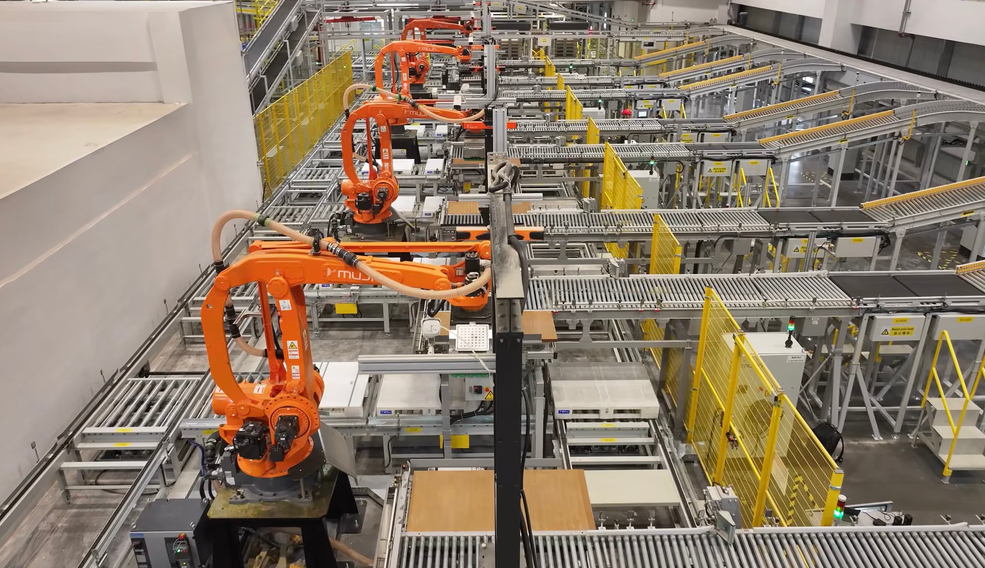
High-tech robotic arms assemble green-energy electric vehicles on an automated factory floor. | Photo Credit: GETTY IMAGES/ISTOCKPHOTO
Philosophy is only one part of the issue; the other is ownership. If a writer creates prompts that get AI to write a powerful essay, who owns that essay: the writer or the creator of the AI tool? As creators ponder over such issues, others are losing their jobs because AI codes faster and better and manages customer service chats without a break at a fraction of the cost. Robots are assembling cars, delivering packages, and managing warehouses. Yet, it is not only about displacement. New jobs are emerging: AI trainers, ethicists, regulators, and creative collaborators. The challenge lies in the distribution: Who will benefit from these new opportunities, and who will bear the cost of lost livelihoods?
Left unchecked, AI could deepen the already wide inequalities. The future of work will depend not just on innovation but on policy choices in education, reskilling, and social safety to ensure that AI augments human potential rather than replaces it.
When AI is taken to the battlefield, the moral stakes get even starker. Autonomous weapons, predictive targeting, and battlefield robotics bring with them incalculable human costs but zero accountability. When warfare becomes a matter of computation and not morality, the danger is not only accidental escalation but also the erosion of human responsibility. Global treaties must prevent an AI arms race before it begins.
MULE (Multi Utility Legged Equipment), the Indian Army’s robotic dogs, on display at the Republic Day parade in Kolkata in January 2025. | Photo Credit: SUMAN BHAUMIK/GETTY IMAGES
The same question that haunts the battlefield—what should we hand over to a machine and what should we keep for ourselves—also applies in the classroom. AI tutors promise personalised learning, adapting lessons to each student’s pace and style. For some, this is a revolution: children in remote villages can access world-class education through synthetic teachers. But education is not just information transfer; it is mentorship, dialogue, and human connection. With AI as the primary educator, we risk reducing learning to a transactional process, and risk losing the other roles that human teachers perform: friend, philosopher, and guide to tender young minds. The harder question then is not whether AI can teach (it can); it is about who will take over these other roles that develop children holistically.
Looming over all this is AI’s most urgent challenge: disinformation. Deepfakes, false news, and algorithmic propaganda have blurred the line between fact and fiction. AI systems can be used to generate such convincing narratives and images that public discourse risks drowning in a blur of rapidly disseminated noise where truth is indistinguishable from lies. Combating this will require not only technological solutions but also media literacy, ethical regulation, and a renewed commitment to truth.
AI’s most urgent challenge is disinformation. Deepfakes, false news, and algorithmic propaganda have blurred the line between fact and fiction. | Photo Credit: GETTY IMAGES
Adding to this sense of unreality is the entry of AI into the most intimate spaces of human life. Companionship bots simulate empathy, offering comfort to the lonely. Dating apps use algorithms to predict compatibility. Synthetic voices whisper encouragement, simulate affection, and even mimic love. Already, people are caring for AI pets and watering AI plants. But while such synthetic companionship may soothe, soothing is not the same as being known. Will machines slowly and steadily lower our understanding and expectation of what it feels like to be loved?
A common thread that runs through all these conversations around AI is that of privacy, which has become perhaps the most contested frontier of artificial intelligence. AI systems thrive on data: our conversations, our movements, our emails, our preferences, our secrets. AI harvests personal information and monitors our lives at a scale that no human snoop has ever managed.
Privacy is not only about secrecy; it is about autonomy, dignity, and freedom. When AI systems know us better than we know ourselves, they can manipulate choices, shape desires, and erode individuality. For decades, the law lagged behind this reality. Europe’s 2018 General Data Protection Regulation remains the most comprehensive endeavour to put boundaries around data collection, but it still struggles to keep pace with AI systems that infer sensitive information from data never directly handed over.
Meanwhile, weak or absent regulation elsewhere has let a parallel economy flourish, one in which data brokers, advertisement networks, and AI developers trade freely in personal information. The cost of that gap is not abstract; it has real-life impacts. Biased hiring algorithms, opaque credit decisions, tailored voting lists, and surveillance products marketed to employers and governments have all spread fastest in places where no regulator was watching.
India offers a useful case study in catching up. The Digital Personal Data Protection Act, passed in 2023, only began taking effect in November 2025, when the government notified the rules and established the Data Protection Board. Full enforcement does not arrive until May 2027. That is roughly four years between framing and operationalising. In this time, billions of records will have already changed hands. The Act gives citizens the right to access, correct, and erase their data, and threatens fines of up to Rs.250 crore for serious violations. But it also permits data to flow freely across borders unless a country is specifically blacklisted.
India’s experience makes plain a pattern that is playing out globally. Legislatures can write strong rights on paper, but it takes years to operationalise a data protection authority, train regulators, and build enforcement capacity. It is exactly during this window that AI systems scale fastest. By the time the law grows teeth, the data have often already been collected, sold, and used to train the next generation of models.
This gap between legislation and enforcement matters most for those with the least power to opt out. AI exacerbates existing social inequalities, including gender-based abuse. Algorithms trained on biased data reproduce stereotypes, amplifying discrimination in hiring, policing, and healthcare. Surveillance tools, though likely developed for legitimate commercial purposes, can be repurposed to track movements, monitor communications, and enable control over women specifically.
Deepfake pornography is a particularly vicious extension of this: fake images that violate dignity and autonomy, built with the same generative techniques marketed elsewhere as creative tools. AI does not create misogyny; it magnifies it, and it does so fastest precisely where the privacy law is weakest or newest.
Closing that gap requires the law to be written fast and implemented faster. It needs regulators with the technical capacity to investigate algorithmic harm. It calls for cultural change that treats data exploitation and image-based abuse as seriously as physical intrusion. And it requires international coordination so that weak regulation in one jurisdiction does not create safe harbours for illegitimate data.
AI is no longer a distant prospect; it is embedded in our schools, battlefields, and bedrooms. We must learn to live with it, and indeed we already have. The question now is whether we will allow it to erode human choice or use it to extend and expand human enterprise and options.
The next century will be defined by who controls intelligence and who builds sentient systems and the algorithms that run them, but ultimately it will be defined also by the values that humans embody in the machines.
The following pages examine each of these aspects in detail to understand how best we can deal with the monster.
Also Read | Is it the end of community?
Also Read | Machines shape the munitions
Related Stories
 AI News
Can Artificial Intelligence Help Prevent Double Land Sales in Ghana?
1 hour ago
 AI News
Delay the deployment of Artificial Intelligence | Opinion letters
1 hour ago
 AI News
Artificial intelligence answers: what is the expected result of the Liverpool v Manchester City match?
2 hours ago
 AI News
Korea’s SK Square backs Japanese physical AI startup Mujin to expand into robotics
2 hours ago
 AI News
Artificial intelligence answers: what is the expected result of the Al Ahly and Zamalek summit?
3 hours ago
 AI News
Artificial intelligence answers: what is the expected result of the Al Ahly v Zamalek summit?
3 hours ago
 AI News
We saw ‘Artificial’ before everyone else, and now we know why Hollywood tried to bury it
3 hours ago
 AI News
AI surveillance startup Flock to cut several hundred jobs amid backlash, sources say
5 hours ago