
How India’s Orange Economy is Reshaping Textiles and Fashion: From Heritage to High

India’s textile and garment industry has always been more than an economic sector; it is a living repository of culture, identity and craftsmanship. Traditional textile traditions from Banarasi silk and Kanchipuram weaves to chikankari embroidery and eri silk have been passed down through generations, serving as enduring symbols of regional heritage, artisanal excellence and cultural identity.
Today, however, these cultural assets are increasingly being repositioned as drivers of innovation, entrepreneurship and economic growth through what is popularly referred to as the Orange Economy or Creative Economy (Buitrago & Duque, 2013; Howkins, 2001). The Orange Economy is based on the concept that value is not just made via the physical production of goods but also through ideas, narrative, design and intellectual property. In the ecology of fashion, this means that the value of a handcrafted textile is not just the fabric but the cultural story, the craftsmanship and the authenticity that it represents (Throsby, 2010).
With global consumers increasingly seeking products with authenticity, meaning and provenance, India’s cultural heritage is emerging as a significant competitive advantage. The convergence of Indian designers, artisan-led fashion brands and digital storytellers has enabled the country’s textile traditions to evolve from symbols of heritage into high-value assets, driving cultural entrepreneurship and global market appeal.
Contemporary Markets for Traditional Crafts
The cultural economy is supported by India’s handloom and handicraft sectors. The handloom industry provides employment to more than 3.15 million people, while the handicraft industry supports the livelihoods of as many as seven million artisans, many of whom are women from rural and semi-urban areas (Dutta, 2023; Kukreja et al., 2023). Traditional crafts such as Banarasi weaving, Bhagalpur silk, eri silk, Kalamkari, Madhubani, Warli art and various regional embroidery techniques are increasingly being integrated into contemporary fashion products and global value chains (Hani & Das, 2019; Jay, 2015). Research demonstrates that consumers are buying more than simply items; they are buying stories, authenticity, and cultural connection. In addition, it has been found that nostalgia and support for local heritage are crucial elements that influence purchase decisions, particularly among the younger consumers (Dasgupta & Chandra, 2016). This transformation is strongly tied to Consumer Culture Theory which states that consumption is a way of construction and expression of one’s identity (Arnould & Thompson, 2005). Belk (1988) suggested the “extended self,” which posits that things are often symbolic extensions of personal and societal identity (Belk, 2001). This conversion instantiates how tradition, when nurtured through contemporising and collaboration, can evolve into premium assets for the nation’s creative economy.
Fashion Leaders transforming Traditional Textiles
As one of the world’s richest repositories of textile heritage, India’s craftsmanship is well recognised in global markets, supported by the efforts of visionary fashion leaders who have successfully bridged the gap between tradition and contemporary consumer demand. By embracing design innovation, artisan collaboration and digital storytelling while preserving authenticity, Indian designers have transformed traditional textiles into high-value cultural and economic assets.
Veteran designers such as Ritu Kumar, Sabyasachi and Rahul Mishra, as well as younger talents like Sourav Das and Hetal Shrivastava, have further strengthened this ecosystem through collaborations with weaving societies and artisan clusters. Their approach goes beyond textile manufacturing, reflecting a commitment to ethical fashion that values craftsmanship, cultural preservation and innovation.
The influence of these designers extends beyond production to shaping consumer awareness. Through contemporary design interventions and digital commerce, the Indian design community has expanded market opportunities for artisans while making heritage textiles more accessible to conscious consumers. These efforts not only help preserve India’s textile legacy but also position the sector as a significant contributor to the country’s creative economy.
Digital Storytelling and the New Fashion Economy
Accelerated by the digital revolution, craftsmen and fashion entrepreneurs may now bypass geographical boundaries and contact consumers directly, thanks to digital storytelling, e-commerce marketplaces and social media. Today’s platforms allow shoppers to connect with the stories of the artisans, communities and cultural traditions behind the products, not just the products themselves.
Some Indian companies have integrated old skills with new-age marketing strategies. FabIndia, Raw Mango, Biba and Manyavar have proven that history can be a great commercial asset, when paired with clever design, storytelling and digital interaction (Kaur & Tiwari, 2025; Khaire, 2011). FabIndia has included over 55,000 rural craftsmen into mainstream markets using only artisan centred sourcing methods, which shows how inclusive business practice can create social and economic benefit (Dutta, 2023).
Digital technologies are also opening up new potential for virtual storytelling, online exhibitions, co-creation platforms and direct-to-consumer shopping methods. This move to service-oriented models, where consumers engage with experiences, construct narratives and customised products, fits with a wider trend towards the ‘servitisation’ of fashion (Agarwal et al., 2025). This transformation generates substantial economic value: creative occupations contribute nearly 8 per cent of India’s employment, pay 88 per cent higher wages than non-creative roles, and account for approximately 20 per cent of gross value added (Kukreja et al., 2023). Handloom and handicraft exports exceed $3.5 billion annually (Shaban et al., 2022) while successful brands like FabIndia have helped rural artisans anchor into mainstream markets.
Sustainability, Circular Fashion and Revival of culture
Sustainability is probably the most potential junction between the Orange Economy and fashion. Resource efficiency, local production and low-waste manufacturing have long been the hallmarks of classic textile systems. Today, similar skills are being rediscovered via circular fashion efforts, garment upcycling, and the resurrection of indigenous textile traditions. Projects with Saura and Toda villages show the potential of upcycling and circular fashion to conserve endangered cultural traditions and create new economic opportunities for artisan groups (Chaturvedi & Chanana, 2025). The revival of Kunbi saree in Goa is a testimony to the power of digital platforms, hands-on learning, and community involvement to revive traditional crafts among the youth and build viable business models based on culture (Agarwal et al., 2025). The growing popularity of thrifting, resale sites and handmade fashion among younger consumers is an extension of a wider movement away from fast fashion and mass-produced apparel, and towards authenticity, individualism and sustainability. For many members of Generation Z, purchasing handmade or second-hand clothing is not only an environmentally-friendly option, but a way of expressing their uniqueness and values.
The New Indian Consumer: Identity & Luxury
The change in India’s fashion economy is evident in the luxury market, too. The demand for premium fashion products has been pushed by the rising middle-class and increasing disposable income in the country, with luxury itself being more associated with self-expression and cultural identity (Bain & Company, 2023; BCG-CII, 2022).
An illustration caselet: Aditi, 26, a marketing expert from Bengaluru, buys a handcrafted designer saree or an artisan-made pocketbook not for its function, but for the tale, her story, and her dreams. Like many young Indian clients, fashion is a way of expressing achievement, personality and cultural identity. This purchase activity resembles Veblen’s (1899) idea of conspicuous consumerism to some extent, where things are utilised as visible indicators of status, but also captures the identity construction processes described in Consumer Culture Theory (Arnould & Thompson, 2005).
This is especially true in India’s booming wedding business. Designer apparel, bespoke needlework, hand-made fabrics, jewels and bespoke luxury experiences all combine in a vibrant ecology supporting weavers, crafters, designers, photographers and many creative enterprises. And social media helps with this, too, as it allows purchasers to record and share these chosen moments and makes fashion a kind of digital cultural capital.
Challenges in Delivering Cultural Value
India’s Orange Economy holds great potential, but there are certain structural challenges. Many craftspeople and creative enterprises struggle to protect and monetise their intellectual property, limiting their ability to create long-term value from innovative ideas and cultural narratives (Howkins, 2001). India produces enormous amounts of creative work, but economic ownership of stories, motifs and craft identities is often fragmented. Another big problem is access to funding. Creative enterprises whose key assets are intangible (ideas, workmanship and design abilities) do not lend themselves well to traditional finance procedures. Recent research has stressed the need of alternative financing tactics such as crowdsourcing, creative enterprise incubators and collaborative finance models (Kukreja et al., 2023).
Other important challenges include market access and digital literacy. “Success is less and less about the quality of the craft and more about branding, business skills and the ability to engage with digital platforms.” Therefore, collaboration between designers and artisans, entrepreneurial training, and a more supportive ecosystem are becoming just as important as technical skills and craftsmanship themselves. (Shaban et al., 2022).
Related Stories
 Business
Robot factories and hypersonic missiles: JPMorgan Chase’s first $5 billion of defense investments
1 day ago
 Business
Police say a car has hit an Australian lawmaker, critically injuring her; the driver was arrested
1 day ago
 Business
Boomi acquires Israeli startup Elementary for $43 million
1 day ago
 Business
Mega chicken farm expansion plan withdrawn
1 day ago
 Business
Data Breach at Hankyu Hanshin Department Store Common ID System Affects Nearly All 1.26 Million Members
1 day ago
 Business
Global Startup EXPO and Nippon Startup Awards 2026: METI Showcases Japan's Deep
1 day ago
 Business
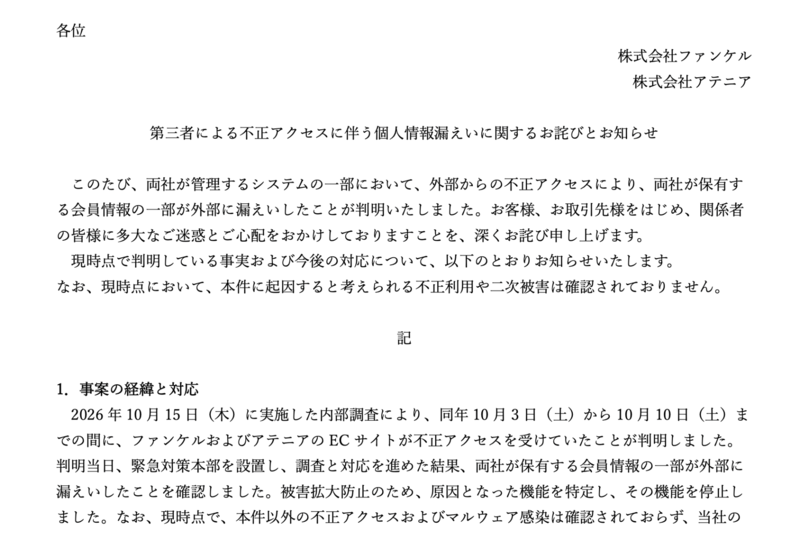
FANCL and Attenir Suffer Data Breach Affecting 780,000 Customers, Exposing Addresses, Names, Phone Numbers
1 day ago
 Business
DeepSeek Quietly Ships V4.1-Flash
1 day ago