
HPE's record Q3: AI infrastructure, networking demand drives growth, but supply constraints tap the brakes
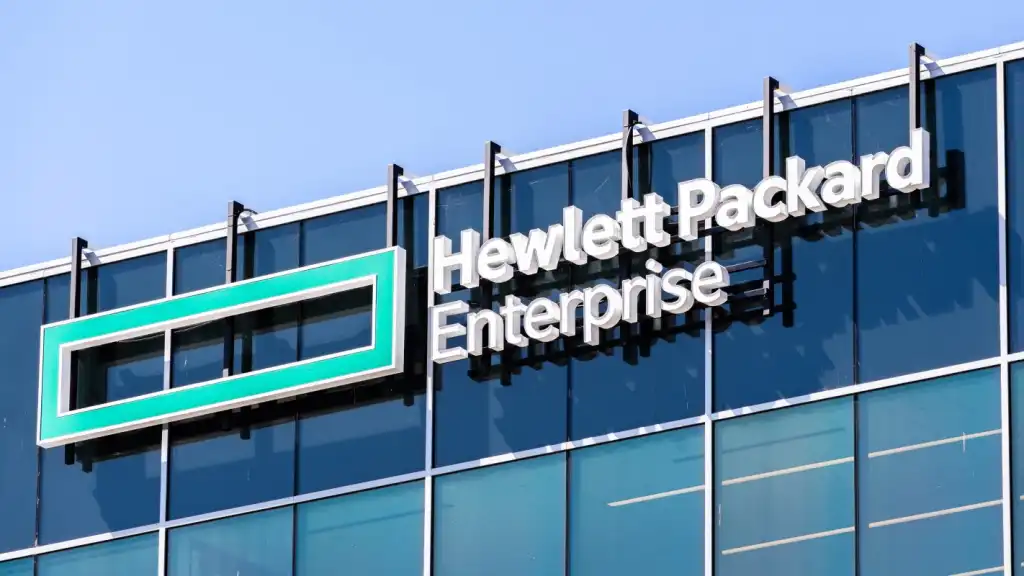
Demand for AI, networking, and servers drove HPE to a record quarter, the company reported during its third-quarter earnings call with financial analysts.
“AI has become a multi-year growth driver, expanding demand across our HPE portfolio,” HPE CEO Antonio Neri said during the call. “We booked more orders than any prior quarter in our history, resulting in a record-breaking backlog for the company. We expect to convert more orders into revenue in Q4, which give us even greater confidence in sustaining our networking growth in fiscal 2027.”
HPE revenue for the quarter was $12.2 billion, a 34% increase from the prior-year period. Bookings and revenue for networking products also reached record levels, Neri said. Looking ahead to fiscal year 2027, CFO Marie Myers said HPE expects networking revenue to grow 13%-17%, and cloud and AI revenue to grow 14%-18%.
“Campus and branch networking had record revenue as customers modernize aging edge infrastructure and deploy AI-driven network operations,” Neri said. “Orders were ahead of revenue, demonstrating the differentiation of our self-driving networks and the versatility across multiple cloud development models. Routing and data center switching demand accelerated in the quarter, with orders substantially ahead of revenue and our backlog at its highest ever.”
Meanwhile, supply constraints, particularly around memory—DDR5, DDR4, and NAND in the flash drive space—continue to pose challenges. In addition, the transition from traditional DRAM to high-bandwidth memory is intensifying supply pressure.
“Supply constraints continue to affect our ability to fulfill the increased customer demand. We are collaborating very closely with our partners to secure additional multi-year supply agreements,” Neri said. “We are also providing our customers with alternative product configurations and deeper planning interlocks to better forecast supply availability.”
AI-driven networks are helping drive HPE results, but so is interest in AI across the board, Neri said. “We see enterprises increasingly moving from AI pilots to production deployments, using traditional servers for agentic AI workloads and inferencing,” Neri said.
Demand for inferencing and agentic AI workloads is building, he said. “AI systems orders of $2.4 billion increased over 30% sequentially, reflecting broad-based demand across customer segments. Enterprise demand more than doubled, reflecting increasing overall infrastructure spending as AI initiatives have become board-level priorities,” Neri said.
AI is advancing beyond early proof-of-concept training deployments into a broader enterprise workflow transformation opportunity, Neri said. “Customers are increasingly investing in new agentic AI applications and AI inferencing, requiring accelerated computing infrastructure, secure data storage access, and enterprise-grade cloud management.”
Neri pointed out a shift in HPE’s server business and shared its role in HPE’s growth: “The server product category drove the outperformance with high demand for traditional servers and AI systems. We saw strong demand from large enterprises, neocloud service providers, and sovereign customers,” Neri said. “We expect demand to remain exceptionally high as our pipeline remains multiples of our backlog. A fundamental shift in the server business is becoming quite clear. The way customers value their IT infrastructure is changing. Their focus is not just whether a server can run AI workloads, but also how it can enable entirely new business workflows using new AI applications.
Ongoing server backlogs isn’t just an HPE issue. Competitor Dell this week reported a record AI server backlog, with $95 billion in orders waiting to be filled. In Dell’s case, demand is “exceptionally strong” for traditional CPU-based servers that are increasingly supporting agentic AI workloads.
Related Stories
 AI News
OpenAI's GPT-6 Astra on ARC-AGI
17 minutes ago
 AI News
Artificial Intelligence (AI)
1 hour ago
 AI News
How China’s AI race axes jobs, forcing workers into low
1 hour ago
 AI News
Can Artificial Intelligence Predict the Right Partner for You?
1 hour ago
 AI News
KAIST AI Tech Fixes SQL Errors, No Restart Needed
2 hours ago
 AI News
ChatGPT, Gemini, Grok and Claude down as AI services experience outage
2 hours ago
 AI News
China Advances Coordinated Development of Computing Power and Electricity Amid AI Boom
2 hours ago
 AI News
AI in a fragmenting world: Why ‘connector’ economies can still gain
2 hours ago